Postpartum Running Return: A Week-by-Week Walk-Run Ramp

Quick Answer: Most moms can return to running in stages, starting with brisk walking and adding short run intervals over several weeks. Clear your return with your provider first, then use a walk-run ramp and check how your pelvic floor and body respond after each session. Pause if you notice leaking, heaviness, or pain.
Your first run back felt great for six minutes, then your pelvis felt like it was pulling toward the floor. You’re not out of shape. Your body is rebuilding its base, and running asks more of it than walking does.

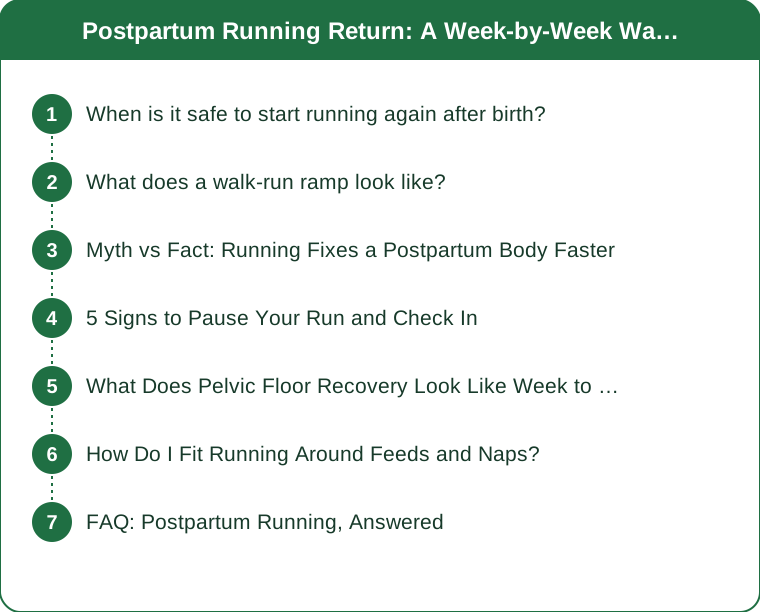
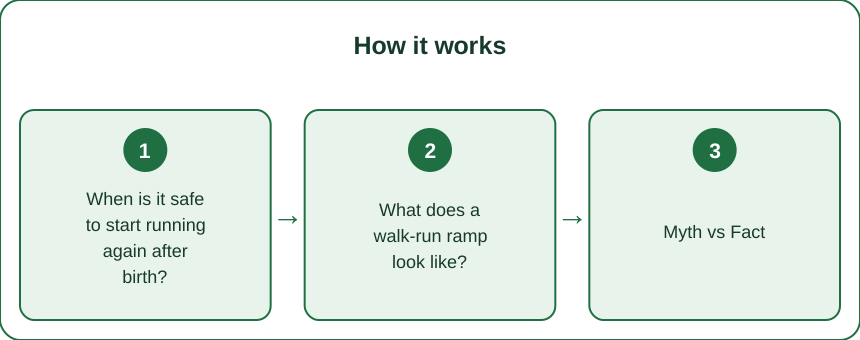
When is it safe to start running again after birth?
Timing depends on how you delivered, your recovery, and what your provider has cleared. Many moms wait until their six-week check, and some need longer. Ask your provider about your pelvic floor before you start.
Use a simple readiness check before your first run. You should be able to walk briskly for 30 minutes without leaking, heaviness, or back pain, and you should be able to do a few controlled pelvic floor squeezes and relaxations.
What does a walk-run ramp look like?
Think of the first month as a ladder:
- Week 1: Walk 30 minutes. Add 1 minute of easy jogging every 5 minutes, repeated 4 times.
- Week 2: Walk 5 minutes, then alternate 2 minutes jogging with 2 minutes walking for 20 minutes.
- Week 3: Walk 5 minutes, then alternate 3 minutes jogging with 90 seconds walking for 25 minutes.
- Week 4: Run 5 minutes, walk 2 minutes, repeat 4 times.
Run three days a week with a rest day between. Keep the pace easy enough that you can talk in full sentences, which is often called the talk test.
Myth vs Fact: Running Fixes a Postpartum Body Faster
Myth: The sooner you run hard, the faster you get your old body back.
Fact: Hard running too early can increase pelvic pressure and slow your recovery, and it can make the ache or leaking worse. A slow ramp builds the base you need for longer, stronger runs later.
Moms who ramp gradually usually feel steadier, sleep better, and keep running without a setback. That’s a faster path than starting hard and stopping for three months.

5 Signs to Pause Your Run and Check In
Stop the run and walk home if you notice any of these:
- Leaking when you run, cough, or jump.
- Heaviness or pressure low in the pelvis.
- Doming or a ridge down your belly during the run.
- Sharp pain in your pelvis, back, or hips.
- Bleeding or a sudden change in discharge.
Any of these means you should rest, reduce the intensity, and talk to your provider before you run again.
What Does Pelvic Floor Recovery Look Like Week to Week?
Pelvic floor recovery rarely moves in a straight line. Some days you will feel strong and steady, and other days you will notice heaviness after a long walk or a busy afternoon with the baby. That up-and-down pattern is common, and it does not mean your running plan has failed.
In the first few weeks, focus on quiet strength. Practice gentle pelvic floor squeezes and full relaxations, then pair them with slow breathing. Breathe out as you lift, and let everything soften on the inhale. This simple rhythm helps your core and pelvic floor work together, which matters more than how far or how fast you run.
By the middle of the ramp, you can add more challenge. Try short, easy hill walks, step-ups from a low step, and bird dogs on the floor. Each one asks your pelvis to hold steady under load. If you can do these without leaking or pressure, your body is ready for the next run interval.
Keep a short log after each session. Note the run length, how your pelvis felt, and whether you noticed leaking. Patterns show up quickly, and a log gives you clear evidence to bring to your provider or a pelvic floor physical therapist. If the trend moves in the wrong direction for more than a week or two, step back to the previous week’s ramp and try again.
How Do I Fit Running Around Feeds and Naps?
Running with a baby at home takes planning, but a little structure makes it realistic. Choose a time when your baby is most settled, often right after a feed, and let your partner or a family member take over the baby for twenty or thirty minutes. Even a short run counts toward your ramp when you keep the intensity easy.
Plan for hydration and fuel before you go. Drink a glass of water, and have a small snack if you feel light. Many moms find that a short walk-run session feels better after a feed than before one, because the breast is softer and more comfortable to move in.
Keep the schedule flexible. If a night of broken sleep leaves you exhausted, swap the run for a walk and try again in a day or two. Recovery is part of the plan, and showing up tired and pushing hard is how many moms end up with a setback they could have avoided.
FAQ: Postpartum Running, Answered
Can I run if I am still breastfeeding?
Yes, many moms run while breastfeeding. Feed or pump before your run, wear a supportive sports bra, and drink water before and after.
Should I wear a belt or brace?
Some moms find a support belt comfortable, but it doesn’t replace pelvic floor work. Use it only if your provider has suggested it, and keep building strength alongside.
When should I see a professional?
See a pelvic floor physical therapist if leaking, heaviness, or pain continues after several weeks of ramping. Early help makes recovery much smoother.
This is general information, not medical advice.
TL;DR:
- Get clearance from your provider, then start with brisk walking and short run intervals.
- Follow a ramp of about four weeks, running three days a week with rest between.
- Keep your pace conversational, and avoid hard running in the early weeks.
- Pause and check in for leaking, pelvic heaviness, doming, sharp pain, or bleeding.
Running back is a gradual return, not a sprint. Build the base, and the miles will follow.
See It in Motion
Seen here: Maternity Capris with Side Pockets — shop it on bubblelime.com
Keep Reading
This article is for general informational and styling purposes only. Fit, sizing, and product availability may vary.