The Talk Test: Gauging Postpartum Walking Intensity

Quick Answer: The talk test means you can speak in full sentences while you move, but singing or gasping isn’t allowed. It’s a practical guide for postpartum cardio, especially when you don’t have a heart rate monitor. Start with easy walks, add time first, and only then add short brisk intervals.
Your walk with the stroller started out pleasant, but by the second block you were wondering whether you were doing too much or too little. Pace, steps, and calories can make it confusing. Your voice is often a more honest gauge of effort, and it’s always with you.

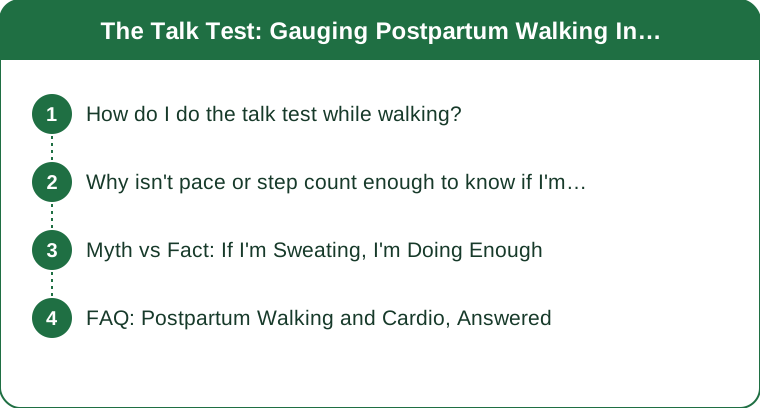
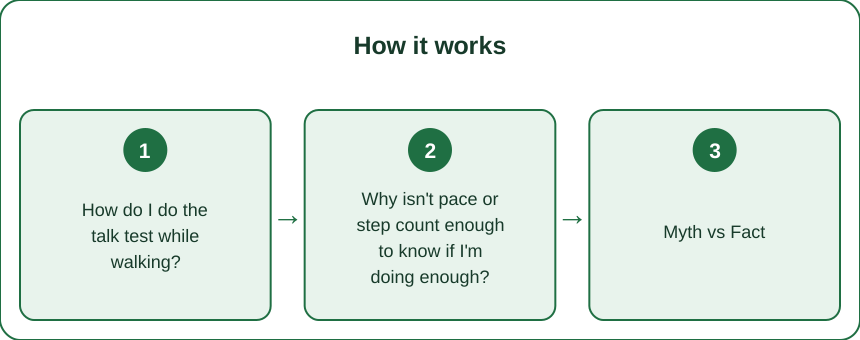
How do I do the talk test while walking?
While you walk, try saying a full sentence out loud, such as the weather or what’s for dinner. If you can speak comfortably with a few breaths between sentences, you’re in an easy zone. If you can only manage a few words, you’re working hard. If you can’t speak at all, slow down.
Most postpartum walking should feel like the easy zone for the first several weeks. You can still be a little warm and breathing harder than usual, and that’s fine. The test only tells you whether your effort is steady enough to continue, not how many calories you burned.
Why isn’t pace or step count enough to know if I’m doing enough?
Pace depends on the terrain, the stroller, the wind, and how tired you were before you started. Step counts can look good while your body is doing much harder work than the number suggests, especially on hills or with a heavy load.
Your breathing responds to what’s actually happening in your body that day. Sleep, feeding schedule, and stress can change how hard a walk feels, and the talk test adjusts with you. That makes it a practical tool for real life, not a perfect measurement.

Myth vs Fact: If I’m Sweating, I’m Doing Enough
Myth: Sweat is the best sign that a workout is working.
Fact: Sweat depends on temperature, humidity, clothing, and your body’s own patterns. You can sweat in a warm room without building much fitness, and you can work hard in a cool breeze without much sweat.
Use the talk test and how you feel afterward. You should feel better, not wiped out, and you should be able to do your normal day without a major crash.
FAQ: Postpartum Walking and Cardio, Answered
How should I build up over six weeks?
A common plan is to walk easy for 10 to 15 minutes in weeks one and two, grow to about 20 minutes in weeks three and four, and add one or two short brisk intervals in weeks five and six. Keep the talk test in play the whole time.
Is running okay yet?
Many providers want you to be cleared before running, especially after a C-section or if you have pelvic floor symptoms. Ask first, then build back with walking and strength work.
When should I contact my provider?
Call your provider for heavy bleeding, chest pain, dizziness, a racing heartbeat, or pelvic heaviness or leaking during exercise. Those signs need a professional check.
This is general information, not medical advice.
TL;DR:
- Use the talk test: full sentences while you move, no gasping.
- Build up over six weeks, adding time first and intervals last.
- Pace, steps, and sweat can mislead you, so trust your breathing.
- Call your provider about bleeding, chest pain, dizziness, or pelvic symptoms.
Walking at a comfortable, speaking pace is a strong start for most new moms.
See It in Motion
Seen here: Maternity Capris with Side Pockets — shop it on bubblelime.com
Keep Reading
This article is for general informational and styling purposes only. Fit, sizing, and product availability may vary.