How to Restart Postpartum Training After a Summer of Travel and Disruption

Quick Answer: A disrupted summer usually costs less strength than it feels like, because travel involves a lot of carrying, walking, and lifting - it costs consistency, not capacity. So restart at roughly 70 to 80 percent of where you left off rather than at the beginning, rebuild the schedule before the intensity, and expect the first two weeks to feel disproportionately hard for reasons that are about sleep and routine rather than about your core. Do not restart the twelve-week progression from week one.
You did not stop moving for three months. You stopped moving on purpose, which is a different problem and a much easier one to fix.

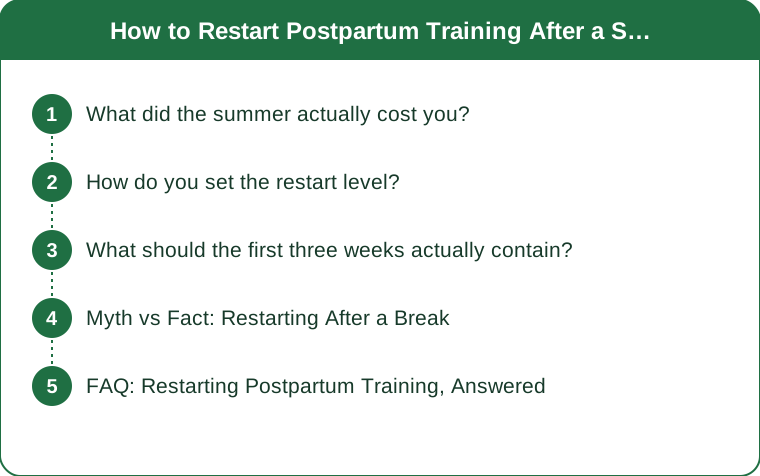
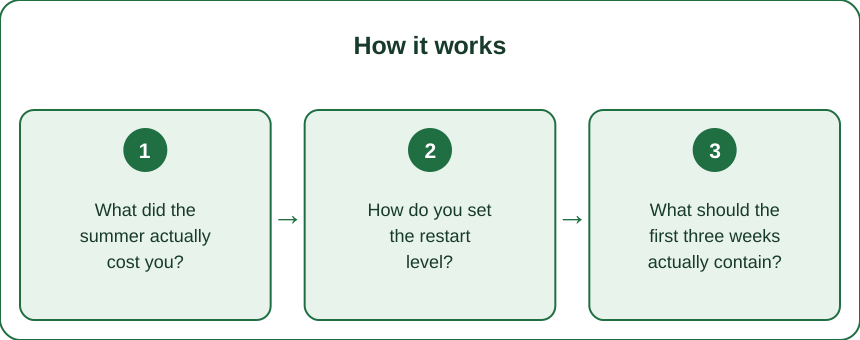
What did the summer actually cost you?
Less strength than you think. Detraining research consistently shows that strength is retained substantially better than people expect over weeks to a couple of months, particularly in people who remain generally active. A summer of carrying a toddler, walking with a pram, and lifting bags is not sedentary.
More consistency than you think. The thing that broke is the habit structure - the specific times, cues, and locations that made training happen. Habits are context-dependent, and a summer of different contexts genuinely erases them.
Some specific capacity in whatever you were not doing. If you had been building toward loaded squats and spent three months carrying children asymmetrically on one hip, your ability to hold a symmetrical loaded position will feel worse than your general strength suggests.
And sleep, almost always. Disrupted routines mean disrupted sleep for both you and the child, and sleep debt is the single largest determinant of how a training session feels. A great deal of the first-two-weeks difficulty is sleep, not fitness, and it improves as the routine stabilises.
The practical implication is important: the restart should target the schedule first and the loading second. Rebuild when you train before you rebuild how hard you train, because the first is what actually broke.
How do you set the restart level?
Start at 70 to 80 percent of your last working load, for two sessions. If you were squatting with a certain weight in June, use roughly three-quarters of it in the first week back. It will feel easy, which is the correct experience, and it lets your connective tissue re-acclimate without a strain.
Rebuild the frequency before the duration. Three fifteen-minute sessions a week is a better restart than one forty-five-minute session, because you are rebuilding a habit and habits are built on repetition, not on volume.
Anchor sessions to fixed events rather than to times. After the morning drop-off. After the evening handover. Times drift with a disrupted schedule; events do not, and events survive a September that is still settling.
Give it three weeks before judging anything. The first week will feel hard, the second slightly better, and the third close to normal. People who evaluate the restart after week one almost always conclude they have lost more than they have.
And do not restart the twelve-week postpartum progression from week one unless you have a reason to. If you had reached loaded squats and carries before the summer, you have not returned to the breathing-and-reconnection phase. Drop back one stage at most.

What should the first three weeks actually contain?
Week one: three sessions, fifteen minutes, movements you already know well. Bodyweight squats, hip hinges, carries, a row variation, and the breathing work. Nothing new, nothing tested, nothing measured. The purpose is entirely to re-establish that this happens.
Week two: three or four sessions, twenty minutes, load returning to roughly 85 percent. Add one movement you had been progressing before the break. Still no testing.
Week three: four sessions, twenty to twenty-five minutes, load back to previous levels if everything has felt fine. This is the earliest point at which it is worth trying anything demanding.
Keep the core work in every session rather than as a separate block. Thirty to sixty seconds of breathing and pelvic floor coordination at the start of each session gets it done four times a week, which beats a dedicated core session you will skip twice.
Watch for the specific symptoms that always warrant stopping and getting assessed: leaking, a dragging or heavy sensation in the pelvis, coning or doming along the midline of the abdomen, or any pain. These are common and treatable and are a pelvic health physiotherapist’s territory rather than something to push through. This is general information, not medical advice.
Myth vs Fact: Restarting After a Break
Myth: three months off means starting from scratch. Fact: strength is retained far better than fitness culture suggests, and the neural component that does decline returns quickly. Most people are back to their previous loads within two to three weeks, not two to three months.
Myth: the first session should test where you are. Fact: testing on detrained connective tissue is how the restart becomes a strain. The information gained is worth very little and arrives naturally by week three anyway.
Myth: you need to make up for the lost time with extra volume. Fact: adding volume to a body that has not trained for months is the most reliable route to a second break. The lost weeks are gone and cannot be recovered; the only question is what happens from here.
Myth: if it feels this hard, you must have lost a lot. Fact: perceived difficulty in the first two weeks is heavily driven by sleep, routine disruption, and unfamiliarity rather than by capacity. The gap between how hard week one feels and how hard week three feels, at similar loads, is mostly this.
Myth: the disrupted summer was a failure. Fact, and it matters more than any of the training points: a summer of travel, family, and disruption with a young child is not a lapse in discipline. Consistency across a year is what produces results, and a year with an interrupted summer and a strong autumn is a good year. Treating it as a failure is what makes people restart too hard and get hurt.
FAQ: Restarting Postpartum Training, Answered
How much strength do you lose in three months off?
Less than most people expect - strength is retained relatively well over this timescale, especially in people who remain generally active, and much of what declines is neural and returns within two to three weeks. Carrying a child and walking daily counts as remaining active.
Should I restart my postpartum program from the beginning?
Usually not. Drop back one stage from where you were rather than returning to the initial breathing and reconnection phase, unless you have new symptoms or a new pregnancy. Restarting from week one is the most common reason a progression takes a year to cover twelve weeks.
Why does exercise feel so much harder after a break?
Sleep disruption, loss of routine, and unfamiliarity account for a large share of it, alongside a genuine but modest decline in conditioning. The difference between how week one feels and how week three feels at the same load is mostly these factors resolving.
How often should I train when restarting?
Three short sessions a week to begin with, rising to four by week three. Frequency rebuilds the habit, which is the thing that actually broke over the summer, and short sessions are far more likely to survive a September schedule that is still settling.
TL;DR:
- A disrupted summer costs consistency, not capacity - carrying, walking, and lifting kept more strength than it feels like.
- Restart at 70 to 80 percent of your previous load for two sessions, and rebuild frequency before duration.
- Anchor sessions to fixed events rather than clock times, because events survive an unsettled September.
- Drop back one stage in your progression at most; do not return to week one.
- Weeks one to three: known movements only, then one added movement, then previous loads - no testing before week three.
- Fold the breathing and pelvic floor work into every session rather than scheduling it separately.
- Leaking, pelvic heaviness, doming, or pain means stop and get assessed, not push through.
The summer was not a failure. Now build the autumn, starting three sessions this week.
See It in Motion
Seen here: Maternity Capris with Side Pockets — shop it on bubblelime.com
Keep Reading
This article is for general informational and styling purposes only. Fit, sizing, and product availability may vary.