Losing Weight While Breastfeeding Without Tanking Your Supply

Quick Answer: Milk production burns roughly an extra 400 to 500 calories a day, which means gentle weight loss and full supply can coexist - but only with a modest deficit. The working rules: lose no faster than about a pound a week, keep total intake above roughly 1,800 calories, anchor every meal with protein, drink to thirst aggressively, and watch the baby’s output and your pumping volumes as the real dashboard. Crash dieting is the one reliable way to get both less milk and less energy. Always loop in your own provider - this is general information, not medical advice.
The pressure to shrink quickly arrives before the baby sleeps through anything, and it collides with a biological fact nobody frames clearly: you are currently the entire food supply for another human. That is not a reason to abandon the goal. It is the reason the plan looks different - slower on the scale, and honestly easier to live with.

Why do aggressive deficits backfire while nursing?
Because the factory gets paid first, until suddenly it does not. Lactation is metabolically expensive - commonly estimated at 400 to 500 calories a day at full production - and your body treats it as a priority expense. Run a moderate food deficit and the body happily draws the difference from stored fat; that is the system working as designed, and it is why many nursing mothers lose steadily on nothing more dramatic than decent meals.
Cut hard, though, and the body starts reading scarcity. Very low intake, especially crash dieting under roughly 1,500 calories or sudden drops, is associated with reduced supply for many women - and the effect often shows up on a delay, a week or two after the diet started, which is exactly when people conclude the diet is fine.
The hidden second cost is you. Deep deficits on fragmented sleep produce the trifecta of dizziness, irritability, and fog - in the months when you are carrying a human down the stairs at 3am. Underfueling also tends to crater the very consistency the goal depends on: the walk gets skipped, the protein gets replaced by whatever is nearest, and the plan collapses by Thursday.
Slow is not the consolation-prize version of the plan. At this life stage, slow is the only version that compounds.
What does the gentle deficit actually look like?
The rate cap: about a pound a week, and slower is fine. Postpartum bodies vary enormously; some drop weight effortlessly while nursing and some hold a reserve until weaning - both are normal biology, not report cards.
The floor: keep intake above roughly 1,800 calories while breastfeeding, higher if you are training or nursing a big eater. Rather than counting everything on no sleep, most women do better with subtraction targets: liquid calories first - the sweetened coffees, juices, and finish-the-toddler’s-milk habit - then portion drift at dinner, while leaving meals structurally intact.
Protein is the non-negotiable: 25 to 30 grams per meal. It protects muscle while the scale moves, blunts the 4pm crash-and-graze cycle, and supports recovery from birth itself. Eggs, Greek yogurt, cottage cheese, rotisserie chicken, canned tuna, lentils - the boring roster is the effective one.
Fluids run the machine: milk is mostly water, and thirst while nursing is famously savage. A full water bottle at every feeding station is the lowest-effort habit in this article.
And movement counts before it is exercise. Stroller walks, carrier walks, ten minutes of anything - the deficit should come mostly from the plate, with movement cast as energy and sanity rather than punishment. The workout ambitions can scale up as sleep does.
How do you eat well when you are too tired to cook?
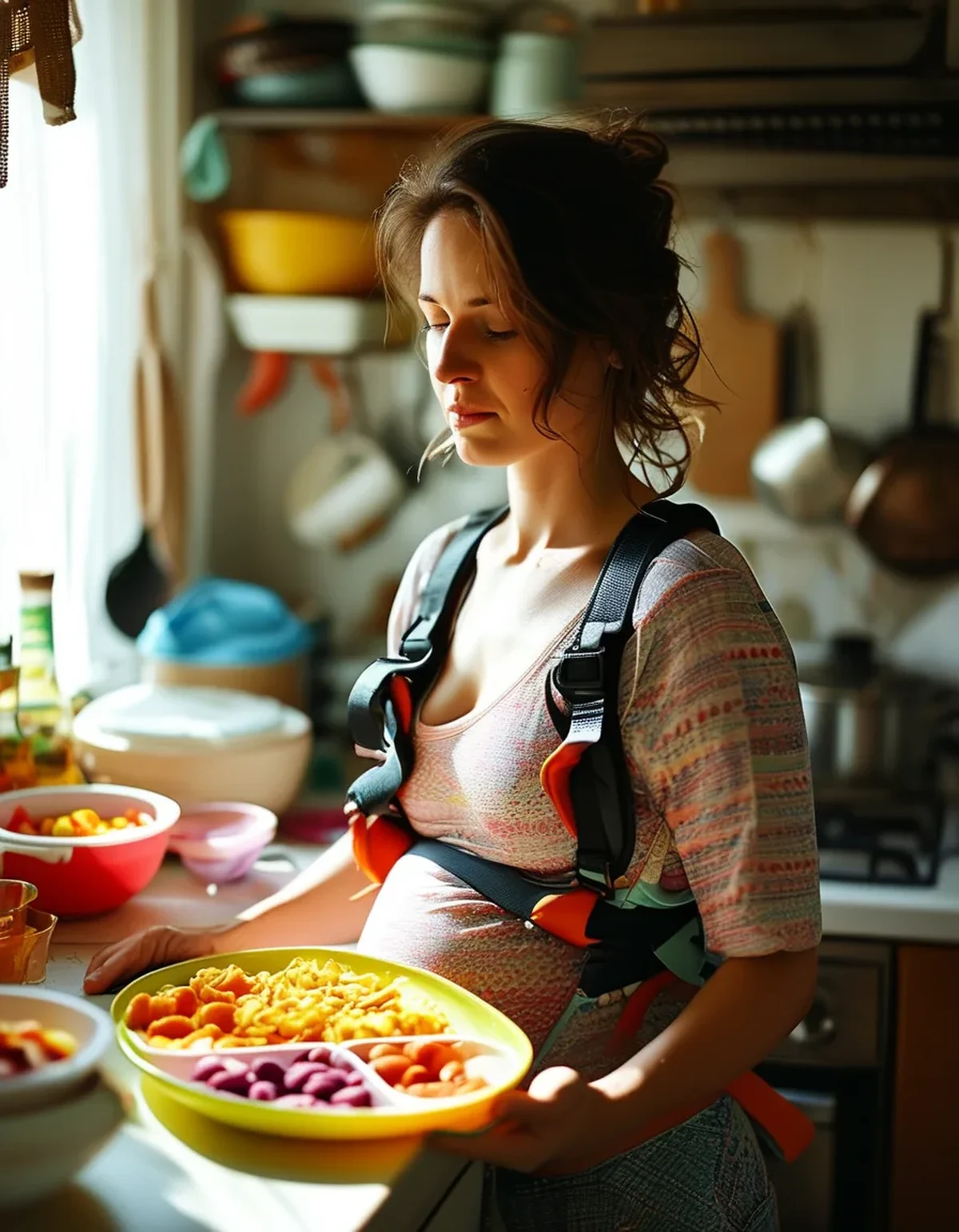
Exhaustion, not knowledge, is what actually breaks postpartum nutrition - so the system has to assume a one-handed, interrupted eater.
Build the one-hand roster. Hard-boiled eggs done six at a time, cheese sticks, Greek yogurt cups, cottage cheese with pre-cut fruit, hummus with anything, trail mix portioned into cups, protein shakes for the feeds that eat the mealtime. None of it requires heat, focus, or a second hand.
Prep in five-minute investments, not Sunday marathons. A double batch of whatever dinner already happened, a washed-grape bowl at eye level, overnight oats in two jars. The rule that matters: the default visible food is the plan. On four hours of sleep you will eat whatever requires zero decisions - so make that thing yogurt-and-berries instead of the cereal box.
Front-load the day. A real breakfast with 30 grams of protein - even at 5:30am, even standing - measurably tames the evening graze that undoes most gentle deficits. The classic postpartum pattern is coffee till noon, crackers till five, then an unstoppable 9pm kitchen sweep; it is a fuel-timing problem wearing a willpower costume.
And keep late-summer logistics on your side: cold proteins beat cooking in an August kitchen, the stroller walk fits before 9am heat, and the giant iced water is self-care that costs nothing.
Myth vs Fact: Breastfeeding and Weight
Myth: Breastfeeding melts the weight off everyone. Fact: The calorie burn is real, but hormones, appetite, and sleep debt vary so much that some women lose easily, some hold steady, and some hold a final few pounds until weaning. Every version is physiologically normal.
Myth: A hard workout or dieting makes milk sour or weak. Fact: Moderate exercise does not meaningfully change milk composition or acceptance, and a modest food deficit does not thin the milk - the body protects quality remarkably well. The risk of extreme deficits is volume and your own energy, not spoiled milk.
Myth: You need to drink milk to make milk. Fact: You need fluids and overall nutrition; the species-specific beverage is not required. Water plus a decent diet covers it.
Myth: Eating for two continues while nursing. Fact: The real bill is a few hundred extra calories - roughly a hearty snack, not a second dinner. The eating-for-two frame and the crash-diet frame are opposite errors around the same modest number.
Myth: If the scale stalls, cut harder. Fact: While nursing, the correct response to a stall is patience at the same gentle deficit, a sleep audit, and a protein audit - the deeper cut is the move that risks the supply and rarely fixes the stall.
FAQ: Breastfeeding Weight Loss Questions, Answered
How many calories should I eat while breastfeeding and losing weight?
Most guidance lands above roughly 1,800 a day as the floor, with a gentle deficit built mostly from cutting liquid calories and portion drift. The right number for you is a conversation with your provider or a dietitian - especially if supply has ever been touchy.
How fast can I safely lose weight while nursing?
About a pound a week as the ceiling. Faster crash approaches are the classic route to a supply dip that shows up on a two-week delay.
What are the signs my deficit is hurting my supply?
A sustained drop in pumping volumes, fewer wet diapers, a suddenly frustrated baby at the breast, or feeds stretching much longer - alongside you feeling dizzy or wrecked. Any of those means eat more today and call your provider or a lactation consultant, not push through.
When should I start trying to lose weight postpartum?
Generally not before your postpartum checkup clears you, and ideally once feeding is well established - commonly around six to eight weeks or later. The early weeks are for recovery and supply; the deficit keeps. This is general information, not medical advice.
TL;DR:
- Nursing burns roughly 400 to 500 calories a day - a modest food deficit rides on top of that; a crash diet fights it.
- Ceiling of about a pound a week, floor of roughly 1,800 calories, protein at every meal, water everywhere you sit.
- Engineer for exhaustion: one-hand foods, visible defaults, and a real breakfast that defuses the 9pm graze.
- The dashboard is diapers, pumping volumes, and your own steadiness - not the scale’s weekly mood.
The factory is temporary; the body that runs it is yours for good. Feed both properly, take the slow pound a week without apology, and let the timeline be the one part of postpartum life that refuses to be rushed.
See It in Motion
Seen here: Maternity Capris with Side Pockets — shop it on bubblelime.com
Keep Reading
This article is for general informational and styling purposes only. Fit, sizing, and product availability may vary.