Getting Back to Exercise When Your First Child Just Started School

Quick Answer: The first week of school hands you a large block of time and almost no accumulated fitness to spend it on, which is why so many people start with five sessions and stop by week three. Start with three sessions a week, keep the first fortnight easy enough that you finish wanting more, and build strength before conditioning. If you are within a year of giving birth or have any pelvic floor symptoms, the pelvic floor and deep core work comes first regardless of how long ago the birth was.
For the first time in years, the house is quiet at nine in the morning.
The temptation is to fill every one of those hours immediately. The version that still exists in November looks quite different.

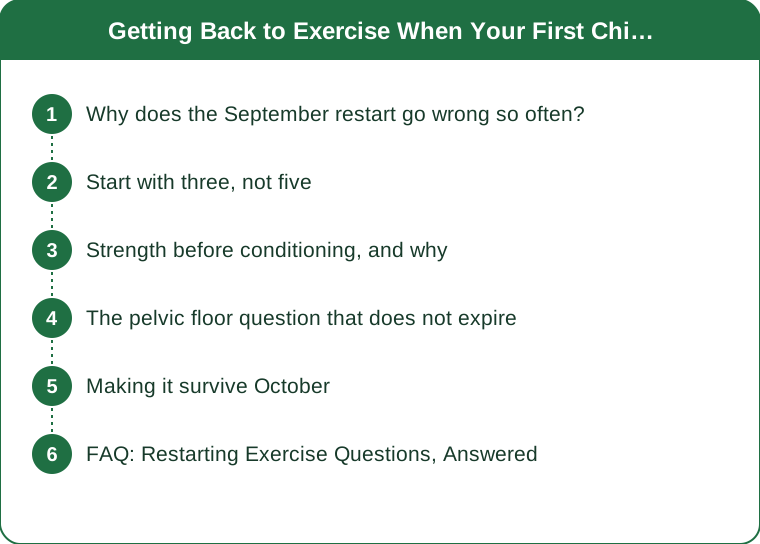
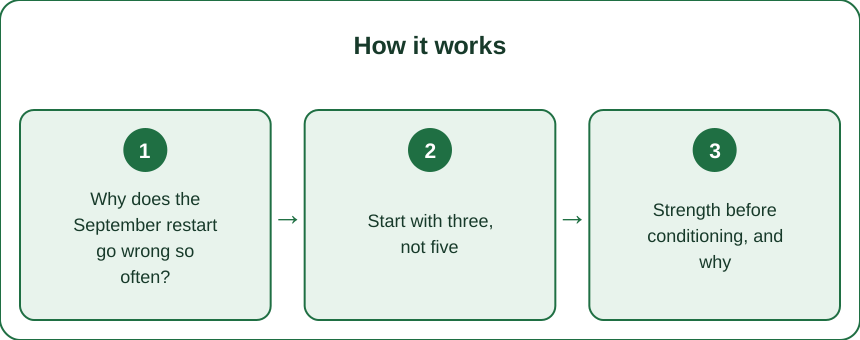
Why does the September restart go wrong so often?
Because time became available faster than fitness did.
For several years the constraint was childcare. Now it is not, and the natural response is to plan around the new constraint - which appears to be nothing. Five sessions a week looks entirely reasonable when you have thirty free hours.
But the body has not changed in the same week. If you have been managing short, interrupted, inconsistent movement for a couple of years, your tissues are conditioned for that, and a jump to five sessions is a large increase in load whatever the calendar says.
There is also an emotional layer that is worth naming. The first week of school is a genuinely big transition, and a lot of people channel it into an ambitious plan because it feels like a fresh start. That energy is real and useful, and it is also the reason the plan is usually too big.
The third factor: those six hours are not actually free. They fill with the things that were postponed for years - appointments, work, the house. A plan that assumed an empty calendar collides with reality in about ten days.
Start with three, not five
Three sessions a week is the number that survives.
It fits around a week that will turn out to be busier than it looks, it allows recovery between sessions when you are not yet conditioned, and it leaves room to add rather than to cut. Adding a fourth session in week five feels like progress. Cutting from five to three in week three feels like failing.
A workable first month:
- Two strength sessions, 30 to 40 minutes, full body.
- One walk or easy cardio session, 30 minutes.
- Daily, a few minutes of pelvic floor and breathing work.
Keep the first two weeks genuinely easy - finish each session feeling like you could have done more. That is not wasted training; it is how you find out whether the plan fits your week before you have committed to something ambitious.
And schedule around the school run rather than against it. The window right after drop-off is the most reliable one most people have, because nothing else has claimed it yet.
Strength before conditioning, and why
The instinct is usually cardio, and the better order is strength first.
The reasons are practical. Strength work builds the tissue capacity that makes running and higher-impact work tolerable, and it is the thing most likely to have been lost during the years of managing small children. It also loads the hips, spine, and pelvic floor in a controlled way, which matters if you are anywhere in the postpartum window.
A simple full-body session, twice a week:
- A squat pattern - goblet squat or box squat
- A hinge - Romanian deadlift or hip thrust
- A push - press-up on an incline or overhead press
- A pull - row
- A carry - a heavy bag for thirty seconds each side
Three sets of six to ten, with weight that is challenging but where the last rep is still clean. Forty minutes including warm-up.
Add running or higher-impact conditioning after four to six weeks of consistent strength work, not before. The order matters more than most people expect, and it is the main protection against the calf, knee, and pelvic floor problems that end restarts.

The pelvic floor question that does not expire
This applies whether the birth was six months ago or six years ago. Time alone does not resolve pelvic floor symptoms, and a great many people carry them for years assuming they are permanent.
The symptoms worth taking seriously:
- Leaking with coughing, sneezing, jumping, or running
- Heaviness or dragging in the pelvis, especially later in the day
- A visible doming or coning along the midline of the abdomen during effort
- Low back or pelvic pain that appears with new exercise
None of those are a reason not to exercise. All of them are a reason to see a pelvic health physiotherapist before adding impact. That is a specific profession with specific training, and the results are usually much better and faster than people expect - often a matter of a few months rather than years.
If you are in the first year postpartum, this is the priority ahead of everything else in this article. If you are further out and symptom-free, a few minutes of breathing and deep core work still belongs in the week. This is general information, not medical advice.
Making it survive October
The restart that lasts has a few things in common.
A fixed slot. Same days, same time, tied to the school run rather than to intention. The post-drop-off window is the strongest one available because it is defended by the school timetable rather than by willpower.
A minimum version. Decide in advance what counts on a bad day - fifteen minutes and three exercises, for instance. The habit survives a bad week only if there is a version of it that fits a bad week.
Something that is not at home. Home sessions are efficient and easy to skip. One session a week somewhere else - a class, a gym, a walk with someone - adds an external commitment that home training does not have.
A plan for the first illness. Somewhere in the first eight weeks of a school year, a virus arrives and takes out a week. Deciding now that you will resume rather than restart is what prevents a week off from becoming the end of it.
Realistic expectations about the timeline. Meaningful strength changes take two to three months of consistency. The first fortnight is about establishing the slot, not about progress.
FAQ: Restarting Exercise Questions, Answered
How long until I feel like myself again?
Most people notice energy and mood changes within two to three weeks, and strength changes at around eight to twelve weeks. The gap between those two is where people quit, so it helps to know it is coming.
Should I do the school run walk as one of my sessions?
It counts as activity and it is genuinely valuable, but it should not replace a strength session. If the walk is brisk and twenty minutes each way, treat it as a base you build on rather than as training.
What if I am still breastfeeding?
Exercise is compatible with breastfeeding, including strength work. Hydration and adequate energy intake matter more than usual, and a supportive bra makes a large difference to comfort. Anyone concerned about supply should raise it with a health professional rather than guess.
Is it too late if my youngest is already at school?
No. The postpartum window for rebuilding strength and pelvic floor function is much longer than the six-week check implies, and people make substantial progress years later. The starting point is different, not worse.
TL;DR:
- School start hands you time, not fitness - that gap is why ambitious restarts collapse by week three.
- Begin with three sessions, not five. Adding a fourth later feels like progress; cutting feels like failure.
- Strength before conditioning. Build tissue capacity for four to six weeks before adding impact.
- Pelvic floor symptoms do not expire with time - leaking, heaviness, or doming means see a pelvic health physio first.
- Anchor sessions to the school run, the one slot the timetable defends for you.
- Decide your minimum version and your plan for the first illness now, before either is needed.
Six free hours in September is a genuine opportunity. It just works out better if you spend three of them a week rather than all of them. This is general information, not medical advice.
See It in Motion
Seen here: Maternity Capris with Side Pockets — shop it on bubblelime.com
Keep Reading
This article is for general informational and styling purposes only. Fit, sizing, and product availability may vary.