The Postpartum Readiness Checks That Tell You If You Can Run Yet

Quick Answer: The commonly cited guidance is that most people are ready for a return to running somewhere around three to six months postpartum, but the date matters less than whether you can pass a set of load and strength checks first - single-leg standing, hopping, and jogging on the spot without leaking, heaviness, or pain. If any check fails, that’s a signal to build for a few more weeks rather than to push through, and a pelvic health physiotherapist is the right person to guide it.
Six weeks is when you’re cleared to exercise. It is not when you’re ready to run, and the gap between those two things is where most postpartum running injuries live.

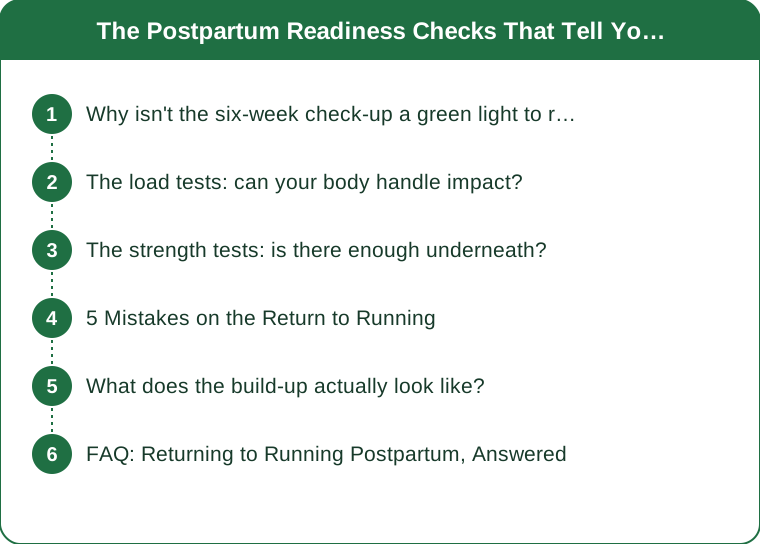
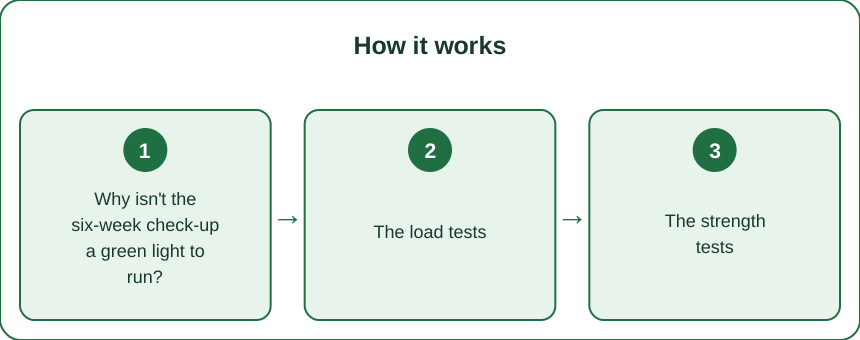
Why isn’t the six-week check-up a green light to run?
Because it’s answering a different question from the one runners are asking.
The postnatal check is a general medical review - healing, bleeding, mood, contraception, and any complications. It’s important and it’s not a musculoskeletal assessment of whether your pelvic floor and abdominal wall can handle repeated impact.
Running is a demanding load. Ground reaction forces in running are commonly cited at around two to three times bodyweight, applied on one leg at a time, repeated at roughly 150-180 times per minute. That’s a substantial and highly repetitive load applied to tissues that have spent months under a very different kind of stress.
Recovery timelines for the relevant tissues are longer than the six-week mark:
- Connective tissue and the pelvic floor continue remodelling for months, not weeks
- Abdominal wall separation frequently narrows over the first several months
- With breastfeeding, hormonal changes can affect connective tissue laxity for longer still
- A caesarean is abdominal surgery, with its own healing course
Published guidance from pelvic health physiotherapists frequently points to around three to six months postpartum as a general reference point for returning to running - and, more importantly, emphasises that the individual assessment matters more than the number. Some people are ready sooner, some considerably later, and both are normal. This is general information, not medical advice.
The load tests: can your body handle impact?
Do these in a private space, in supportive shoes, ideally with a moderately full bladder emptied beforehand. Any leaking, heaviness, dragging, or pain means stop - that’s the test giving you its answer.
1. Walking, 30 minutes, brisk. The foundation. If a brisk 30-minute walk produces heaviness, pressure, or leaking, running is not the next step. This one is non-negotiable and it’s the most commonly skipped.
2. Single-leg balance, 10 seconds each side. Basic stability under bodyweight. Failing this means the hip and pelvic control needed for running isn’t there yet.
3. Single-leg squat, 10 reps each side. Controlled, to a comfortable depth. Watch for the knee falling inward and the pelvis dropping on the unsupported side.
4. Jogging on the spot, 1 minute. The first genuine impact test. Any leaking or pelvic heaviness here is significant information.
5. Forward bounds, 10 reps. Jump forward and land on both feet, controlled.
6. Hopping in place, 10 per leg. Single-leg impact, which is what running actually is.
7. Single-leg running man, 10 per side. Standing on one leg, drive the opposite knee and arms as if running, 10 repetitions.
Passing all seven with no leaking, no heaviness, and no pain is the load-readiness bar. Failing any of them isn’t a failure - it’s a specific piece of information about what to build next, and it’s far better to find out on your kitchen floor than at kilometre three.
The strength tests: is there enough underneath?
Load tolerance is one half. Strength endurance is the other, and it’s the half that determines whether you can run repeatedly rather than once.
1. Single-leg calf raises: 20 repetitions per side. The calf complex absorbs a large share of running’s impact, and calf endurance is a well-established readiness marker. Twenty clean, full-range repetitions on one leg is the target.
2. Single-leg bridges: 20 per side. Glute strength and endurance. The glutes control pelvic position with every step, and weakness here shows up as hip and low back pain rather than as an obvious strength problem.
3. Single-leg sit-to-stand: 20 per side. Quadriceps and hip strength through a functional range.
4. Side-lying hip abduction: 20 per side. Lateral hip strength, which controls the pelvis in single-leg stance - directly relevant to every step of a run.
Plus a pelvic floor check. Can you contract, hold, and fully relax? Both halves matter - an overactive pelvic floor that can’t relax is as much a problem as a weak one, and it’s frequently mistaken for weakness and made worse by more contractions. This one genuinely benefits from an internal assessment by a pelvic health physiotherapist rather than self-testing.
And an abdominal check. Assess for doming or coning along the midline during effort, and check the depth of any separation. Width matters less than whether you can generate tension across the midline - a separation you can create tension across behaves very differently from one you can’t.
Realistic reading of the results: most people around the three-month mark pass the balance tests and fail the endurance ones. That’s not a setback; that’s the programme telling you what the next six weeks contain.

5 Mistakes on the Return to Running
Mistake 1: Using a timeline instead of a test. ‘Twelve weeks’ is a reference point, not a readiness assessment. Two people at the same week can have very different tissue tolerance depending on birth, feeding, sleep, prior fitness, and what they’ve been building.
Mistake 2: Treating leaking as normal and running anyway. Postpartum leaking is common, and common is not the same as something to train through. It’s a signal that the system managing pressure isn’t coping with the load you’re applying, and it responds well to appropriate treatment - so it’s worth getting assessed rather than absorbing.
Mistake 3: Going back to your old distance. Pre-pregnancy fitness doesn’t transfer through the intervening months. Start with run-walk intervals - 1 minute running, 2 minutes walking, for 20 minutes - and progress the running portion over weeks.
Mistake 4: Ignoring sleep as a variable. Broken sleep meaningfully impairs tissue recovery and coordination. A body running on fragmented four-hour nights tolerates load differently, and pushing a running programme through a bad sleep month is how niggles become injuries.
Mistake 5: Not seeing a pelvic health physiotherapist. In several countries a routine postnatal pelvic floor assessment is standard care. Where it isn’t, it’s the single highest-value appointment available to a postpartum runner, and most people who go report finding something they wouldn’t have identified alone.
What does the build-up actually look like?
A twelve-week structure that gets most people from cleared-to-exercise to running continuously.
Weeks 1-4 (from around 6-10 weeks postpartum, if cleared): foundation. Walking, progressing to 30 minutes brisk. Pelvic floor work - contract, hold, and relax, daily. Basic strength: bodyweight squats, bridges, side-lying abduction, calf raises. The goal of this block is passing test one on the load list and starting the strength list.
Weeks 5-8: strength endurance. Progress toward 20 repetitions on each of the four strength tests. Add single-leg work, step-ups, and light loaded carries. Begin the low-impact load tests - balance, single-leg squat.
Weeks 9-12: impact introduction. Jogging on the spot, bounding, hopping. Only when all the strength tests pass at 20 repetitions. Then, if impact is symptom-free: run-walk intervals, starting at 1 minute run and 2 minutes walk, 20 minutes total, three times a week.
Weeks 13+: progression. Increase the running portion of intervals before increasing total duration. Increase total weekly volume by no more than about 10% a week. Continue strength training twice weekly indefinitely - it’s not scaffolding you remove, it’s the thing that keeps the running sustainable.
Stop and get assessed at any point for: leaking, heaviness or dragging in the pelvis, pelvic or low back pain, abdominal doming, or a sudden increase in bleeding. These aren’t reasons to give up on running - they’re reasons to get the specific input that makes running work. This is general information, not medical advice, and a pelvic health physiotherapist is the right person to individualise all of it.
FAQ: Returning to Running Postpartum, Answered
Is three to six months a hard rule?
No - it’s a widely cited reference point from pelvic health guidance, and individual readiness varies substantially. The tests matter more than the month.
Does it differ after a caesarean?
A caesarean is abdominal surgery and the abdominal wall needs its own healing time, so the strength-building phase is typically longer. The load tests are the same; the timeline to passing them usually isn’t.
What if I leak only sometimes?
Intermittent leaking is still a signal that pressure management is being exceeded under some conditions. It’s common, it’s treatable, and it’s worth an assessment rather than a workaround.
Can I run while breastfeeding?
Yes. Feed or express before running for comfort, use a supportive bra, and pay attention to hydration and energy intake - underfuelling while feeding and training is a common and avoidable problem.
What if I’m two years postpartum and never did any of this?
The tests still apply. ‘Postpartum’ isn’t a six-month window, and plenty of people find these checks useful years later - passing them is the point, not when you take them.
TL;DR:
- Six weeks clears you for exercise; it doesn’t assess whether you can handle impact
- Seven load tests - walking, balance, single-leg squat, jogging on the spot, bounds, hops, running man
- Four strength tests at 20 reps each - calf raises, bridges, sit-to-stands, hip abduction
- Leaking or heaviness is information, not something to train through
- Build over twelve weeks, start with run-walk intervals, and progress by about 10% a week
The calendar doesn’t know how you’re healing. The tests do.
See It in Motion
Seen here: Maternity Capris with Side Pockets — shop it on bubblelime.com
Keep Reading
This article is for general informational and styling purposes only. Fit, sizing, and product availability may vary.