Postpartum Pelvic Floor Signals During Exercise: What to Watch For

Quick Answer: Five signals matter during postpartum exercise: leaking, a feeling of heaviness or dragging in the vagina, doming or coning along the midline of the abdomen, breath-holding you cannot release, and symptoms that appear later that day rather than during the session. Any of them means the current load is more than your system can manage right now - not that you should stop exercising, but that this exercise, this load, or this stage needs adjusting. A pelvic health physiotherapist is the right person to assess it.
The standard advice is to stop if you leak. That is true and it is far too narrow, because leaking is often the last signal to appear rather than the first.

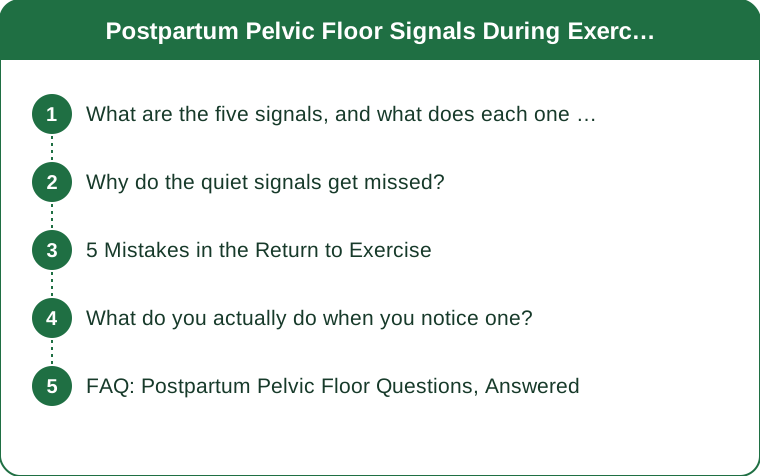
What are the five signals, and what does each one mean?
1. Leaking urine. The best known and the least subtle. Small amounts during impact, jumping, coughing, or heavy lifting mean the pressure generated exceeded what the system could contain at that moment. It is common postpartum and it is not something to train through or to accept as permanent.
2. Heaviness, dragging, or a bulging feeling in the vagina. Often described as something sitting low or a tampon slipping. This typically means the support structures are under more load than they can manage, and it frequently shows up before any leaking does. It is often worse late in the day and after being on your feet.
3. Doming or coning along the midline of your abdomen. A visible ridge or a valley running vertically up the middle of the belly during effort - a sit-up, a plank, getting out of bed. This is a pressure management signal relating to the abdominal wall, and it tells you the load is being managed by pushing outward rather than being controlled.
4. Breath-holding you cannot release. If you cannot talk, or cannot exhale, during a movement, the pressure inside your abdomen is being held rather than managed. This is the earliest signal on the list and the one people least recognise as a signal at all.
5. Delayed symptoms. Heaviness, aching, or leaking that appears in the evening after a morning session, or the next day. This is the most commonly missed signal, because the session itself felt fine. If it happens twice after the same type of session, treat the session as the cause.
This is general information, not medical advice. Any of these is a reason to see a pelvic health physiotherapist rather than to work it out alone.
Why do the quiet signals get missed?
Because postpartum exercise advice is built around a single yes-or-no test - are you leaking - and around a single timeline, the six-week check.
The six-week appointment is not a clearance for impact. It is a general postnatal check, and in most systems it does not include an internal pelvic floor assessment at all. Being told everything looks fine at six weeks is not the same as being assessed as ready to run, and a great many people reasonably interpret it that way.
Heaviness is easy to attribute to something else. Tiredness, a long day, carrying a baby, needing the toilet. It rarely gets connected to the workout that morning.
Doming is hard to see. You cannot see your own midline while planking, and unless someone tells you to look for it, it is invisible. Filming yourself from the side is the practical answer.
Breath-holding feels like effort, not like a problem. It is what everyone does when something is hard, so it does not register as a symptom.
And delayed symptoms break the connection entirely. A session at 9 AM and heaviness at 6 PM do not feel related, and nobody keeps a log detailed enough to notice the pattern on their own.
The practical fix is to know the list, and to check deliberately rather than waiting for something to announce itself.

5 Mistakes in the Return to Exercise
1. Treating the six-week check as clearance for impact. It is a general health check. Return to running guidance from pelvic health specialists commonly suggests a considerably longer timeline - often around three months minimum, with a set of strength and load tests passed first.
2. Judging readiness by how you feel rather than by what you can do. Feeling good is not the same as being able to manage load. Standard readiness checks include things like walking 30 minutes without symptoms, single leg calf raises, hopping, and single leg squats - all without any of the five signals appearing.
3. Going back to the exercises you used to do because you used to do them. Your previous programme was written for a body that had not been pregnant for nine months. Sit-ups, crunches, and full planks are the common examples, but the principle applies to load in general.
4. Ignoring the second and third occurrence. One session with heaviness afterwards could be a long day. The same thing after the same session three times is a pattern, and continuing means progressively loading a system that is telling you it cannot manage it.
5. Assuming it resolves on its own with time. Some of it does. A meaningful proportion does not, and pelvic floor symptoms that are still present at a year postpartum are frequently still present at five years without treatment. The third mistake catches the most people, but this one costs the most, because the window where it is easiest to address quietly closes.
What do you actually do when you notice one?
Stop that exercise for that session. Not the whole workout necessarily - swap to something that does not produce the signal. If plank produces doming, do a modified version on an incline or on your knees, and check again.
Reduce one variable at a time. Load, range, duration, or impact. Halving the duration of a run and keeping everything else the same tells you something. Changing four things tells you nothing.
Fix the breathing first. Exhale on the effort - as you lift, as you push up, as you stand from a squat. A large proportion of pressure management problems improve substantially with this one change, and it costs nothing to try immediately.
Add the strength work rather than only removing things. Pelvic floor and deep abdominal work, progressive glute and hip strengthening, and general strength training all support the return. Removing exercise entirely is rarely the answer and often makes the timeline longer.
Book a pelvic health physiotherapist. This is the recommendation that matters most, and it is routine care in some countries and something you have to seek out in others. An internal assessment gives you information no amount of self-monitoring can - whether the muscles contract, whether they release, whether they are strong or overactive, and there are very different treatment paths depending on the answer.
Keep a two-line log. What you did, and whether anything appeared that day or evening. Delayed symptoms only become visible as a pattern if something is written down.
And give yourself the timeline honestly. Tissue healing, hormonal changes while breastfeeding, and broken sleep all affect load tolerance, and none of them are things willpower influences.
FAQ: Postpartum Pelvic Floor Questions, Answered
What are the signs of pelvic floor problems after birth?
Leaking urine with impact or coughing, a heaviness or dragging feeling in the vagina, doming along the midline of the abdomen during effort, breath-holding you cannot release, and symptoms that appear hours after a session. Any of these is worth an assessment with a pelvic health physiotherapist.
When can I start running after having a baby?
Pelvic health guidance commonly suggests around three months at the earliest, with a series of load tests passed first - walking 30 minutes, single leg calf raises, hopping, and single leg squats, all symptom-free. The six-week check is not clearance for impact.
Is it normal to feel heaviness down there after exercise?
It is common and it is not something to accept or push through. Heaviness usually means the load exceeded what the support structures could manage, and it often appears before any leaking does. Reduce the load and get it assessed.
Do pelvic floor problems go away on their own?
Some improve in the first months, and a meaningful proportion do not resolve without treatment. Symptoms still present at a year are frequently still present years later. Early assessment gives you far more options than waiting does.
TL;DR:
- Leaking is the best-known signal and often the last to appear - four quieter ones show up first.
- Watch for vaginal heaviness, midline doming, breath-holding you cannot release, and delayed symptoms.
- The six-week check is a general health check, not clearance for impact.
- Judge readiness by symptom-free load tests, not by how good you feel.
- Exhaling on the effort fixes a surprising share of pressure management problems immediately.
- A two-line training log is what makes delayed symptoms visible as a pattern.
If any of the five appeared while you read this list, book the pelvic health physiotherapist. That is the step that changes the timeline.
See It in Motion
Seen here: Maternity Capris with Side Pockets — shop it on bubblelime.com
Keep Reading
This article is for general informational and styling purposes only. Fit, sizing, and product availability may vary.