Returning to Running Postpartum: The Timeline Nobody Gives You

Quick Answer: Current physiotherapy guidance broadly suggests waiting around three to six months postpartum before returning to running, not six weeks - and the six-week check clears you for general activity rather than impact specifically. The readiness markers that matter are single-leg balance, single-leg calf raises, hopping without symptoms, and no leaking or heaviness during load. Meeting those matters more than the calendar.
The six-week appointment is short, general, and not a running assessment. Most people leave it believing they have been cleared to run, and the gap between that belief and what the evidence supports is where a lot of avoidable problems start.

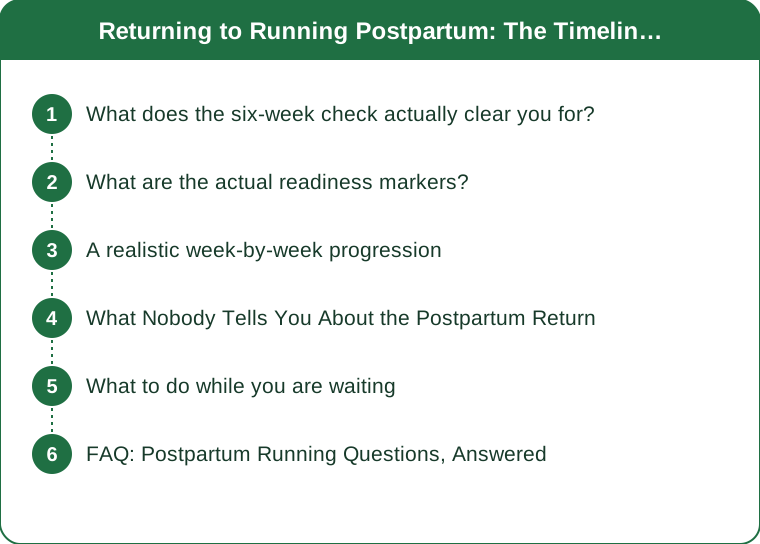
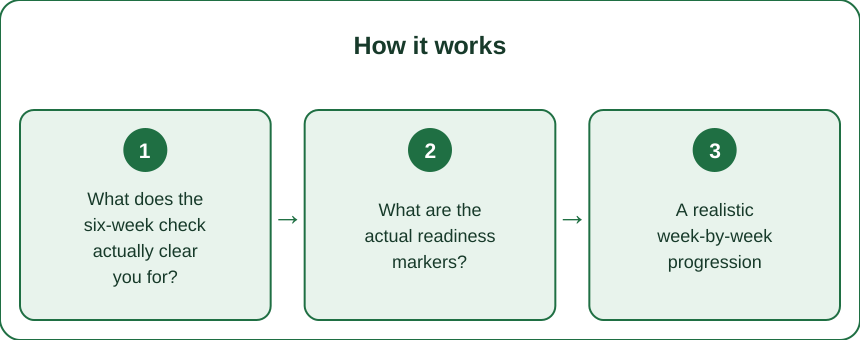
What does the six-week check actually clear you for?
It is a general postnatal review - checking healing, blood pressure, mood, contraception, and answering questions. It is not a musculoskeletal assessment and it is not a running clearance.
What it does not typically include: any assessment of pelvic floor function under load, abdominal wall separation, single-leg strength, or the ability to tolerate impact. Those are the specific things that determine running readiness, and none of them are checked in a standard appointment.
Why the misunderstanding is so widespread: “you can return to normal activity” is genuinely what many people are told, and running feels like a normal activity. The phrase is meant to cover exercise generally, not impact specifically.
What the guidance actually suggests: postpartum returning-to-running guidance developed by specialist physiotherapists broadly points to around three to six months as a reasonable window for returning to impact, with the emphasis on readiness criteria rather than a fixed date.
Why impact is different: running produces ground reaction forces of roughly two to three times bodyweight, repeated thousands of times per session, transmitted through a pelvic floor and abdominal wall that have undergone months of sustained load and, in many cases, direct trauma. Walking does not do this. Neither does cycling or swimming.
This is general information, not medical advice. A pelvic health physiotherapist is the appropriate person to assess your individual readiness, and in many places you can self-refer.
What are the actual readiness markers?
These are the functional tests commonly used by pelvic health physiotherapists, and they are things you can begin working toward at home.
Load and impact tolerance, tested without symptoms:
- Walking 30 minutes briskly
- Single-leg balance, 10 seconds each side
- Single-leg calf raises, 10 each side
- Single-leg bridge, 10 each side
- Single-leg sit-to-stand, 10 each side
- Jogging on the spot, 1 minute
- Hopping in place, 10 each side
- Bounding and single-leg hopping
“Without symptoms” is the critical qualifier, and the symptoms to watch for are specific:
- Any leaking of urine
- A sensation of heaviness, dragging, or bulging in the vagina
- Pain in the pelvis, back, or hips
- Visible doming or coning along the midline of the abdomen
If any of those occur, that is information, not failure. It means the tissue is not yet ready for that load, and it is precisely the signal the tests exist to produce.
Strength markers matter too. Guidance commonly suggests being able to perform meaningful single-leg and hip strength work before adding running load - because running is a single-leg activity repeated continuously, and the strength has to exist before the repetition does.
Why single-leg everything: running is not a two-legged activity. Testing on two legs tells you very little about how you will tolerate the demand.
A realistic week-by-week progression
This assumes an uncomplicated recovery and no symptoms at any stage. Stop and get assessed if symptoms appear.
Weeks 0-6: Recovery. Walking as comfortable, gentle breathing work, and pelvic floor exercises if advised. Not a training period.
Weeks 6-12: Foundation. Progressive walking - building duration first, then pace. Bodyweight strength: glute bridges, sit-to-stands, step-ups, and progressively single-leg versions. Core work that does not produce doming.
Months 3-4: Loading. Add external load to the strength work. Begin low-level impact - heel drops, then small hops, then jogging on the spot for short intervals. Test the readiness markers.
Months 4-6: Return to running. Start with walk-run intervals: 1 minute running, 2 minutes walking, 8-10 rounds. Increase the running interval only when the previous one produces no symptoms and no next-day soreness.
Months 6+: Building. Continuous running, building duration before pace. Keep the strength work - this is where most people drop it, and it is the thing that was making the running possible.
How to progress the intervals: increase one variable at a time and hold it for at least two sessions before increasing again. Duration first, then frequency, then pace - never two at once.
Breastfeeding note: it is entirely compatible with running. A supportive bra, feeding or expressing before a run for comfort, and adequate hydration and energy intake are the practical considerations. This is general information, not medical advice.

What Nobody Tells You About the Postpartum Return
The timeline is not affected by how fit you were before. Someone who ran marathons before pregnancy has the same tissue healing timeline as someone who did not. Previous fitness affects how fast you rebuild once you start, not when you can start.
Caesarean birth is not a shortcut. It is major abdominal surgery, and the abdominal wall healing timeline is its own consideration. The pelvic floor has still carried a pregnancy regardless of delivery route.
Symptoms can appear months in. Leaking or heaviness that shows up at month five, when the running volume increases, is common. It does not mean you did anything wrong; it means the load has exceeded current capacity and the progression needs to slow.
Sleep deprivation affects tissue recovery and injury risk. Running on four hours of broken sleep is a different physiological proposition from running on eight, and being realistic about that is not weakness.
Relaxin’s effect is often overstated. The hormone associated with ligament laxity in pregnancy does decline after birth, and the popular framing of it as a lasting injury risk for many months is less supported than commonly claimed. The more relevant factors are strength, load management, and pelvic floor function.
The comparison problem is the hardest part. Social media returns are not representative, timelines are rarely stated accurately, and someone else’s six-week 5K tells you nothing about your own tissue. This is the piece that causes the most harm and the least useful information.
What to do while you are waiting
The waiting period is not passive, and treating it as training rather than as delay changes the whole experience.
Strength training is the highest-value thing you can do. Specifically:
- Glutes: bridges progressing to single-leg, hip thrusts, step-ups, split squats
- Calves: calf raises, progressing to single-leg with slow lowering - running loads these enormously and they are frequently undertrained
- Deep core: breathing-coordinated work rather than crunches, progressing to loaded carries
Walking, progressively. Build to comfortable brisk 30-45 minute walks. Then add hills. Then add a weighted vest or carry the baby in a carrier. This is genuine loading and it prepares tissue in a way that sitting does not.
Non-impact cardio if you want the conditioning: cycling, swimming, and the elliptical all build aerobic fitness without ground reaction forces. Your running fitness will return faster if you kept the aerobic base.
See a pelvic health physiotherapist. In many places you can self-refer, and a single assessment gives you individualised information that no article can. This is the highest-return single action available.
Get properly fitted for a sports bra. Breast size and shape change substantially and often persistently, and a bra fitted before pregnancy is unlikely to still be correct. Poor support is one of the most common reasons for discomfort on early returns.
This is general information, not medical advice. Persistent leaking, heaviness, pain, or a separation that is not improving all warrant professional assessment rather than patience.
FAQ: Postpartum Running Questions, Answered
Is leaking a bit when I run normal after having a baby?
It is common, and common is not the same as something you have to accept. Urinary leaking during activity is a symptom that pelvic health physiotherapy frequently improves substantially. It is worth getting assessed rather than managing with pads.
Does it matter whether I had a vaginal or caesarean birth?
Both carry a pregnancy’s worth of load on the pelvic floor. Caesarean adds abdominal wall surgical healing. Neither route makes an earlier return automatically safe.
What if I already started running at eight weeks and feel fine?
No symptoms is a genuinely good sign. Consider building the strength foundation alongside it and progressing volume conservatively, and get assessed if anything appears.
How long until I’m back to my previous pace?
Highly variable - often somewhere between six months and two years, depending on sleep, consistency, and how much aerobic base you maintained. Pace is the last thing to return, after duration and frequency.
Can I run with the pram?
Yes, once you are running comfortably without it. Alternate which hand pushes, and be aware it changes your gait mechanics, so build up to it separately.
TL;DR:
- The six-week check clears general activity, not impact - guidance broadly points to three to six months for running
- Readiness is measured by symptom-free single-leg strength, balance, and hopping, not by the calendar
- Symptoms to stop for: leaking, heaviness or dragging, pelvic or back pain, abdominal doming
- Use the waiting period for glute, calf and deep core strength - it is training, not delay
- A pelvic health physiotherapist assessment is the single highest-return thing you can do
This is general information, not medical advice. Previous fitness does not shorten tissue healing, and someone else’s timeline tells you nothing about yours.
See It in Motion
Seen here: Maternity Capris with Side Pockets — shop it on bubblelime.com
Keep Reading
This article is for general informational and styling purposes only. Fit, sizing, and product availability may vary.