Returning to Exercise Postpartum When You Have No Childcare At All

Quick Answer: With no childcare, the workable model is short frequent sessions rather than one long one - three blocks of seven to ten minutes across a day accumulate meaningful training volume, and the research on exercise consistently supports accumulated activity. Prioritize the things that matter most in early postpartum recovery: breathing and core coordination, pelvic floor work, hips and glutes, and posture work for carrying. Set the session up so it can be abandoned at any second without feeling like a failure, because it will be. This is general information, not medical advice - get your postnatal check and clearance before starting, and see a pelvic health physiotherapist if you have any leaking, heaviness, or pain.
The app says 45 minutes, four times a week. You have a baby who naps for 20 minutes at unpredictable intervals and a body that is still figuring itself out.

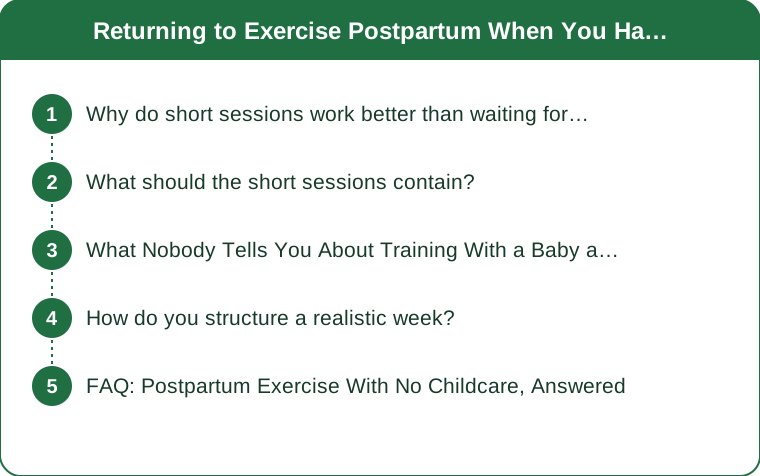
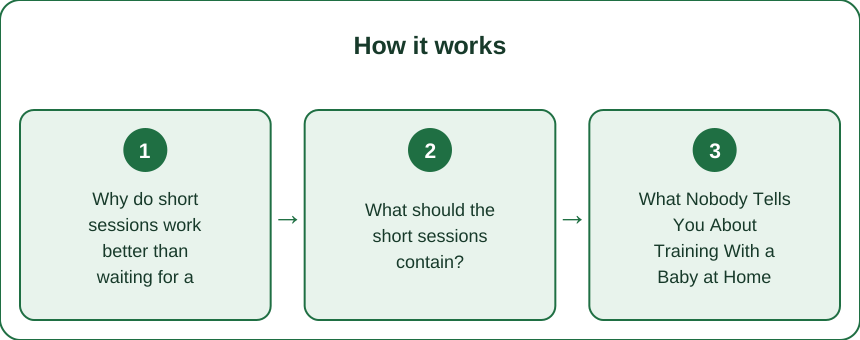
Why do short sessions work better than waiting for a long one?
Accumulated activity counts. Public health guidance moved years ago from requiring bouts of a minimum length to counting activity accumulated across the day, because the evidence supports it. Three ten-minute blocks is a legitimate session, not a compromise.
Short sessions actually happen. A 45-minute plan requiring a specific window has perhaps two viable slots a week and both can be destroyed by a bad nap. A seven-minute plan has a dozen, and the difference in consistency over a month is enormous.
Early postpartum training is about quality, not volume anyway. The priorities in the first months - breathing coordination, pelvic floor and deep core function, hip strength, and posture for carrying - are all better served by frequent brief practice than by long sessions.
Interruption stops being failure. When the unit is seven minutes, being interrupted at minute five means you did five minutes. When the unit is 45, being interrupted at minute five means you did nothing and feel worse than before you started.
And it protects an already-stretched recovery capacity. Broken sleep meaningfully reduces recovery, and stacking long hard sessions on top of it is a reliable route to feeling worse rather than better.
What should the short sessions contain?
Breathing and deep core coordination first. Connecting the breath with the deep abdominal muscles and pelvic floor is the foundation everything else builds on, and it takes two minutes. Exhale as you engage, inhale as you release, and do it before anything harder.
Pelvic floor work, done properly and regularly. This is the highest-priority item for most people in early postpartum and it can be done anywhere. If you are unsure whether you are doing it correctly - and a lot of people are not - a pelvic health physiotherapist assessment is genuinely worth it.
Glutes and hips. Bridges, clams, sit-to-stands, and step-ups. These support the pelvis, the lower back, and every carrying task the day contains.
Posture and upper back work. Feeding, carrying, and pushing a pram all pull the shoulders forward. Rows with a band, wall slides, and thoracic mobility work directly counter it and frequently produce the fastest felt improvement.
Walking, ideally outdoors, with the pram. This is the most accessible cardiovascular option available and it doubles as fresh air and daylight, both of which help mood and sleep regulation.
And leave out anything that makes you leak, feel heaviness, or coning at the midline. Those are signals to modify and to seek assessment, not to push through. This is general information, not medical advice.
What Nobody Tells You About Training With a Baby at Home
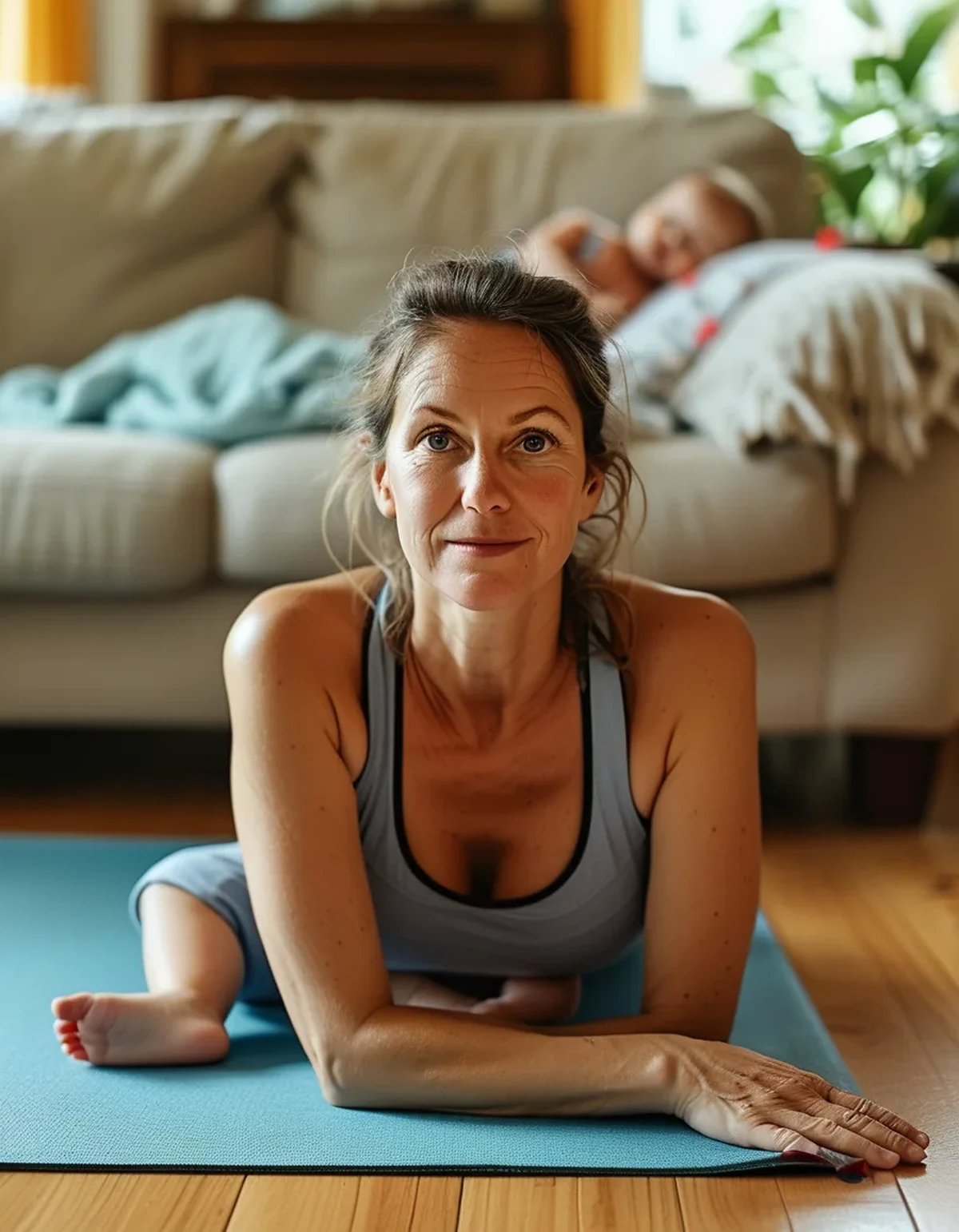
Nobody tells you the floor is the best place to be. Floor-based work means the baby is safe next to you, you can stop instantly, and you are at their eye level - which frequently buys you several more minutes than standing work does.
Nobody tells you the baby becomes part of the session. Bridges with a baby on your hips, sit-to-stands while holding them, and slow carries around the room are all real training, and babies often prefer them to being put down.
Nobody tells you to leave the mat out. The single biggest barrier to a seven-minute session is setup. A mat permanently in the corner of the room removes the decision entirely, and it is why people with equipment out train more than people with equipment tidied away.
Nobody tells you naps are the worst slot. It sounds like the obvious window, but it is also the only window for eating, showering, and sleeping - and building your plan on it means competing with your own recovery. Awake-time sessions with the baby present are more sustainable.
Nobody tells you that comparison is the main injury risk. Social media recovery timelines are not typical, and postpartum recovery is genuinely individual - varying with the birth, the feeding, the sleep, and everything else. The plan that works is the one that fits the life you actually have this month.
And nobody tells you the fourth month is often harder than the second. Sleep frequently regresses, maternity leave arrangements change, and the initial adrenaline has gone - which is precisely when a seven-minute plan proves its worth over a 45-minute one.
How do you structure a realistic week?
Anchor sessions to things that already happen. After the first feed, during the afternoon floor-play, and before bed. Anchoring to existing events beats scheduling by clock time, which assumes a predictability that does not exist.
Keep one written list of five exercises. Not an app, not a program - a list on the fridge you can start from any point. Decision-making is the expensive part when you are tired.
Aim for most days, not for specific days. Something on five days beats an intended three that becomes one.
Bank the walk as the baseline. A daily pram walk is the non-negotiable, and everything else is addition. It is also the most weather-dependent item, which makes the next few weeks - mild, bright, and before the dark evenings arrive - the easiest stretch of the year to establish it.
Progress slowly and on your own timeline. Adding a couple of repetitions or a small amount of load every week or two is plenty. Return to running and higher-impact work has its own readiness criteria and typically comes considerably later than people expect, with pelvic health assessment recommended first.
And get the professional input if you can access it. A single session with a pelvic health physiotherapist is the highest-value thing available in this period, and it is specifically recommended if you have any leaking, heaviness, dragging, pain, or doming at the midline. This is general information, not medical advice.
FAQ: Postpartum Exercise With No Childcare, Answered
Do short workouts actually count?
Yes. Public health guidance counts activity accumulated across the day rather than requiring long unbroken bouts, so three blocks of seven to ten minutes is a genuine session - and in early postpartum, frequent short practice suits the priorities better than long sessions anyway.
What should I focus on first postpartum?
Breathing and deep core coordination, pelvic floor work, glutes and hips, and upper back posture work for carrying and feeding - plus walking. Impact and heavy loading come later and have their own readiness criteria.
Should I work out during naps or while the baby is awake?
Usually while they are awake, on the floor, with them beside you. Naps are also the only window for eating, showering, and resting, and a plan that competes with your own recovery tends not to survive.
When should I see a pelvic health physiotherapist?
If you have any leaking, a sense of heaviness or dragging, pain, or doming along the midline - and ideally as a routine check regardless, since a single assessment tells you far more than any general program can. Get your postnatal check and clearance before starting structured exercise.
TL;DR:
- Three blocks of seven to ten minutes is a legitimate session - accumulated activity counts, and short sessions actually happen.
- Prioritize breathing and deep core coordination, pelvic floor work, glutes and hips, upper back posture work, and walking.
- Stay on the floor with the baby beside you, leave the mat out, and train during awake time rather than competing with naps.
- Anchor sessions to events that already happen and keep a five-exercise list you can start from any point.
- Leaking, heaviness, pain, or doming at the midline means modify and get assessed - not push through.
The plan that works is the one that survives a bad night. Build it at seven minutes and let the good days be a bonus. This is general information, not medical advice.
See It in Motion
Seen here: Maternity Capris with Side Pockets — shop it on bubblelime.com
Keep Reading
This article is for general informational and styling purposes only. Fit, sizing, and product availability may vary.