Returning to Exercise When Your Sleep Is Still Broken

Quick Answer: With badly disrupted sleep, prioritise short frequent low-intensity sessions over any structured programme - 10 to 20 minutes of walking, breathing, and light strength, most days. Skip high-intensity work entirely until you are getting sustained stretches of sleep, because sleep debt raises injury risk, slows recovery, and blunts the adaptations you are training for. Consistency at low intensity beats intensity you cannot recover from.
Almost every return-to-exercise plan is written for someone who slept. When you have not, the plan is not just harder - it is the wrong plan.

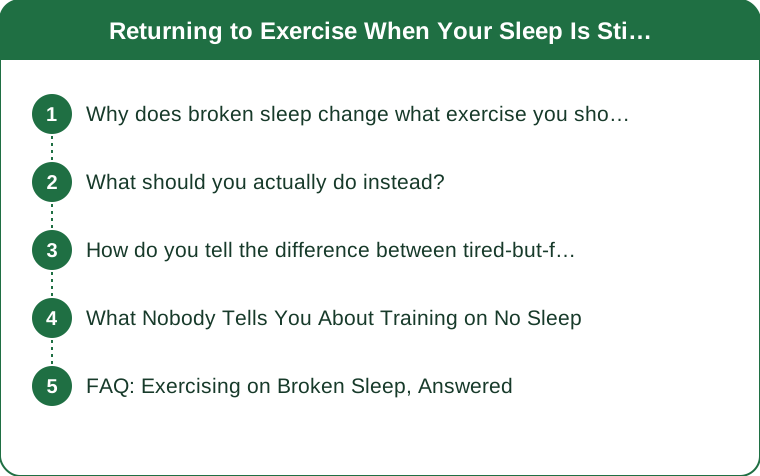
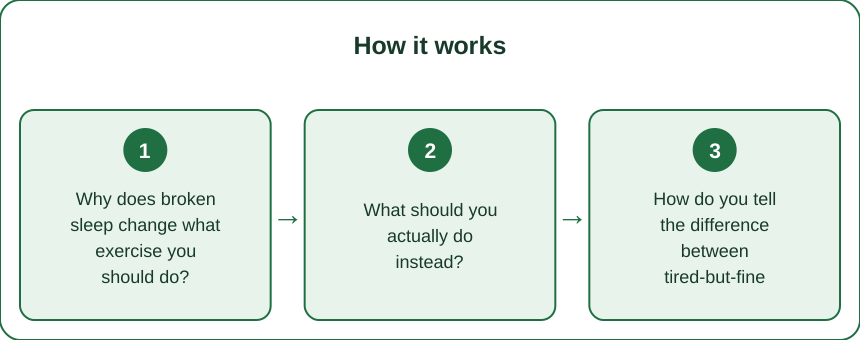
Why does broken sleep change what exercise you should do?
Because the training effect happens during recovery, and sleep is where most of that recovery occurs.
Exercise is a stress. The adaptation comes afterward, during rest, and sleep is when the bulk of tissue repair, hormonal regulation, and neural consolidation happens. Train hard on badly broken sleep and you accumulate the stress without collecting the adaptation.
Three specific things change:
- Injury risk rises. Sleep restriction is associated with increased injury rates in athletic populations, likely through reduced reaction time, worse coordination, and impaired judgement.
- Perceived effort rises. The same session feels considerably harder on poor sleep. This is not weakness - it is a measurable effect, and it means your usual intensity markers no longer mean what they used to.
- Recovery slows. Soreness lasts longer, and the next session lands before you have recovered from the last one.
Add to this the postpartum context specifically: connective tissue is still remodelling, the abdominal wall and pelvic floor are recovering, and there may be feeding demands on energy and fluid. The combination of these factors with sleep deprivation is why the standard six-week-and-back-to-normal framing is unhelpful for so many people.
None of this means do nothing. Movement helps mood, energy, and sleep quality itself. It means changing what movement looks like.
What should you actually do instead?
Short, frequent, and low intensity, with the emphasis on frequency rather than any single session.
The shape that works:
- 10 to 20 minutes, most days, rather than 45 minutes three times a week. Short sessions fit into unpredictable days and do not require recovery you do not have.
- Walking as the base. Outside if possible - daylight exposure in the morning helps regulate the circadian system, which matters when your nights are fragmented.
- Light strength work, two or three times a week. Bodyweight or light resistance, well below failure. Stop each set with several repetitions left; training close to failure on poor sleep is where things go wrong.
- Breathing and core work daily, if it has been cleared. Diaphragmatic breathing, gentle core connection, pelvic floor work as advised.
A sample 15-minute session:
- 3 minutes: breathing, lying or seated, long exhales
- 5 minutes: bodyweight squats to a chair, incline press-ups, glute bridges - 2 sets of 10 each, unhurried
- 5 minutes: walk, indoors or out
- 2 minutes: stretch through hips and chest
Rules for the sleep-deprived phase:
- Never train on a night with under about three hours of total sleep. Walk instead.
- Scale by feel, daily. Yesterday’s plan is not binding.
- Avoid high-intensity intervals, heavy lifting near maximum, and impact work until sleep is more consolidated.
- If a session makes the rest of the day harder, it was too much. That is the only test that matters at this stage.

How do you tell the difference between tired-but-fine and doing too much?
By what happens after, not during. During is unreliable when you are this tired.
Signs it is working:
- You feel better after the session than before it, even mildly
- Mood and energy improve for a few hours afterward
- You can do something similar the next day
- Sleep, when you get it, feels slightly more restorative
Signs you are overdoing it:
- Wiped out for hours afterward rather than lifted
- Soreness lasting more than about two days from a light session
- Getting more irritable, more tearful, or more foggy on training days
- Resting heart rate creeping up over a week or more
- Any pelvic floor symptoms - heaviness, leaking, dragging sensation - during or after
- Coning or doming along the midline of the abdomen during effort
The last two are stop signals, not scale-back signals. They warrant a review with a pelvic health physiotherapist rather than a lighter version of the same thing.
One useful daily check before deciding on a session: how do you feel about the idea of it? Mild reluctance is normal and usually passes once you start. Genuine dread, or the thought of it feeling physically impossible, is information. On those days, a ten-minute walk in daylight is the whole session and it counts.
If you are postpartum, have not had a postnatal check, or have any pelvic floor or abdominal separation concerns, see a pelvic health physiotherapist before starting a programme. This is general information, not medical advice.
What Nobody Tells You About Training on No Sleep
Progress is not linear and will not be for a while. You will have a good week and then a regression week when a tooth comes through or an illness passes through the house. The regression is not lost progress - it is the normal shape of this period, and expecting it removes most of the frustration.
Exercise can improve sleep quality even when it cannot improve sleep quantity. Moderate activity, particularly in daylight and not too close to bedtime, is associated with better sleep depth. You cannot get more hours, but the hours you get can be better - which is a genuinely worthwhile reason to keep moving.
Motivation is not the limiting factor and treating it as one is corrosive. The advice to just push through assumes fatigue is psychological. Sleep deprivation is a physiological state with measurable effects on strength, coordination, and judgement. Working with it produces better outcomes than overriding it.
Hunger and appetite go strange. Sleep restriction affects appetite-regulating hormones, which tends to increase hunger and shift cravings toward quick energy. This is a hormonal response, not a discipline failure. Eating regularly - protein at each meal, not skipping - manages it far better than restriction, which makes everything about this period worse.
The comparison problem is at its worst here. Someone else’s postpartum return timeline tells you nothing about yours, because you cannot see their sleep, their birth, their support, or their history. The most useful comparison is to yourself last month.
And the thing that most surprises people: the people who return to full training soonest are usually not the ones who pushed hardest early. They are the ones who kept moving gently, avoided injury and burnout, and were ready when sleep eventually consolidated.
FAQ: Exercising on Broken Sleep, Answered
Is it better to sleep in or to exercise in the morning?
On severely restricted sleep, sleep wins. On moderately restricted sleep, a short walk in morning daylight often does more for the whole day than the extra twenty minutes in bed.
When can I go back to running or high-intensity training?
When you are getting reasonably consolidated sleep most nights, have been cleared for impact, and have built a base of walking and strength work. For running specifically, a pelvic health physiotherapist assessment is worth having first.
Does caffeine before a workout help?
It can reduce perceived effort, but it also masks fatigue you may need to notice, and late caffeine worsens the sleep you do get. Keeping it early in the day is the trade-off most people land on.
How long does this phase last?
Enormously variable. For many people sleep begins consolidating somewhere in the first year, but there is a wide normal range, and illness and developmental phases disrupt it repeatedly.
Should I take a supplement to help?
Discuss with your clinician, particularly if you are breastfeeding. Adequate iron status is worth checking, since deficiency causes fatigue that no amount of training adjustment will fix. This is general information, not medical advice.
TL;DR:
- Sleep is where training adaptation happens, so broken sleep changes the plan, not just the difficulty
- Aim for 10 to 20 minutes most days rather than long sessions a few times a week
- Skip high intensity, heavy loads, and impact until sleep consolidates
- Judge by how you feel hours later, not during - and treat pelvic floor symptoms as a stop signal
- Exercise can improve sleep quality even when it cannot add hours
The standard return-to-exercise timeline assumes a variable you do not currently have. Build the habit at an intensity you can recover from, keep walking in daylight, and let the harder training wait for the nights when it can actually do something for you.
See It in Motion
Seen here: Maternity Capris with Side Pockets — shop it on bubblelime.com
Keep Reading
This article is for general informational and styling purposes only. Fit, sizing, and product availability may vary.