Why Recovery After a Second Baby Feels Nothing Like the First

Quick Answer: Second recoveries often involve faster uterine contraction and more confident feeding, alongside more intense afterpains, more abdominal separation, more pelvic floor load, and dramatically less rest. The physical recovery timeline is broadly similar; the practical recovery is usually harder because there is a toddler. Plan around the rest deficit rather than around the birth.
Most second-time mothers expect the second recovery to be easier because they know what they are doing. Some of it genuinely is. The parts that are harder tend to be the parts nobody mentioned.

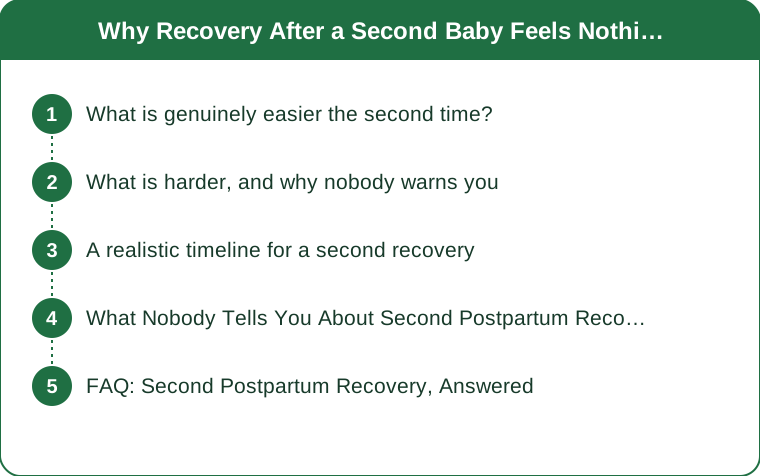
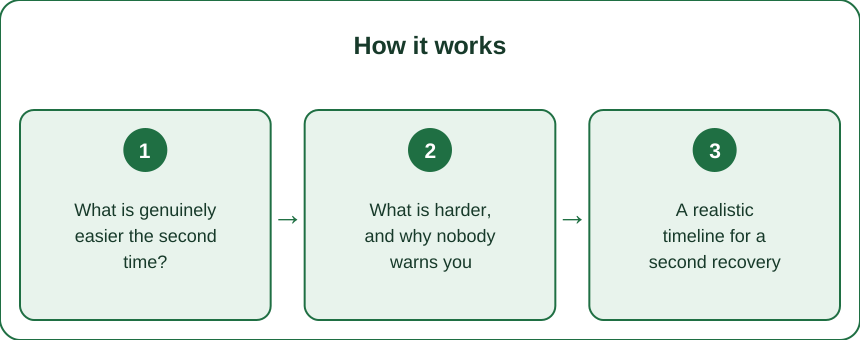
What is genuinely easier the second time?
Several things, and they are worth naming because the difficulties get more airtime.
The uterus contracts back faster. Having been through it before, the uterus involutes more efficiently. This is a real physiological advantage - and it comes with a cost covered in the next section.
Feeding is usually easier. Milk often comes in sooner, latch problems are recognised and fixed faster, and the experience of having done it before removes a great deal of the anxiety. Many women who struggled the first time find the second considerably smoother.
You know what normal is. The first postpartum period is full of alarming things that turn out to be routine - the bleeding, the night sweats, the hair loss at month three, the emotional intensity of the first week. Knowing these are expected removes an enormous amount of worry, and worry is exhausting.
You have realistic expectations about timelines. First-time mothers often expect to feel normal at six weeks because that is when the check-up happens. Second-time mothers generally know six weeks is an administrative milestone, not a physical one.
Confidence with the baby is transformative. Handling, settling, reading cues, deciding what needs a call to a doctor. The competence that took three months to build the first time is present from day one.
Labour is often shorter, particularly the pushing stage, which can mean a less depleting birth and a faster initial recovery.
You know what you need. Second-time mothers are markedly better at accepting help, saying no to visitors, and ignoring advice that does not apply to them - and those three things affect recovery more than any exercise plan.
What is harder, and why nobody warns you
Afterpains are significantly worse. The cramping as the uterus contracts back is mild for most first-time mothers and often genuinely painful for second and subsequent births - because a uterus that has been stretched before contracts more forcefully. They are strongest during feeding, when oxytocin release triggers contraction, and typically last three to seven days. Many second-time mothers describe them as the biggest unexpected difference, and mention that nobody had told them.
Abdominal separation is often greater. Diastasis recti is more common and frequently wider in subsequent pregnancies, because the abdominal wall has been stretched before and the tissue between the muscles is less elastic. It also tends to appear earlier in the pregnancy, which means longer under load.
The pelvic floor has more accumulated demand. Two pregnancies, two births, plus the daily loading of carrying a toddler while pregnant. Second-time mothers report more urinary leaking and more sensation of pressure, and it is worth taking seriously rather than accepting.
Rest is close to non-existent. This is the largest practical difference by a wide margin. The first time, you sleep when the baby sleeps. The second time, the baby sleeps and a three-year-old needs lunch. The cumulative sleep deficit is the single biggest determinant of how a second recovery feels, and no amount of physical preparation compensates for it.
You are lifting a toddler while healing. A 14kg child who wants picking up, repeatedly, during exactly the weeks you should be avoiding heavy lifting. There is often no realistic way to avoid it, which makes technique matter enormously - lift from a squat, exhale on the effort, avoid twisting, and ask for help where it exists.
Back pain is more common, from carrying a toddler on one hip while feeding a newborn, and from a core that is doing more with less.
The guilt is different. Divided attention between a newborn and an older child is one of the most consistently reported emotional difficulties of a second postpartum period, and it catches people who felt entirely prepared.

A realistic timeline for a second recovery
Physical healing follows broadly the same course. What differs is what you are doing during it.
Weeks 0 to 2:
- Bleeding, afterpains (worse than you remember), fatigue
- Movement: gentle walking, breathing work, nothing else
- The realistic goal is horizontal time, which will be less than the first time. Take it where it exists rather than saving it up.
Weeks 2 to 6:
- Bleeding tapering, energy patchy, sleep deprivation compounding
- Movement: walking, gentle core connection breathing, pelvic floor work if comfortable
- Do not use the six-week check as a starting gun. It is a screening appointment, not a clearance to train.
Weeks 6 to 12:
- The window where second-time mothers most commonly overdo it, because they feel more capable and are more impatient
- Movement: progressive core and glute work, longer walks, light resistance
- A pelvic health physiotherapy assessment is worth more here than any programme - and it is more important after a second birth than a first
Months 3 to 6:
- Movement: building resistance training, gradual return to impact if the pelvic floor is ready
- Impact readiness is a specific thing to test, not a date on a calendar. Hopping and jogging on the spot without leaking or heaviness is the practical threshold.
Months 6 to 12:
- Most women return to full activity in this window, and many describe feeling properly themselves closer to twelve months
- Breastfeeding affects this - relaxin and hormonal changes continue while feeding, and some tissue laxity persists until after weaning
The single most useful adjustment: measure against where you were four weeks ago, not against your first recovery. The first recovery happened in different circumstances - more sleep, fewer demands, a body that had been through less.
What Nobody Tells You About Second Postpartum Recovery
The hardest month is often month four, not month one. The first weeks bring help, meals, and permission to do nothing. By month four the help has gone, the older child has adjusted or not, sleep is still broken, and the expectation - internal and external - is that you are back to normal. Plan support for month four, not just week two.
Your body may return to its shape faster and feel weaker. Looking recovered and being recovered are different, and second-time mothers get less latitude precisely because they look fine. The core and pelvic floor are usually further behind than the appearance suggests.
Diastasis is very often improvable at any point. The window for closing abdominal separation is not six weeks and does not close - targeted work improves function and often the gap itself years later. Second-time mothers who were told they had missed their chance the first time were told wrong.
The toddler is the training programme, and it is not a good one. Carrying, lifting from awkward positions, twisting into a car seat, sleeping badly. It is high-load, poor-technique, unrecovered work, and it is a common contributor to back and pelvic pain at three to six months.
Everyone’s second is different from their own first, and comparisons across people are worse than useless. Birth type, feeding, sleep, the older child’s age and temperament, support, and whether you had any recovery from the first before starting the second all change it.
Postnatal depression and anxiety can appear the second time even if they did not the first, and vice versa. A previous straightforward experience is not protection, and the increased load makes screening more important, not less. If something feels persistently wrong - not tiredness, but flatness, dread, or intrusive thoughts - that is a call to make today, not something to manage.
Two years between births is associated with better recovery than shorter gaps in some research, largely because nutrient stores and tissue have longer to restore. If your gap was shorter, it is worth being more attentive to iron, protein, and pacing rather than more anxious.
FAQ: Second Postpartum Recovery, Answered
Why are afterpains so much worse the second time?
A uterus that has been stretched before contracts more forcefully to return to size. They peak during feeding, are strongest in the first three to seven days, and respond to timing pain relief before feeds - ask your midwife or doctor what is appropriate for you.
Will my diastasis be worse this time?
Often it is wider and appears earlier, because the tissue has been stretched before. It is also very responsive to targeted work, and improvement is possible well beyond the first year.
When can I start exercising again?
Gentle walking and breathing from the early days if you feel able. Progressive work usually from six to twelve weeks, guided by symptoms rather than dates. A pelvic health physiotherapy assessment is the most valuable single step, and more so after a second birth.
How do I avoid lifting my toddler?
Often you cannot. Reduce frequency where possible, encourage climbing up rather than being lifted, lift from a squat rather than a bend, and exhale on effort. Prioritise the recovery you can control.
Is it normal to feel more emotional this time?
Very common, and often related to divided attention and sleep deprivation rather than the birth. Persistent low mood, anxiety, or intrusive thoughts warrant a conversation with a health professional - postnatal mental health conditions can appear after a second birth even if the first was uncomplicated. This is general information, not medical advice.
TL;DR:
- Easier: uterine involution, feeding, knowing what is normal, confidence with the baby
- Harder: afterpains, diastasis, pelvic floor load, back pain, and above all the absence of rest
- The physical timeline is similar; the practical one is longer because of the toddler and the sleep deficit
- Month four is often the hardest, not month one - arrange support for then
- A pelvic health physiotherapy assessment is the single highest-value step after a second birth
The most useful thing you can do is stop measuring this recovery against your first one. Different sleep, different demands, a body that has been through more. Compare yourself to four weeks ago, get the pelvic floor assessed, and get help booked for month four before you need it. This is general information, not medical advice.
See It in Motion
Seen here: Maternity Capris with Side Pockets — shop it on bubblelime.com
Keep Reading
This article is for general informational and styling purposes only. Fit, sizing, and product availability may vary.