Why Your Heart Rate Runs Higher Postpartum for the Same Easy Pace

Quick Answer: A higher heart rate at the same easy pace postpartum is normal and usually reflects four overlapping factors: blood volume dropping back from its pregnancy peak over roughly 6 to 12 weeks, reduced haemoglobin if iron stores were depleted, a genuine loss of aerobic fitness from months of reduced training, and elevated resting heart rate from broken sleep. For most people the numbers move meaningfully by three to four months and largely settle by six to nine. Train by effort and by talk test rather than by your pre-pregnancy zones, which will otherwise push every easy session into a moderate one.
The pace feels the same. The watch says something completely different. And using the old zones means the easy walk you planned is now, physiologically, a tempo session.

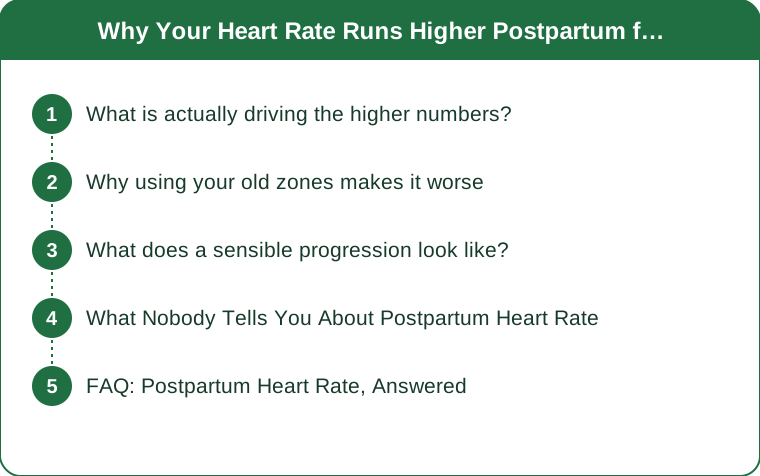
What is actually driving the higher numbers?
Four things, and they resolve on different timelines.
Blood volume. During pregnancy plasma volume rises by 40 to 50 percent. After birth it drops back over several weeks. In the interim the heart is working with a changing amount of fluid to move, and stroke volume - the amount pumped per beat - is lower than it will be. Lower stroke volume at the same oxygen demand means more beats per minute. Timeline: mostly settled by 6 to 12 weeks.
Iron and haemoglobin. Blood loss at delivery plus the demands of pregnancy leave many women with depleted iron stores. Lower haemoglobin means each unit of blood carries less oxygen, so the heart compensates with rate. Timeline: months, and only if it is actually addressed.
Detraining. Aerobic capacity declines measurably within a few weeks of reduced training, and most people train much less in late pregnancy and early postpartum. This is a real fitness loss and it responds to training in the normal way. Timeline: 8 to 16 weeks of consistent easy work.
Sleep debt. Broken sleep raises resting heart rate by 5 to 15 beats for many people, and every exercise reading sits on top of that elevated baseline. Timeline: whenever the baby decides.
Why using your old zones makes it worse
Heart rate zones are percentages of a maximum, and they assume a stable relationship between rate and effort. Postpartum that relationship has moved.
If your easy zone used to be 120 to 135 and the same effort now produces 145, then training to 120 to 135 means walking slower than easy - or, far more commonly, ignoring the number and training at what feels easy while believing you are in a higher zone than you are.
The practical damage is that every session drifts up in intensity. Chasing the old numbers means going harder to hit them, which turns easy aerobic work into moderate work. Moderate work is exactly what you do not need when sleep is broken and recovery capacity is low. This is one of the most common reasons postpartum returns stall around week six with fatigue rather than injury.
Use effort instead, and specifically the talk test. Easy means you can speak in full sentences. If you can only manage a few words, it is not easy, whatever the plan says. The talk test is not affected by blood volume, iron status, or sleep, because it measures the thing you actually care about.
If you want a number, reset your zones from a current resting heart rate rather than a pre-pregnancy maximum, and re-check monthly.

What does a sensible progression look like?
Volume first, intensity much later. The order matters more than the specifics.
Weeks 1 to 6 of your return: walking only, building total weekly minutes. Start wherever you actually are - for many people that is 10 minutes, five days a week. Add roughly 10 percent per week to the weekly total, not to individual sessions.
Weeks 6 to 12: keep everything at the talk-test easy level and continue building volume toward 120 to 150 minutes a week. Add hills or a slightly brisker pace for short segments only if the easy sessions are consistently comfortable.
Weeks 12 onward: introduce one session a week with some intensity - intervals, a hill repeat set, a brisker continuous 15 minutes. One. The second one is the mistake almost everyone makes at this stage.
Throughout, watch two signals. Morning resting heart rate trending down across weeks is the clearest evidence the aerobic system is rebuilding. And any pelvic floor symptoms - heaviness, leaking, pressure - mean reduce impact and get assessed, regardless of what the cardio plan says.
If you are still bleeding, in the first six weeks, or have not had a postnatal check, walking and breathing is the whole program. This is general information, not medical advice.
What Nobody Tells You About Postpartum Heart Rate
Nobody tells you that breastfeeding sessions affect the reading. Heart rate in the 30 to 60 minutes after a feed is often noticeably different, and fluid status shifts through the day in a way that shows up on the watch. A session timed just after a feed and one timed just before are not directly comparable.
Nobody tells you that iron deficiency without anaemia still raises exercise heart rate. Standard bloods may come back within normal limits while ferritin - the storage measure - is low. If your numbers are not improving by three to four months and fatigue is disproportionate, ferritin is the specific thing worth asking about.
Nobody tells you that wrist-based readings get less reliable when you are cold or your hands are full. Pushing a stroller in October puts the wrist in exactly the position where optical sensors struggle. A chest strap resolves a surprising amount of confusing data if the numbers seem erratic rather than just high.
Nobody tells you that the number going up mid-session is often just cardiac drift. In a long easy walk heart rate climbs 5 to 10 beats over 40 minutes at identical pace, driven by heat and fluid loss. It is normal, it is more pronounced when you are underhydrated, and postpartum you are frequently underhydrated.
And nobody tells you that six to nine months is a normal timeline - not a slow one. The expectation that it should be back by twelve weeks is where most of the discouragement comes from.
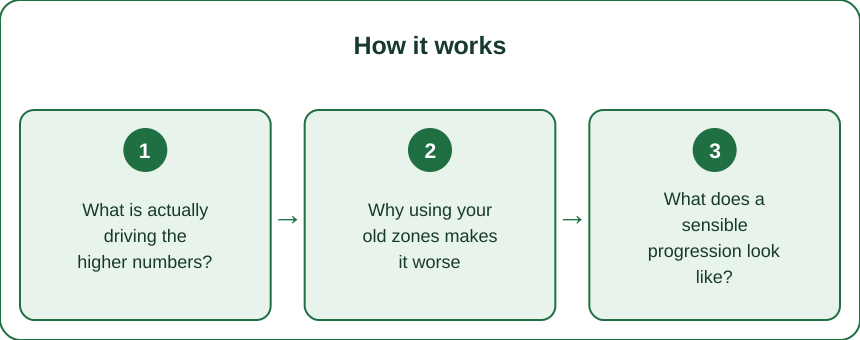
FAQ: Postpartum Heart Rate, Answered
Is a high heart rate during exercise postpartum dangerous?
Generally no, if it is proportionate to effort and settles normally afterwards. What warrants a same-week medical conversation is a high rate at rest, palpitations, breathlessness disproportionate to activity, chest pain, or dizziness. Those are not the pattern described here.
Should I just train slower until the numbers come down?
Train at easy effort, which will initially mean slower paces. But do not restrict to the old zone numbers - that produces sessions that are far below any useful stimulus and it delays the rebuild.
When should I get bloods checked?
If you have not had them since delivery and it has been more than three months, it is reasonable to ask. If fatigue is significant or the numbers are not improving at all by four months, ask specifically about ferritin as well as full blood count.
TL;DR:
- A higher heart rate at the same easy pace is normal postpartum - blood volume, iron status, detraining, and sleep debt all contribute.
- Blood volume settles by 6 to 12 weeks; the full picture usually takes six to nine months.
- Do not train to your pre-pregnancy zones - it silently converts every easy session into a moderate one.
- Use the talk test, build weekly volume by about 10 percent, and add only one intensity session after week 12.
- Track morning resting heart rate as your progress marker, and ask about ferritin if nothing improves by four months.
The watch is telling you the truth about your heart rate. It is just not telling you anything useful about your effort right now, and effort is the thing to train by.
See It in Motion
Seen here: Maternity Capris with Side Pockets — shop it on bubblelime.com
Keep Reading
This article is for general informational and styling purposes only. Fit, sizing, and product availability may vary.