Why You Leak a Little When You Jump After Baby (and the Fix)

Quick Answer: A small leak during jumps after birth usually means the pelvic floor isn’t yet managing the sudden pressure of impact, because the muscles and support tissues are still rebuilding. A stepwise plan works best: rebuild strength with slow pelvic floor contractions, add a breath-out habit, and bring impact back in gradually, starting with low-impact moves. Most people see clear progress in four to six weeks. Book an assessment with a pelvic health physical therapist if leaking happens with everyday activity, if it’s getting worse, or if you feel heaviness or pain.
You’re doing your first jumping jacks since the baby arrived. Ten jumps in, you feel a warm trickle, and you stop, embarrassed. You haven’t come back to running yet, and you wonder if that’s what everyone else meant by bouncing back.
It’s a very common story. Leaking during impact is one of the most frequent things people notice when returning to exercise, and it’s fixable in most cases.

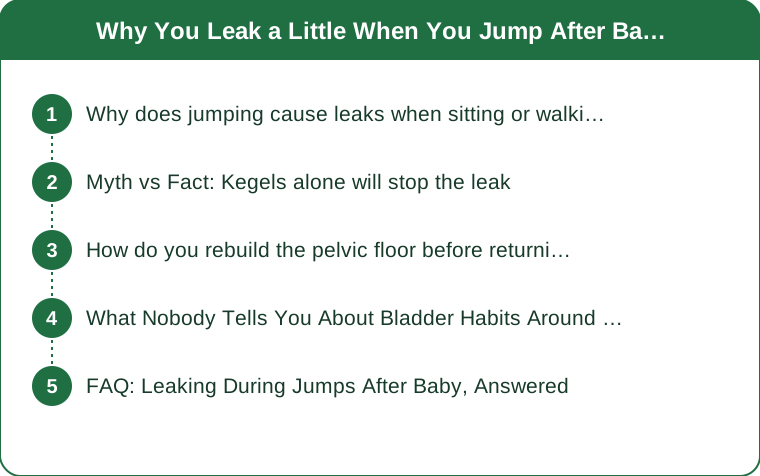
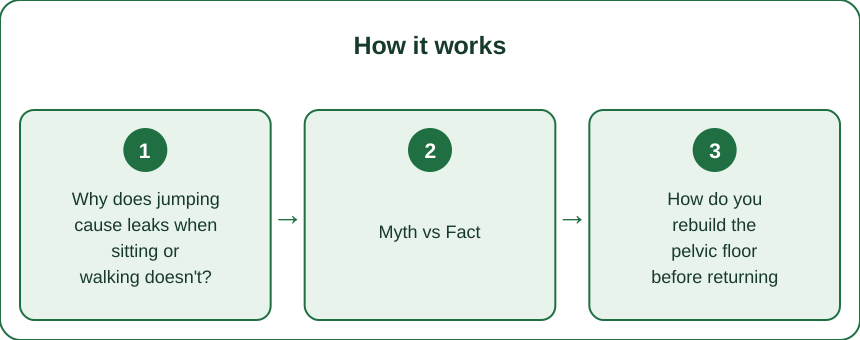
Why does jumping cause leaks when sitting or walking doesn’t?
Jumping creates a sudden spike in pressure inside the belly and pelvis, and then a sharp downward drop as you land. Your pelvic floor has to brace fast and recover fast, hundreds of times in a single session.
Walking is slower and smoother, so the muscles have time to respond. Running and jumping are much harder on the system. A pelvic floor that has been stretched by pregnancy or birth, or that hasn’t been trained to react quickly, may not keep up with that spike. The result is a brief leak.
Pregnancy changes also matter. The tissue that supports the bladder and urethra may be softer for months, and the hormones that loosen ligaments can linger. This makes the early return to impact one of the most common times for leaking to show up.
Myth vs Fact: Kegels alone will stop the leak
Myth: doing a lot of Kegels will fix leaking during jumps.
Fact: muscles also need to contract quickly and relax fully. Many people squeeze hard all the time and still leak, because the muscle can’t release fast enough to handle the next pressure spike. Training both the squeeze and the release, plus the breath, gives better results.

How do you rebuild the pelvic floor before returning to jumping?
Work in stages. Move to the next step only when the current one is leak-free for a full week.
- Stage 1, slow lifts: tighten the pelvic floor gently, hold for 5 seconds, and relax for 10. Do 8 reps, 2 to 3 times a day.
- Stage 2, breath-out: exhale slowly through your mouth as you lift and tighten the pelvic floor, the way you’d exhale before standing up from a chair. Repeat 10 times.
- Stage 3, low-impact moves: marching, step-touches, and squats with the exhale. Keep the pace easy.
- Stage 4, small hops: start with a two-foot hop in place, then gradually add height and speed. Stop if you feel any leak or heaviness.
Each step builds on the one before. Rushing back to full jumping jacks is the most common mistake.
What Nobody Tells You About Bladder Habits Around Exercise
Many people cut back on fluids before a workout to avoid leaks. That can backfire. Drinking less can make urine more concentrated, which irritates the bladder and can make you feel the urge more often.
Try a steady water routine instead: drink regularly through the day, and empty your bladder before you start exercising. Limit caffeine and fizzy drinks if they trigger urgency. Use a liner if you’re going to be out and about, and don’t feel bad about it. Leaks are common, and you’re rebuilding.
FAQ: Leaking During Jumps After Baby, Answered
Is it normal to leak a little after birth?
It’s common, especially in the first months, and it often improves with training. A leak that keeps happening with everyday activity deserves a check, not just endurance.
How long does it take to improve?
Many people notice a difference in four to six weeks of consistent training. Full recovery varies widely depending on birth history, prior fitness, and how the pelvic floor responds.
When should I see a professional?
See a pelvic health physical therapist or your doctor if you leak with walking or coughing, feel a bulge or heaviness at the vaginal opening, have pain during sex, or if the leak is getting worse.
This is general information, not medical advice.
TL;DR:
- Leaking during jumps after birth happens because the pelvic floor is still learning to handle sudden pressure spikes.
- Kegels alone aren’t enough. Train the quick release and the breath-out as well as the squeeze.
- Move through four stages from slow lifts to small hops, and only advance after a leak-free week.
- Don’t cut back on water. Steady hydration and a calm bladder routine help.
- Book a pelvic health assessment if leaking happens with everyday activity, feels heavy, or gets worse.
You don’t have to give up impact forever. Rebuild in steps, breathe out on every effort, and let the timeline be your timeline. This is general information, not medical advice.
Keep Reading
This article is for general informational and styling purposes only. Fit, sizing, and product availability may vary.