Why You Sweat So Much During Postpartum Workouts
Quick Answer: You sweat so much during postpartum workouts because estrogen drops sharply after birth, which makes your body’s thermostat more sensitive, and because you’re still shedding fluid you held during pregnancy. Lower fitness and breastfeeding add to it. For most women the heaviest sweating eases within 6 to 8 weeks, and it can linger at a lower level while nursing. Drink before and after sessions, dress in light layers, and see your doctor if you also have a fever or a racing heart at rest.
You used to finish a 30-minute class with a light glow. Now a 15-minute stroller walk leaves your shirt stuck to your back.
Your hairline is wet, your sports bra is soaked, and you’re wondering whether you’ve somehow become wildly unfit in the space of a few months. You haven’t. Your body’s cooling system is working with a different set of instructions at the moment.
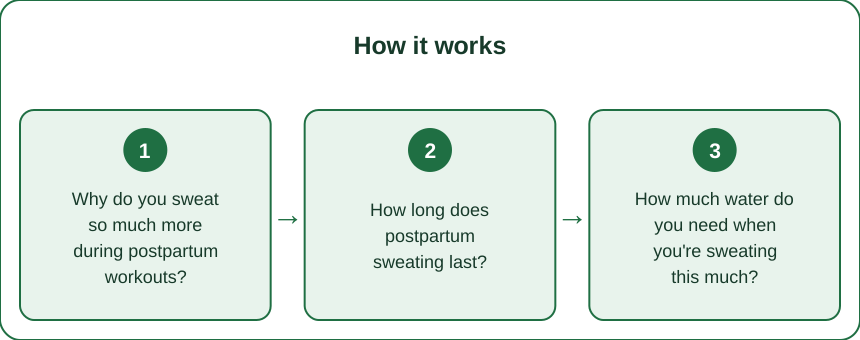
Why do you sweat so much more during postpartum workouts?
Three things are happening at once.
Your estrogen fell fast. Estrogen is very high in late pregnancy and drops within days of delivery. That hormone helps regulate the part of your brain that controls body temperature. When it falls, the thermostat becomes jumpy, and it triggers sweating at a lower temperature than it used to. It’s the same mechanism behind hot flashes later in life.
You’re offloading extra fluid. Blood volume rises by roughly 40 to 50 percent during pregnancy, and many women also hold extra water in their tissues. After birth, your body gets rid of it through urine and sweat.
Exercise costs more effort right now. After months of reduced activity, the same walk raises your heart rate and your core temperature more than it did before. More heat means more sweat.
So the drenched shirt is a hormone and fluid story far more than a fitness one.
How long does postpartum sweating last?
For most women, the heaviest sweating, including night sweats, peaks in the first 2 weeks and settles noticeably by 6 to 8 weeks as fluid levels return to normal.
Breastfeeding can extend it. Nursing keeps estrogen lower for longer, so some women stay sweatier than usual, in workouts and at night, for as long as they’re feeding frequently. It often eases when feeds space out or when periods return.
Fitness plays a part too. As your conditioning comes back over 8 to 12 weeks of regular movement, the same session produces less heat, and your body gets more efficient at cooling.
If you’re 4 months out, not breastfeeding, and still soaking through clothes during gentle exercise, that’s worth mentioning to your doctor.
How much water do you need when you’re sweating this much?
More than you think, especially if you’re nursing.
A practical routine for workout days:
- Before: about 8 ounces of water in the 30 minutes before you start.
- During: a few sips every 10 to 15 minutes for sessions over 30 minutes.
- After: 16 ounces within the hour after you finish.
- Every feed: a glass of water each time you sit down to nurse.
Breastfeeding raises fluid needs on its own. Common guidance lands at around 16 cups of total water a day while nursing, counting food and all drinks. You don’t need to measure it. Pale yellow urine is a good sign you’re doing fine, and dark yellow means drink more.
If you’re sweating heavily for more than 45 minutes, add a pinch of salt and a splash of juice to your bottle, or eat a salty snack afterward.
Signs you’re behind include headache, dizziness on standing, a dry mouth, and unusual tiredness.
5 mistakes that make postpartum workout sweating worse
1. Wearing your thick pre-pregnancy cotton tee. Cotton holds moisture against your skin. Thin, breathable, quick-drying fabric keeps you cooler and prevents that clammy chill afterward.
2. Overdressing for an autumn walk. You feel cold when you step outside, so you add a heavy coat, and 5 minutes later you’re overheating. Dress as if it’s about 10 degrees warmer than the forecast and use layers you can unzip.
3. Skipping the warm-up. Going straight to a hard effort spikes your temperature. Five minutes of easy movement lets your body start cooling gradually.
4. Drinking less to avoid leaking. This one catches a lot of women. Cutting fluids doesn’t fix bladder leaks and can irritate the bladder further. Stay hydrated and ask a pelvic health therapist about the leaking.
5. Working out right after a feed in a warm room. Skin-to-skin warmth plus a stuffy room means you start hot. Open a window or run a fan, and aim for a room temperature of around 65 to 68 degrees.
When is heavy sweating after birth a sign of something else?
Most postpartum sweating is harmless. A few patterns deserve a call to your doctor or midwife.
- A fever of 100.4°F or higher, with or without chills. Infection is a possible cause in the weeks after birth and needs prompt attention.
- A racing or pounding heart at rest, shaky hands, feeling anxious or wired, or losing weight quickly without trying. These can point to postpartum thyroiditis, a temporary thyroid inflammation that affects roughly 1 in 20 women in the first year after birth.
- Sweating with chest pain, shortness of breath, or fainting. Treat this as an emergency.
- Drenching sweats that continue past 3 to 4 months when you’re not breastfeeding.
A simple blood test can check your thyroid. If something feels off beyond being damp and annoyed, it’s reasonable to ask.
FAQ: Postpartum Sweating Questions, Answered
Does sweating more mean I’m burning more calories?
No. Sweat is your cooling system, and how much you produce depends on hormones, fluid levels, room temperature and clothing. Any weight you lose during a sweaty session is water, and it comes back when you drink. Judge a workout by how you feel and what you could do, not by how wet your shirt is.
Will sweating a lot lower my milk supply?
Sweating itself doesn’t reduce supply. Being significantly dehydrated can leave you feeling drained and may affect output for some women, so replace what you lose. Moderate exercise hasn’t been shown to harm milk supply in well-hydrated, well-fed mothers.
Why do I sweat more at night than during my workout?
Night sweats are driven by the same estrogen drop, and they’re often strongest in the first 2 weeks. Warm bedding and a baby sleeping against you add heat. Light cotton sheets, a fan, and a towel on your pillow help while it passes.
TL;DR:
- Heavy sweating in postpartum workouts comes from a sharp estrogen drop, leftover pregnancy fluid, and lower fitness, with breastfeeding extending it for some women.
- The worst usually eases by 6 to 8 weeks and keeps improving as your conditioning returns.
- Drink 8 ounces before and 16 ounces after, wear light breathable layers, warm up for 5 minutes, and cool the room.
- Call your doctor for fever of 100.4°F or more, a racing heart at rest, rapid weight loss, or drenching sweats past 3 to 4 months.
Pack a towel, fill the bottle, and keep moving. The puddle phase is temporary, and it says nothing about how fit you are or will be. This is general information, not medical advice.
See It in Motion
Seen here: Maternity Capris with Side Pockets — shop it on bubblelime.com
Keep Reading
This article is for general informational and styling purposes only. Fit, sizing, and product availability may vary.