Why Your Postpartum Feet Need a Different Fall Running Shoe Than They Used To

Quick Answer: Postpartum feet frequently sit a half to full size larger and flatter than before pregnancy because of relaxin-driven ligament laxity and fluid retention that doesn’t fully reverse, and fall’s cooler, wetter, uneven terrain exposes that mismatch faster than summer running did. If your go-to running shoe suddenly feels tight across the midfoot, slippery on wet leaves, or achy by mile two, the shoe is probably still built for your pre-pregnancy foot. Getting remeasured and prioritizing wider midfoot fit, stable arch support, and better wet-traction outsoles solves most of it.
You pull out the running shoes that carried you through half-marathons before baby, lace them up for a crisp September jog, and something feels off — a pinch at the widest part of your foot, a new ache in your arch, your stride landing a little differently on the wet sidewalk. It’s not in your head, and it’s not “just getting back into it.” This is general information, not medical advice.
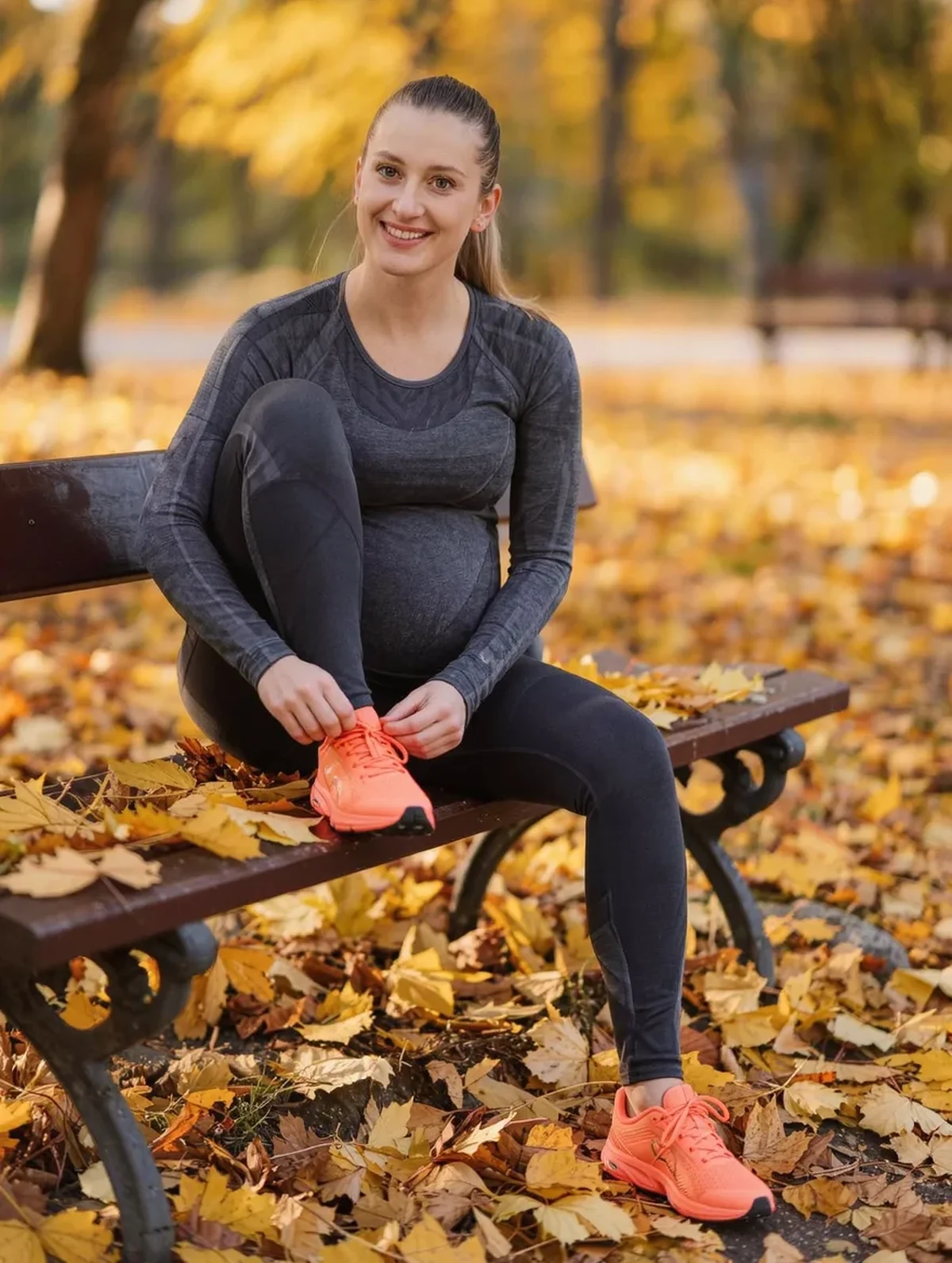
Why Do Postpartum Feet Actually Change Shape?
During pregnancy, your body releases relaxin, a hormone that loosens ligaments throughout the body to help the pelvis accommodate childbirth. Relaxin doesn’t limit itself to the pelvis — it affects ligaments in your feet too, particularly the ones supporting the arch and holding the bones of the midfoot together. Combined with the added weight-bearing load of pregnancy (an average of 25-35 pounds carried through the feet for months) and fluid retention that peaks in the third trimester, many feet spread out: the arch flattens slightly, and the forefoot widens.
Here’s the part that surprises people: relaxin levels drop within days of delivery, but the ligament laxity it caused doesn’t automatically snap back. Studies tracking foot length and arch height postpartum have found measurable changes that persist for months, and in some women, permanently. Add in the fact that many postpartum bodies retain some fluid for weeks (especially if you’re breastfeeding, since prolactin also has mild fluid-retention effects), and you get a foot that’s genuinely different from the one your old running shoes were fitted to.
This is why a shoe that fit perfectly at your pre-pregnancy running store visit two years ago can suddenly feel like it’s biting across the ball of your foot, or why you’re sliding forward inside a shoe that used to lock your heel in place. It’s not that the shoe changed — you did, structurally, and the fix isn’t toughing it out, it’s remeasuring.
The practical takeaway: get your feet measured (both length and width, standing, at the end of the day when they’re most swollen) before assuming your old size is still correct. Many postpartum runners find they’ve gone up half a size, and some need a wider width entirely — especially in the midfoot, not just the toe box.
What Does Fall Weather Have to Do With It?
Summer running forgives a lot. Dry pavement, warm air keeping your feet slightly swollen and snug inside the shoe, predictable footing — none of it exposes a borderline-fit shoe the way fall does. Once temperatures drop and mornings turn damp, three things change at once, and they all interact badly with a shoe that no longer matches your foot.
First, wet leaves and damp pavement demand real outsole traction. A shoe with worn-down or minimal tread that was “fine” on dry summer sidewalks becomes genuinely unstable on a leaf-covered path in October. If your foot is also sitting slightly differently in the shoe than it used to (looser heel, shifted arch contact), you lose the double margin of safety you had before — less grip, less precise foot placement.
Second, cooler feet swell less during a run, which sounds like a good thing, but it means a shoe that felt snug-but-okay in July’s heat (when your feet were more swollen and filling the shoe) can feel loose and sloppy in October’s chill, letting your foot slide around inside — the opposite fit problem, but still a problem.
Third, uneven terrain — curling leaves hiding cracks, wet roots on trails, the first frost patches — asks more of your ankle stability, which is exactly where postpartum ligament laxity is most likely to still be present. A stable, supportive shoe compensates for some of that; a worn-out or ill-fitting one doesn’t.
Put together, fall is the season postpartum foot changes tend to announce themselves through twisted ankles, new arch pain, or blisters that never happened in summer. It’s less about the season being harder on running in general and more about it being a stress test your shoe fails first.
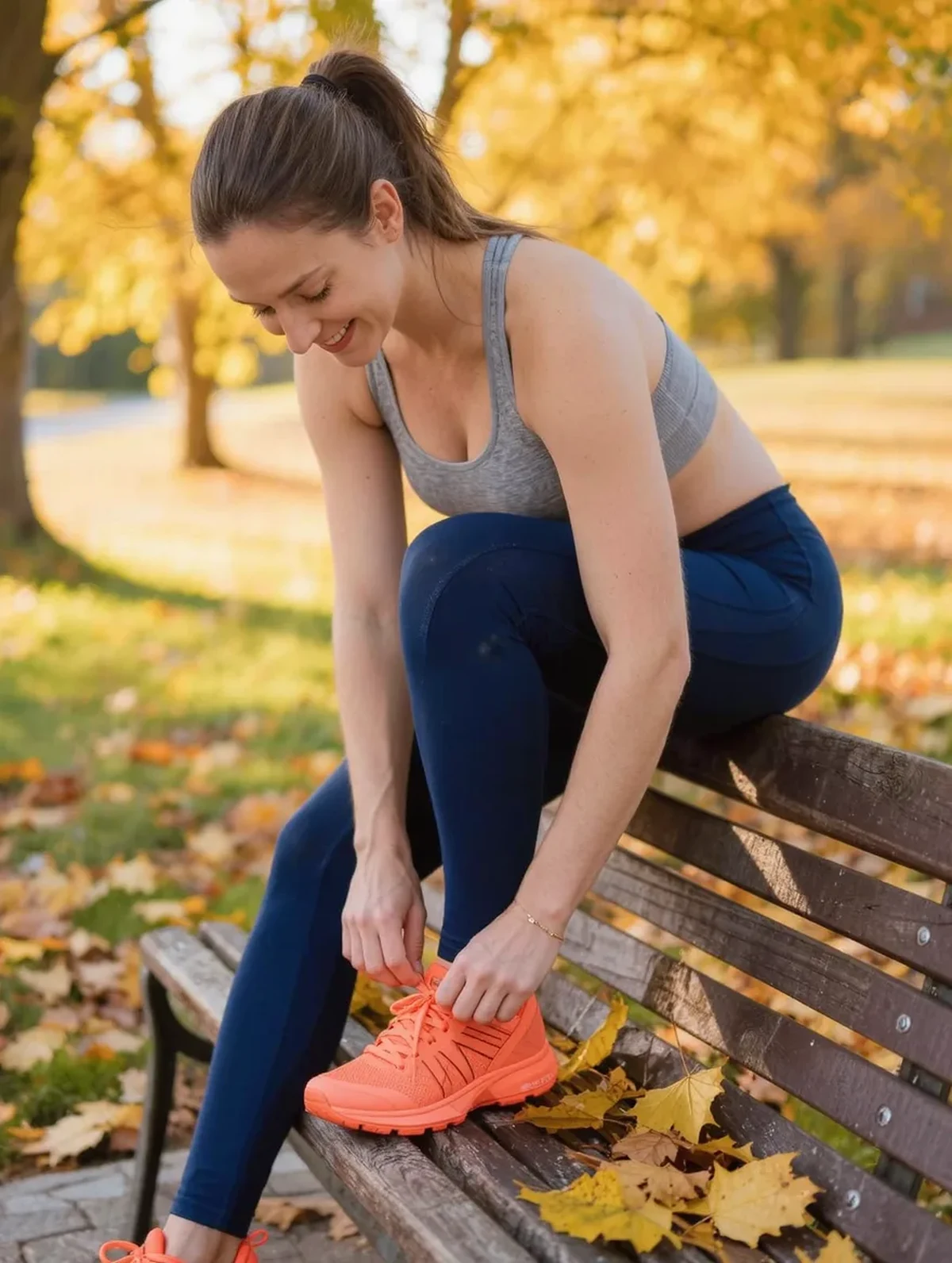
5 Mistakes Postpartum Runners Make With Fall Shoe Choices
Mistake 1: Assuming your pre-pregnancy size is still correct. As covered above, foot length and width can genuinely change and often stay changed. Get remeasured rather than guessing.
Mistake 2: Buying shoes in the morning. Feet are smallest first thing after waking and largest by evening, especially postpartum when mild fluid retention lingers longer into the day. Shop for running shoes in the afternoon or evening for a truer fit.
Mistake 3: Prioritizing cushion over stability. A maximally cushioned shoe feels plush in the store but can actually increase ankle wobble on uneven fall terrain if it lacks a firm, wide base. If you’re managing any residual ligament laxity, a shoe with a moderately firm midsole and a wider platform gives more real-world security than pillowy softness.
Mistake 4: Ignoring the outsole tread pattern. Not all rubber is equal. Multidirectional lug patterns handle wet leaves and mud dramatically better than the smooth, road-optimized soles built for dry summer pavement. If your shoe’s tread is worn smooth (check the forefoot and heel edges), that’s a fall hazard regardless of fit.
Mistake 5: Ignoring pain as “just needing to break the shoe in.” New arch aching, a hot spot on the outside of the foot, or numbness across the top of the foot after a run are signals the shoe doesn’t match your current foot shape — not signals to push through for a few more weeks. Persistent foot or ankle pain is worth mentioning to a doctor or physical therapist, particularly if it doesn’t ease with rest.
What Should You Actually Look For in a Fall Running Shoe Postpartum?
Start with width, not just length. Many postpartum runners do better in a shoe labeled “D” or “wide” in the midfoot even if the toe box fits fine in a standard width — the spreading tends to happen through the middle of the foot, not just the toes. Brands vary a lot here, so trying on rather than ordering by your old size matters more than usual right now.
Look for a firm, structured midsole with a wide base rather than maximum stack-height cushioning. Stability-category trainers (often labeled as such by running stores) are built with exactly this kind of ligament-laxity support in mind, even though they’re not marketed specifically to postpartum runners.
Check the outsole for multidirectional lugs, especially if any of your route touches trails, parks, or tree-lined streets where leaves accumulate. A quarter-inch of extra tread depth is a meaningful difference in October and November.
Finally, consider a half-size up from whatever your last fitting said, particularly if it’s been more than a year since you were last professionally measured, and particularly if you’re still breastfeeding — the mild fluid retention that comes with it can keep feet slightly larger for the duration.
A good running specialty store will measure both feet (they’re often slightly different sizes postpartum, more so than before), watch your gait, and let you test a few pairs on their in-store treadmill or slope. That twenty-minute investment usually saves months of unexplained foot pain once the fall running season gets going in earnest.
TL;DR:
- Pregnancy hormone relaxin loosens foot ligaments, and the resulting arch flattening and forefoot widening often doesn’t fully reverse postpartum
- Fall’s wet leaves, cooler temps, and uneven terrain expose an ill-fitting shoe faster than summer running does
- Get remeasured (afternoon/evening, both feet) rather than trusting your pre-pregnancy size
- Prioritize midfoot width, a firm stable base, and real outsole tread over pure cushioning
- New foot or ankle pain isn’t “breaking the shoe in” — it’s a fit signal worth listening to
Your feet did real structural work growing a human — give them a shoe built for who they are now, not who they were before.
See It in Motion
Seen here: Maternity Capris with Side Pockets — shop it on bubblelime.com
Keep Reading
This article is for general informational and styling purposes only. Fit, sizing, and product availability may vary.