Gentle Cardio to Ease Back Into Movement

Quick Answer: Start with walking — 10–15 minutes at an easy pace, most days, once you’ve been cleared (usually around 6 weeks, later after a c-section). Add low-impact options like swimming, cycling or gentle dance when walking feels easy. Build by roughly 10% a week, and back off immediately if you leak, feel heaviness in your pelvic area, or hurt.
The first time you try to move like you used to, your body files a complaint. Your lungs are fine but your pelvic floor isn’t, or you’re two blocks in and your energy just leaves.
That’s not a fitness problem. That’s a body that grew a person four months ago and is still rebuilding the plumbing. Cardio still belongs in your life — it just has to walk in quietly.

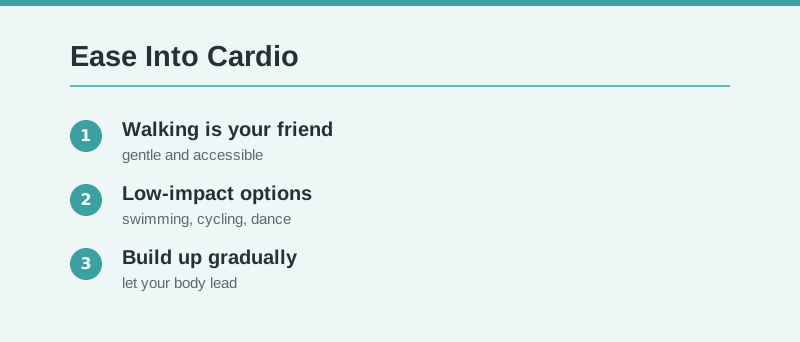
When Can You Start Cardio After Giving Birth?
The honest answer: after your provider clears you, and that timeline is personal. Many women get the go-ahead at the standard 6-week check after an uncomplicated vaginal birth. After a c-section, a difficult delivery, or significant tearing, it’s often later — 8 to 12 weeks, sometimes more.
That clearance is a floor, not a starting gun. Being cleared means it’s safe to begin gentle movement, not that your pelvic floor and core are back to pre-pregnancy capacity. Those take months.
Gentle walking, on the other hand, usually starts much earlier — often within days, in short easy strolls, with your provider’s okay. That’s not really “training.” It’s circulation, fresh air and a change of scenery, and in the early weeks it’s worth more than any workout plan.
Why Is Walking the Best Postpartum Cardio?
Because it asks almost nothing and gives back a lot. Walking is the perfect postpartum cardio for four concrete reasons:
- It’s low-impact. No jarring through a pelvic floor that’s still recovering.
- It scales precisely. You control distance, pace and hills to the minute.
- It fits a newborn’s schedule. Stroller, sling, nap window — it works around the baby instead of competing with them.
- It lifts your mood. Daylight plus movement plus getting out of the house is a genuine mental-health lever, not a soft one.
A realistic build: start at 10 minutes at a conversational pace, most days. When that feels easy for a full week, go to 15. Then 20. Then add a bit of pace or a gentle incline — but change only one variable at a time.
What Low-Impact Cardio Can You Add Next?
Once walking 20–30 minutes feels genuinely comfortable, you have options:
Swimming is the gentlest of all — the water carries your weight, so there’s essentially zero impact on joints or pelvic floor. Most providers ask you to wait until bleeding has fully stopped and you’re cleared for water, often around 6 weeks.
Stationary cycling gives you a controllable heart-rate stimulus with no impact at all. Start at 10–15 minutes on light resistance. Watch the saddle if you’re still tender.
Gentle dance or low-impact aerobics works if you keep both feet finding the floor — no jumping yet. It’s also the most fun of the three, which matters more than it sounds when you’re running on broken sleep.
Elliptical or incline treadmill walking bridges the gap toward running without the pounding.
Running is the one to hold back on. Most pelvic health physios suggest waiting until at least 12 weeks postpartum, and only after you can hop, jog on the spot and do single-leg work without leaking or heaviness.

How Fast Should You Build Up?
Slower than you want to. The rough guide is the 10% rule — increase total weekly time or distance by about 10% a week, not more.
But postpartum adds a variable nobody’s training plan accounts for: sleep. Some weeks you’ll progress. Some weeks the baby will be up every 90 minutes and holding steady is the win. That’s not falling behind — that’s the plan working.
A workable four-week ramp once you’re cleared:
- Week 1: 10 min easy walking, 4–5 days
- Week 2: 15 min easy walking, 4–5 days
- Week 3: 20 min, one day with a gentle hill
- Week 4: 20–25 min, add one 15-min swim or bike session
Let energy and symptoms set the pace, not the calendar.
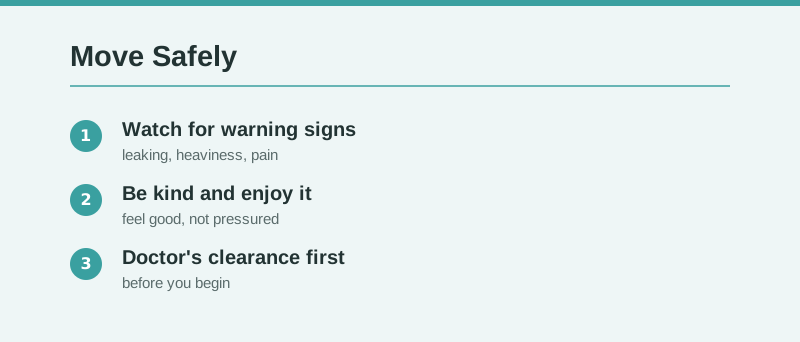
5 Warning Signs That Mean Ease Off
These aren’t failures. They’re data — your body telling you the load is ahead of the recovery.
- Leaking urine during or after the session. Common, not normal, and very treatable with pelvic floor rehab.
- Heaviness or dragging in the pelvic area — like something is sitting low. Stop and get assessed; this can signal prolapse.
- Pain anywhere — pelvis, back, incision, or the pubic bone.
- Doming or coning down the middle of your belly, which suggests your core isn’t managing the pressure yet.
- Bleeding that restarts or increases after activity — a sign you’ve done more than your body was ready for.
Any of these means scale back and, ideally, see a pelvic health physiotherapist. In many countries you can self-refer, and one appointment often changes everything. Persistent pain, heavy bleeding, or fever always warrant a call to your provider rather than a wait-and-see.
Be Kind About It (Genuinely)
The pressure to “bounce back” is loud and it is nonsense. You’re rebuilding stamina, mood and a sense of yourself, and cardio is a tool for all three — not a punishment for having had a baby.
Pick things you actually like. Celebrate the 10-minute walk you almost skipped. Rest when you need to, which will be often. Gentle movement that feels good becomes a habit; gentle movement that feels like an obligation gets abandoned by week three.
One practical thing: comfort removes friction. Postpartum bodies change size and shape for months, and a waistband that digs or rolls is a genuine reason people skip the walk. High waist yoga pants or maternity capris with a soft, non-binding band — nothing that presses on a c-section scar — make the difference between going out and staying in. Supportive shoes matter too; feet often change size after pregnancy.
FAQ
How soon after birth can I start walking?
Short, easy walks are often fine within the first days or weeks with your provider’s okay — that’s circulation and fresh air rather than exercise. Structured cardio that raises your heart rate usually waits for your postnatal clearance, typically around 6 weeks for an uncomplicated vaginal birth and later after a c-section.
Will cardio affect my breast milk supply?
Gentle to moderate cardio doesn’t reduce milk supply for most women. What can affect it is under-eating and under-hydrating, so add a little extra food and water on days you move more. Feeding or pumping before a session also makes it far more comfortable.
Can I do cardio if I have diastasis recti?
Yes — walking, swimming and cycling are generally fine with diastasis recti. What to avoid is anything that makes your belly dome or cone, or high-impact work before your core can manage the pressure. A pelvic health physio can assess your gap and tell you exactly what’s safe for you.
TL;DR:
- Get cleared first — around 6 weeks for vaginal birth, later after a c-section.
- Walking is the foundation. Start at 10 minutes, build to 20–30.
- Add swimming, cycling or gentle dance once walking feels easy; hold running until at least 12 weeks.
- Build by about 10% a week, and let sleep dictate the pace.
- Stop and get assessed for leaking, heaviness, pain, doming, or renewed bleeding.
- Choose movement you enjoy in gear that doesn’t dig — comfort is what makes it repeatable.
See It in Motion
Seen here: Maternity Capris with Side Pockets — shop it on bubblelime.com
Keep Reading
This article is for general informational and styling purposes only. Fit, sizing, and product availability may vary.