Cardio With Diastasis Recti: What's Safe, What Waits and What Helps

Quick Answer: With diastasis recti, cardio is safe when it manages intra-abdominal pressure. Walking, stationary cycling, swimming and the elliptical are generally fine once you’re cleared and symptom-free. Running, jumping, crunch-heavy classes and breath-hold intervals wait until your core handles pressure without doming. The gauge is simple: if a ridge appears down your midline during effort, that intensity is too much today. A pelvic-health physio is the best guide here.
Everything online contradicts everything else. Running feels risky. “Just walk” got old three weeks ago.
Diastasis recti — the postpartum abdominal separation — comes with cardio rules that nobody explains clearly, which leaves you either doing nothing or guessing.
Here’s the clear version: what’s genuinely safe now, what earns patience, and the signals that reopen the impact door.

What’s the one principle behind all the rules?
Diastasis management is intra-abdominal pressure management. That’s it — every verdict below is just this principle applied.
The gap heals when your core system can handle pressure without pushing it forward through the middle. So the question for any exercise isn’t “is this on the banned list?” — it’s “can my core manage the pressure this creates today?”
Two practical tools come from that:
The doming check. During effort, watch your midline. If a ridge or cone appears down the center of your abdomen, that intensity is more than your core can currently manage. It’s a gauge, not a failure — you adjust and continue.
The breath connection. Exhale on effort. That keeps pressure moving out rather than down and forward. It’s free, it takes a week to become automatic, and it makes everything on both lists safer.
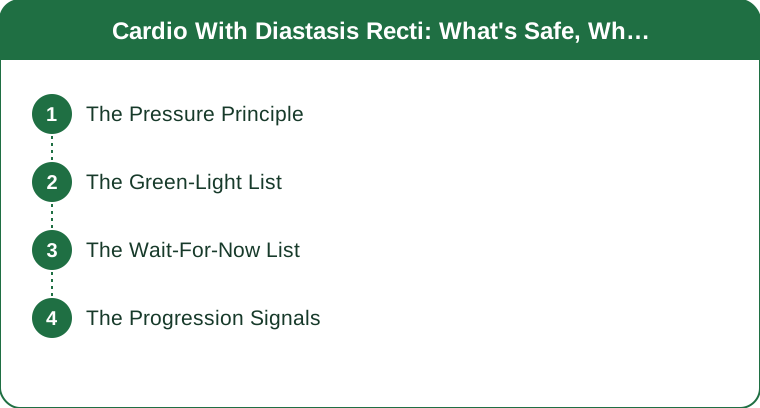
What cardio is safe with diastasis recti?
Safe from early on, assuming you’re cleared and symptom-free:
Walking, in all its forms. Flat, hilly, incline treadmill. This is the postpartum cardio backbone, and it progresses further than people expect — a brisk 4% incline walk is real cardiovascular work.
Cycling. Stationary first: the seated position is pressure-friendly. In a spin class, add resistance while seated rather than doing standing climbs.
Swimming and water walking, once you’re cleared for pools. Buoyancy takes load off the whole system.
The elliptical. Impact-free rhythm, easy to control intensity.
Low-impact follow-along workouts. The marching, stepping and knee-lift genre overlaps heavily with quiet-workout content, which is convenient if you’re training during a nap.
The key insight: intensity comes from pace and incline, not impact. Your heart rate climbs perfectly well with both feet staying on the ground.

What should wait?
Running and jumping. Impact multiplies downward pressure. The return runs through a readiness checklist — core and pelvic floor function — not just through the calendar.
Crunch-heavy “core cardio” classes. Repeated flexion under fatigue is the most reliable way to produce doming.
Breath-hold interval work. The strain-and-hold pattern spikes pressure sharply, and the exhale rule can’t keep up at maximum effort yet.
Twist-heavy formats. Loaded rotation waits for a core that can transfer force without bulging.
The wait is weeks to months, not forever — and it’s meaningfully shorter with dedicated rehab work than without.
How do you know you’re ready for impact again?
The reopening criteria most pelvic-health physios use:
- The gap generates tension. During effort, the midline feels like a trampoline rather than a crevasse. Depth matters less than whether it can generate tension.
- No doming through your current cardio at honest intensities — not just at easy ones.
- The pelvic floor co-signs. No heaviness, pressure or leaking during brisk walks and small hops.
- You test gently. Ten seconds of jogging with a body scan afterward is data. Symptoms are information, not verdicts.
The comeback sequence: walk → incline walk → harder cycling → low hops → run intervals. Each rung earned, none rushed.
Cardio was never canceled. It was re-ordered.
This is general wellness information, not medical advice. A pelvic-health physical therapist can assess your specific separation and pelvic floor function, and that assessment is worth more than any general guideline — see one before returning to impact, and sooner if you have pain, heaviness or leaking.
Myth vs Fact: diastasis recti and cardio
Myth: You have to wait until the gap fully closes before doing any cardio. Fact: Low-impact cardio is generally appropriate well before that, once you’re cleared and symptom-free. What matters is whether your core manages the pressure, not whether the measurement has reached a particular number.
Myth: The width of the gap is what determines your progress. Fact: Function matters more than measurement. A narrower gap with no tension is a worse outcome than a wider one that generates tension under load — which is why physios assess how the midline behaves during effort, not just how far apart it is.
Myth: Ab exercises will close the gap faster, so more is better. Fact: Crunch-style flexion under fatigue is one of the more reliable ways to produce doming. Targeted breathing and deep core work, progressed appropriately, does more than volume of traditional ab work.
Myth: If you had diastasis after one pregnancy, running is permanently off the table. Fact: Most people return to impact. The timeline varies from weeks to months and depends on rehab work and pelvic floor function — not on a permanent restriction.
A sample first month of cardio
Something concrete to start from, assuming you’re cleared and symptom-free:
Week 1–2: 20–30 minute walks, 4–5 days a week, flat ground. Practice exhaling on effort and check for doming when you pick up the pace.
Week 3: Add incline — 2–4% on a treadmill, or a hilly route. Same duration. Intensity is now coming from the incline, not from speed or impact.
Week 4: Introduce seated cycling twice a week, 20 minutes, moderate resistance. Keep the walks.
Throughout: pair this with whatever core and breathing rehab work your physio has given you. The cardio maintains fitness; the rehab work is what actually changes the gap. Both matter, and they aren’t substitutes for each other.
If doming appears at any point, drop back a step rather than pushing through. The progression waits; the healing doesn’t have to.
Frequently Asked Questions
Can you do cardio with diastasis recti?
Yes — low-impact cardio is generally appropriate once you’re medically cleared and symptom-free. Walking, stationary cycling, swimming and the elliptical all raise your heart rate without the downward pressure that impact creates.
When can I start running again after diastasis recti?
When your midline generates tension during effort, you see no doming at honest intensities, your pelvic floor shows no heaviness or leaking during brisk walking and small hops, and gentle jog intervals pass a body scan. Timeline varies widely, which is why a physio assessment beats a calendar.
Does walking help heal diastasis recti?
Walking supports healing indirectly — it builds general conditioning and circulation without adding intra-abdominal pressure. Closing the gap itself depends more on targeted core and breathing work, ideally guided by a pelvic-health professional.
TL;DR:
- The whole thing is pressure management: exhale on effort, and watch for doming as your gauge
- Safe now: walking and incline walking, seated cycling, swimming, elliptical, low-impact follow-alongs
- Wait on: running, jumping, crunch-heavy classes, breath-hold intervals, loaded twisting
- Get intensity from pace and incline instead of impact
- Progression: walk → incline → cycle harder → low hops → run intervals, with a physio’s input
See It in Motion
Seen here: Maternity Capris with Side Pockets — shop it on bubblelime.com
Keep Reading
This article is for general informational and styling purposes only. Fit, sizing, and product availability may vary.