The Best Gentle Exercises to Lose Baby Weight Safely

Quick Answer: The safest postpartum exercises are stroller walks, deep core breathing work, bodyweight strength, gentle yoga or Pilates, and baby-inclusive movement. Get medical clearance first — usually at the 6-week check, later after a cesarean. Start with 10-minute sessions rather than hour-long workouts: consistency drives postpartum weight loss far more than intensity, and your body is still repairing tissue.
You’ve been cleared to exercise. You have roughly eleven minutes of free time and approximately zero energy.
Every workout plan you find online assumes an hour, a gym, and a night of sleep. None of those exist right now.
Here’s what actually works in real new-parent life — and why “gentle” is the operative word, not a consolation prize.
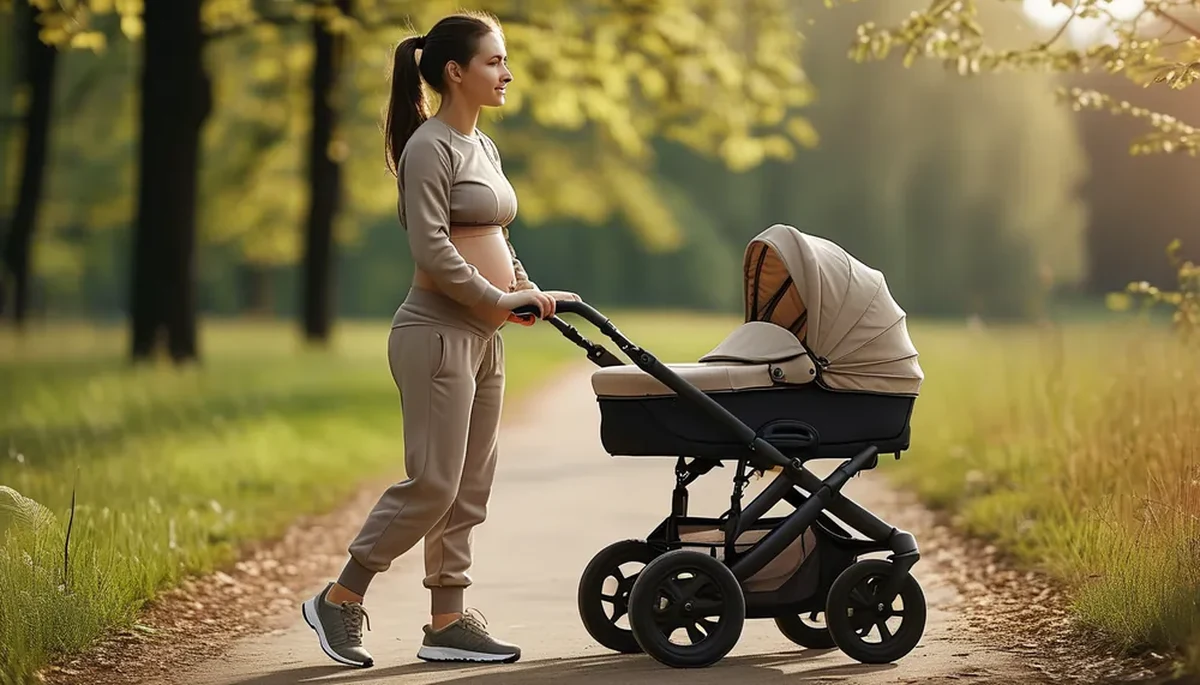
When Can You Start Exercising After Giving Birth?
The standard answer is your 6-week postpartum check, but the real answer is more nuanced.
Gentle walking and breathing work can often start within days for an uncomplicated vaginal birth — many providers actively encourage short walks in the first week for circulation and mood.
Structured exercise typically waits for clearance at 6 weeks after a vaginal birth, and 8–12 weeks after a cesarean, since that’s abdominal surgery with a healing incision underneath.
Running and high-impact work deserve more patience than most people give them. Current physiotherapy guidance suggests waiting until 12 weeks minimum, and ideally after a pelvic floor assessment — impact loading before the pelvic floor has recovered is a well-documented route to long-term problems.
Signs to stop and check in: bright red bleeding that increases with activity, pelvic heaviness or dragging, leaking urine during exercise, or pain at a cesarean scar.
Get your doctor’s clearance first, and let your body lead. Sustainable beats intense, every single time.
What Are the Best Gentle Postpartum Exercises?
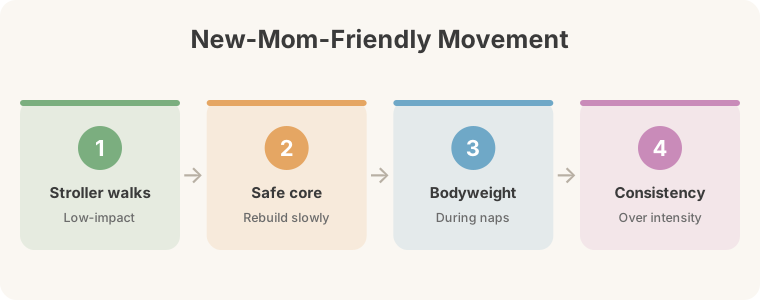
Five categories, roughly in the order you’d add them.
1. Walking, Especially Stroller Walks
The perfect postpartum exercise. Low-impact, mood-boosting, gets you daylight, and the baby comes along.
How to start: 10 minutes, flat route, week one. Add 5 minutes weekly. By week eight you’re at 45 minutes, which is a genuinely substantial amount of movement.
It genuinely counts — walking is the most reliably-completed exercise in postpartum research precisely because it needs no childcare, no equipment, and no changing clothes.
2. Postpartum-Safe Deep Core Work
Not crunches. Especially not crunches if you have diastasis recti (abdominal separation), which affects a majority of women immediately after birth.
Start here instead: diaphragmatic breathing with a gentle deep-core draw-in on the exhale. Lie on your back, knees bent, hands on your lower belly. Inhale wide into the ribs, exhale and gently draw the lower belly toward your spine. 10 breaths, twice daily.
Then progress to: heel slides, dead bugs with one limb at a time, and pelvic tilts. Add these once the breathing feels automatic — usually around week 3–4 of practice.
3. Bodyweight Strength
Gentle squats, modified (incline) push-ups against a counter, wall sits, and glute bridges. No equipment, and every one of them can be done in a naptime window.
A realistic starter set: 10 squats, 10 counter push-ups, 10 glute bridges. Twice through. That’s about 8 minutes.
4. Gentle Yoga or Pilates
Look specifically for postnatal classes, not general ones. Postnatal instructors modify for diastasis recti, pelvic floor recovery, and the joint laxity that relaxin leaves behind for months after birth.
5. Baby-Inclusive Movement
Baby-wearing walks, gentle squats holding the baby, floor time where you do your breathing work while they’re on the mat next to you. Turns bonding time into movement time — multitasking mom magic.
What Nobody Tells You About Postpartum Weight Loss
- Sleep matters more than the workout. Broken sleep raises cortisol and hunger hormones and reliably slows fat loss. Some nights the genuinely correct fitness decision is to nap instead of exercise. That’s not a failure; that’s the physiology.
- Breastfeeding burns roughly 450–500 calories a day — but it also raises appetite substantially, which is why it doesn’t automatically produce weight loss the way people expect.
- Relaxin stays in your system for months. Joints remain looser than usual for 3–6 months postpartum (longer while nursing), which means you’re more injury-prone in deep stretches and heavy lifts than you feel.
- Strength work beats cardio for body composition here. Rebuilding muscle you lost during pregnancy supports metabolism and, more importantly, makes carrying a rapidly-heavier baby sustainable.
- The timeline is nine months up, and often longer down. This is the one nobody says out loud, and it’s the one that causes the most unnecessary distress. Your body took most of a year to change; giving it a comparable window back is reasonable, not slow.
How Do You Fit Exercise Into Real New-Mom Life?
- Short and frequent. Three 10-minute blocks beats one 30-minute block you never start. The research on exercise accumulation supports this — it’s not a compromise.
- During naps, or with the baby present. Work around your actual reality rather than the one in the workout video.
- Be flexible. Some days you’ll rest. That’s part of the plan, not a deviation from it.
- Comfortable gear that works. Supportive activewear you can nurse in and move in removes a real friction point — high waist maternity capris with pockets or a soft nursing-friendly top means you’re not changing clothes to do 10 minutes of movement, which is often the deciding factor in whether it happens.
- Consistency over intensity. Always. This is the whole strategy in three words.

Frequently Asked Questions
How long does it take to lose baby weight?
Most people lose about half the pregnancy weight in the first six weeks (fluid, placenta, and blood volume), then the remainder gradually over 6–12 months. A loss of around 0.5–1 lb per week is a sustainable target once you’re eating adequately, and slower is normal while breastfeeding.
Can you do crunches after having a baby?
Not early on, and not at all if you have diastasis recti — traditional crunches increase intra-abdominal pressure and can worsen abdominal separation. Start with breathing-based deep core work and progress to heel slides and dead bugs. Check for separation by feeling above and below the navel while lifting your head off the floor.
Is it safe to diet while breastfeeding?
Severe calorie restriction can affect milk supply and isn’t recommended. Most guidance suggests eating at least 1,800 calories a day while nursing and aiming for gradual loss. Speak to your provider or a dietitian before restricting intake, especially in the first few months.
What exercises should you avoid postpartum?
Avoid high-impact work (running, jumping, HIIT) before 12 weeks and ideally before a pelvic floor assessment. Also avoid traditional crunches, full planks, and heavy lifting early on if you have diastasis recti or pelvic floor symptoms. Anything causing leaking, heaviness, or pain is a signal to stop.
When to Check With a Professional
See your provider for bleeding that increases with activity, pain at a cesarean scar, or any pelvic pain. A pelvic health physiotherapist is genuinely worth the appointment for anyone experiencing urinary leaking, a feeling of heaviness or bulging, painful intercourse, or a diastasis gap wider than two fingers — these are common, they are not something to just live with, and they respond very well to treatment.
If low mood, anxiety, or intrusive thoughts are making daily life hard, please contact your provider or a maternal mental health service. Postpartum depression and anxiety are common, treatable, and not something exercise alone should be expected to handle.
This article is for general informational purposes only and isn’t medical advice. Always get medical clearance before postpartum exercise.
TL;DR:
- Get clearance first — 6 weeks after a vaginal birth, 8–12 after a cesarean, 12+ before impact work.
- Five gentle options: stroller walks, deep core breathing, bodyweight strength, postnatal yoga, baby-inclusive movement.
- Start at 10 minutes and add 5 a week. Three short blocks beat one long one you never start.
- No crunches early on, especially with diastasis recti. Breathing work first, then heel slides and dead bugs.
- Sleep and consistency drive results more than intensity. Nine months up often means longer coming down — that’s normal.
See It in Motion
Seen here: Maternity Capris with Side Pockets — shop it on bubblelime.com
Keep Reading
This article is for general informational and styling purposes only. Fit, sizing, and product availability may vary.