The Truth About Your Postpartum Belly

You had the baby weeks ago, but your belly still looks like you’re five months along, and every time you catch your reflection it stings a little. If you’ve stood in front of the mirror asking why, you’re in enormous company — this is one of the most common, least-talked-about parts of new motherhood.
Quick Answer: A rounded postpartum belly is normal for weeks to months after birth. Your uterus needs about six weeks to shrink back toward its previous size, your abdominal muscles were stretched (and sometimes separated) over nine months, and your skin and connective tissue recover on their own slower timeline. Gentle deep-core work, walking, patience, and a pelvic-health physical therapist (if you notice doming or a wide gap) are what actually help — not wraps or teas.
The postpartum belly has real anatomy behind it, and understanding that beats every quick fix on the internet.

How long does it take your uterus to shrink after birth?
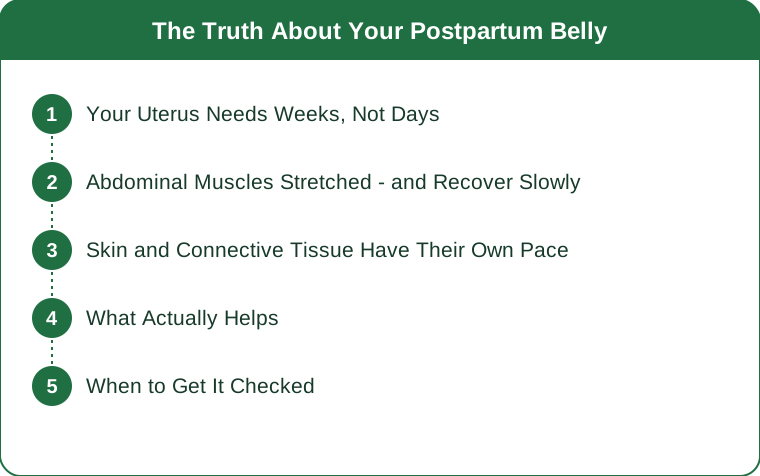
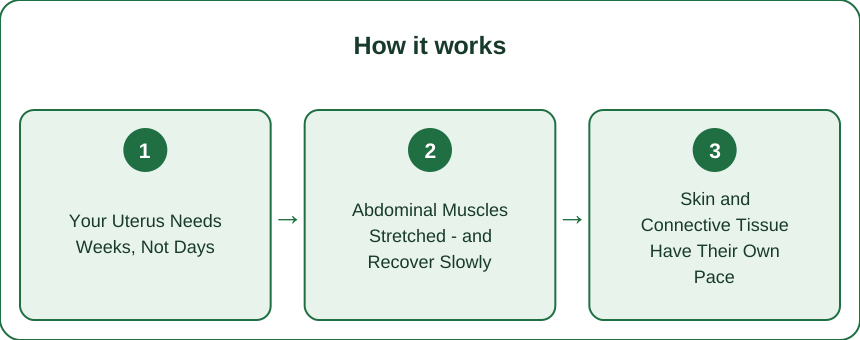
After birth, your uterus takes about six weeks just to shrink back toward its previous size. This process is called involution, and until it’s complete, a rounded belly is literal biology, not a fitness failure.
Give your organs time to move back home before you judge how your midsection looks. Nothing about this timeline is optional or something you can rush with crunches or willpower.
Why do your abdominal muscles take so long to recover?
Nine months of stretching leaves your abdominal wall lengthened and often separated down the middle, a condition called diastasis recti. These tissues regain tension gradually, often over several months rather than weeks.
Gentle deep-core work speeds this recovery along; jumping into crunches or intense ab work too early can actually slow it down or make a separation worse. Slow and steady really is the faster route here, even though it doesn’t feel that way.

Why won’t your skin snap back right away?
Skin that expanded over months won’t snap back in weeks, and that’s completely normal — skin simply doesn’t work on the same timeline as muscle. Hydration, protein, and time genuinely help it regain some elasticity.
Comparing your tummy to filtered photos on social media helps no one, and it’s worth remembering that most of what you see online has been retouched, styled, or photographed at a flattering angle. Your body just did something enormous.
What actually helps your postpartum belly heal?
Deep core breathing, pelvic floor work, walking, and eventually progressive strength training rebuild your midsection from the inside out. Sleep and stress management matter more than any wrap or tea — a stressed, exhausted body holds onto tension and inflammation.
Slow is not just okay here — it’s the actually effective route. Most people notice real, visible changes over 3 to 12 months, with continued gradual improvement well beyond that as strength rebuilds.
What nobody tells you about the postpartum belly
- It can take a full year (or more) to feel like “you” again, and that’s still considered a normal timeline, not a slow one.
- A soft, rounded lower belly can be permanent for some people, even with plenty of core work — bodies don’t all reset to a pre-pregnancy blueprint, and that’s okay.
- Breastfeeding hormones can affect how your midsection looks and feels, adding another layer that has nothing to do with effort.
- Almost everyone compares their belly to someone else’s “bounce back,” and almost everyone loses that comparison — because you’re rarely seeing the whole, unfiltered picture.
- The one thing that surprises even physical therapists: crunches are often the wrong first move, and gentle breathing work outperforms them for real diastasis recovery.
When should you get your belly checked by a professional?
If your belly domes or cones when you sit up, or you feel a wide gap or ongoing back pain, a pelvic-health physical therapist can properly assess you for diastasis recti. It’s common — affecting a large share of postpartum people to some degree — and very treatable with the right guidance.
Getting an assessment early makes recovery smoother and helps you exercise safely instead of guessing. This isn’t a sign anything went wrong; it’s just good, proactive care for a body that did something remarkable.
Is it normal to still look pregnant six months postpartum?
Yes, for many people it is. Muscle, skin, and connective tissue all recover on different timelines, and six months is still early in that process for a lot of bodies.
Will exercise alone fix diastasis recti?
Gentle, correctly-done core and breathing exercises help significantly, but a real gap benefits from professional assessment first. A pelvic-health physical therapist can tailor a plan instead of leaving you guessing at home.
How do you know if it’s diastasis recti versus normal postpartum belly?
A telltale sign is a visible dome or ridge down the center of your belly when you sit up or engage your core. If you notice that, or a gap you can fit fingers into, it’s worth getting checked rather than assuming it will resolve on its own.
TL;DR
- Your uterus needs about six weeks to shrink back; a round belly right after birth is normal biology.
- Stretched abdominal muscles (and possible diastasis recti) recover gradually, often over months.
- Skin and connective tissue have their own slower timeline — don’t compare yourself to filtered photos.
- Deep core work, walking, sleep, and stress management help more than wraps or quick fixes.
- Full recovery can reasonably take 3 to 12 months or more, and that’s still normal.
- See a pelvic-health physical therapist if you notice doming, a wide gap, or back pain.
Your postpartum belly isn’t a problem to hide — it’s a body mid-repair, right on schedule. Support it with deep core work, patience, and kindness, and it will change steadily. You grew a human; the timeline is allowed to be human too.
See It in Motion
Seen here: Maternity Capris with Side Pockets — shop it on bubblelime.com
Keep Reading
This article is for general informational and styling purposes only. Fit, sizing, and product availability may vary.