The Postpartum Body Changes That Are Actually Permanent (and the Ones That Aren't)

Quick Answer: Swelling, most hair shedding, uterus size, most diastasis recti and eventually your sleep all genuinely resolve — just on a slower timeline than the marketing suggests. Foot size, stretch marks and skin laxity, rib cage width, breast tissue composition, and a portion of core and pelvic floor changes are often permanent. Permanent doesn’t mean you did recovery wrong; some of it is structural and no amount of effort undoes it.
Postpartum recovery content promises everything eventually bounces back. Then a year passes, and your shoes still don’t fit.
That gap between the promise and your actual body is where a lot of unnecessary self-blame lives. So here’s the honest split — what genuinely heals, what genuinely doesn’t, and how to sit with the second list without treating it as a personal failure.


What Postpartum Changes Actually Resolve With Time?
Swelling and fluid retention. For the vast majority of women this clears within the first few weeks. It’s dramatic while it’s happening and then it’s simply gone.
Hormone-driven hair shedding. The shedding that starts around month three feels alarming and resolves substantially within about a year as hormones settle. You are not going bald. You are on a schedule.
Uterus size and position. Back to close to pre-pregnancy over roughly six weeks. This one is reliable enough to be boring, which is the nicest thing you can say about a recovery timeline.
Most diastasis recti. The majority of abdominal separation improves significantly with time plus targeted core work. Note the honest wording: most, and significantly — not universally to zero.
Energy and sleep. These ease as your baby’s sleep matures. The catch is that the timeline belongs to the baby, not to you, and it varies enormously between children.
The reframe: this list is real. These things heal. They just heal slower than a six-week postpartum check-up and a “bounce back” headline imply.

What Postpartum Changes Are Actually Permanent?
Foot size can change for good. Pregnancy hormones loosen ligaments, and for some women the arch settles lower and stays there. This is the most under-discussed permanent change on the list — nobody warns you that you might simply have different feet now.
Some skin changes don’t fully reverse. Stretch marks fade a lot in colour and texture over the first couple of years, but they rarely disappear entirely. Skin laxity behaves similarly: much better, not always original.
Rib cage width can shift permanently. Your ribs physically expanded to make room, and for some women they don’t come all the way back. This is a structural change, not a soft-tissue one — which is exactly why no amount of core work addresses it, and why a pre-pregnancy dress can refuse to zip while every other measurement matches.
Breast tissue composition often changes for good. Shape and tissue composition frequently don’t fully revert, and this happens regardless of whether you breastfed and regardless of how much chest work you do. Feeding method is not the variable people think it is.
Some diastasis and pelvic floor changes persist. For a portion of women, dedicated rehabilitation improves function substantially without returning things to exactly how they were. Better and functional is a genuine outcome even when identical isn’t on offer.
The frame that matters: every item on this list is physical and structural. None of it is a report card on your effort.
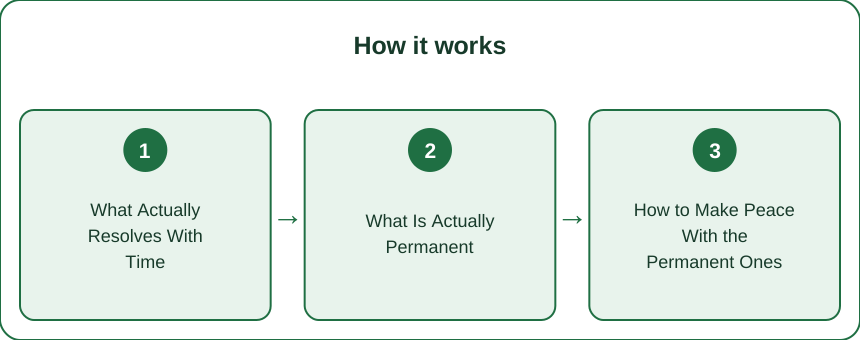
How Do You Make Peace With the Permanent Ones?
Separate effort from outcome. A permanent change is not evidence you didn’t work hard enough. Ligaments that loosened and a rib cage that widened are outside the reach of exercise, and no programme was ever going to fix them. Working harder on something structural just produces exhaustion with the same result.
Trade appearance for function. “Can I carry my kid up two flights without my back complaining?” is a more useful question than “does this match a photo from three years ago?” — and unlike rib width, it’s a question you can actually change the answer to.
Let grief be grief. You’re allowed to be sad about a body you don’t recognise without immediately arriving at gratitude. Nobody needs you to be inspirational about this by Tuesday. Grief and love for your body coexist perfectly well; it’s the pressure to skip straight to acceptance that makes it worse.
Blame the standard, not yourself. “Bounce back” was always marketing language, not a medical timeline. It described a product’s promise, not a body’s biology. You didn’t fail to meet a standard — the standard was wrong.
Read the changes as evidence. The wider ribs made room for a person. The looser ligaments were the point. That’s not a consolation-prize reframe; it’s just an accurate description of what happened.
What Nobody Tells You
- Shoe size is on the list. Many women quietly replace their entire shoe collection and assume it’s just them.
- Breastfeeding isn’t the variable. Breast tissue changes happen with formula feeding too. The pregnancy did it, not the feeding.
- Rib width explains the zip problem. When every measurement matches and a dress still won’t close, this is usually why.
- “Most” diastasis resolving means some doesn’t. A residual gap after honest rehab is a known outcome, not a sign you skipped the exercises.
- The year-one hair regrowth looks like a fringe. Those short spiky bits at your hairline are healthy new growth. Everyone gets them; nobody photographs them.
Frequently Asked Questions
How long before I know if a change is permanent?
Roughly the 12–18 month mark is a fair assessment point for most soft-tissue changes — hair, swelling, much of the skin change. Structural changes like rib width and foot size are usually apparent well before that. If you’re still waiting at two years, you’re likely waiting on something that has already settled.
Can exercise reverse a wider rib cage or bigger feet?
No, and that’s the useful thing to know. Both are structural — bone position and ligament length. Exercise does a great deal for strength, posture and how you carry yourself, but it doesn’t reverse either of these, and it isn’t a failure of your programme that it doesn’t.
Does that mean core work is pointless if my diastasis doesn’t fully close?
Not remotely. The goal is tension and function across the midline, not a gap width of zero. A functional core with a small residual separation is a genuinely good outcome, and it’s the one most rehab is actually aiming at.
What’s easiest to wear while all of this settles?
Whatever accommodates a body that’s still changing, so you’re not fighting your waistband every day. High waist leggings with a soft, wide band are the low-effort option — they work across a fairly wide range of shape changes, which matters when the shape is still moving.
When to See a Professional
See a pelvic floor physiotherapist if you have leaking, heaviness or pressure in the pelvis, pain during sex, or a separation that isn’t improving with consistent work. See your doctor for persistent pain, and for low mood or anxiety that’s lasting beyond a few weeks — postpartum mental health is treatable and it is not something to wait out. None of these are things to file under “just how it is now.”
TL;DR:
- Resolves: swelling, most hair shedding, uterus size, most diastasis recti, and eventually sleep — slower than the marketing implies.
- Often permanent: foot size, stretch marks and some skin laxity, rib cage width, breast tissue composition, and some core or pelvic floor change.
- Structural changes like rib width and foot size are beyond what exercise can reverse — that’s biology, not effort.
- Value function over matching an old photo, and let grief exist without rushing to gratitude.
- “Bounce back” was marketing, not a medical timeline. The standard was wrong, not you.
- Leaking, pelvic pressure, pain, or lasting low mood all warrant a professional — not patience.
See It in Motion
Seen here: Maternity Capris with Side Pockets — shop it on bubblelime.com
Keep Reading
This article is for general informational and styling purposes only. Fit, sizing, and product availability may vary.