Postpartum Cardio: How to Rebuild Endurance Without Overdoing It

Quick Answer: Build walking duration first, then add pace and gentle inclines, then low-impact machines like a bike or elliptical — and only return to jogging once you’re cleared and your pelvic floor handles it without leaking or heaviness. Progress across weeks, not days. Leaking, increased bleeding, all-day exhaustion or any pain means back off.
The urge to just go for a run again is strong, and completely understandable.
The problem is that your heart, your pelvic floor and your hormone-loosened joints are all on different recovery schedules, and none of them are on the one in your head. Rush it and you lose more weeks than patience would have cost you.

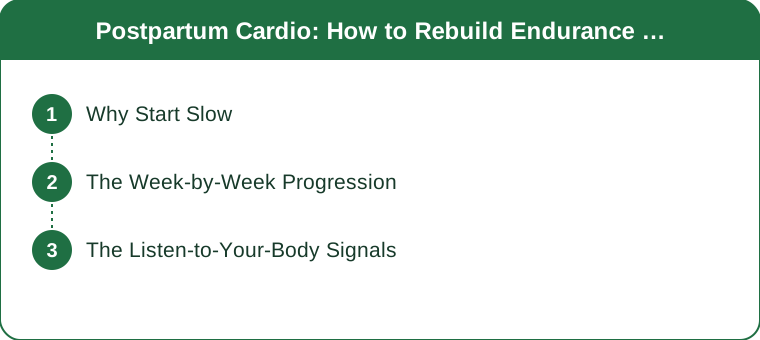
Why Do You Need to Start Slow?
Healing continues invisibly. Internal recovery runs for weeks after you feel fine on the outside. Feeling ready and being ready are different measurements, and only one of them is visible.
The pelvic floor comes before impact. Every running step sends load through a pelvic floor that’s still recovering. Leaking or a feeling of heaviness means the foundation isn’t ready — and running on it doesn’t strengthen it, it just tests it.
Relaxin lingers. The hormones that loosened your joints for delivery don’t clear immediately, and loose joints plus sudden intensity is how postpartum injuries happen. Your ankles and knees need easing back in.
Sleep debt slows everything. Recovery is worse and effort feels harder on broken sleep. A session that would have been easy pre-baby genuinely is harder now, and that’s physiology rather than fitness.
Clearance first, especially after a caesarean. Get your provider’s go-ahead, and ask specifically what you’re cleared for rather than settling for a general yes.
The reframe: postpartum cardio is a rebuild that respects invisible healing. Patience now buys a stronger comeback later.

What Does the Week-by-Week Progression Look Like?
Start with walking. Daily gentle walks are the foundation. Build duration first — from 10 minutes to 20 to 30 — before touching pace. Boring, and it works.
Add pace, not impact. Once 30 comfortable minutes is routine, walk briskly and add gentle inclines. You get real cardiovascular work with zero pounding, which is exactly the trade you want right now.
Bring in low-impact machines. A stationary bike or elliptical adds genuine endurance work without jarring anything. This is where you can start pushing effort meaningfully.
Test readiness for impact. Before jogging: cleared by your provider, no leaking during or after exercise, no pelvic heaviness or dragging, and comfortable brisk walking for 30 minutes. Then try 1 minute of jogging in a walk, and check how you feel that evening and the next day. Ideally get a pelvic health physiotherapist to assess you first.
Intervals come later. Build the aerobic base before adding hard efforts. Intervals on an unbuilt base produce fatigue rather than fitness.
Duration before intensity, always. Lengthen your easy sessions first. Adding hard sessions to short ones is the most common way people stall.
Progress week to week, not day to day. Add roughly 10% a week, and repeat a week — or step back one — after a bad stretch of nights. Sleep is a legitimate input to this.
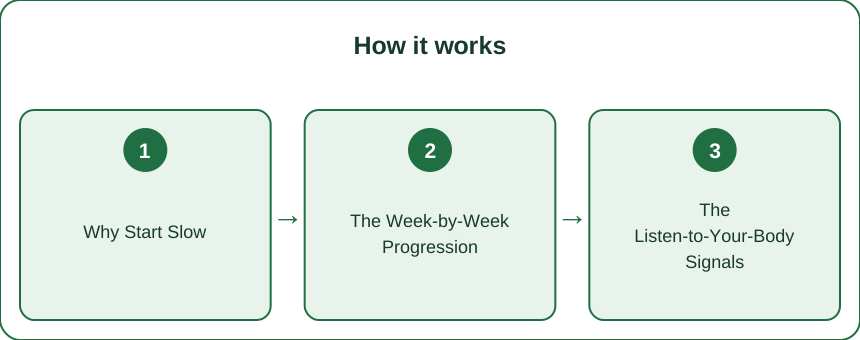
What Signals Tell You to Adjust?
Pelvic floor feedback. Leaking, heaviness or pressure during or after activity is the clearest signal there is. Reduce impact, rebuild the floor, and get assessed. This is not something to push through.
Bleeding. An increase after activity means you did too much. Scale back to the last amount that didn’t and hold there.
Drained versus energised. Good cardio leaves you a bit more alive afterwards. If a session flattens you for the rest of the day, the dose was wrong — usually too long rather than too hard.
Pain anywhere. Joint, pelvic, abdominal. A stop sign, not a challenge.
Recovery between sessions. You should feel roughly recovered by the next one. Accumulating fatigue week over week means the progression is outrunning your recovery.
5 Mistakes New Mothers Make With Cardio
- Going straight back to running — skipping the walking base entirely and testing the pelvic floor with 5km.
- Ignoring leaking — treating it as normal postpartum life rather than as the signal it is. It’s common, but it’s treatable.
- Adding intensity before duration — hard sessions on a base that isn’t built yet.
- Progressing on the calendar — “I’m eight weeks post-birth so I should be doing X” rather than progressing on how you actually respond.
- Not factoring in sleep — pushing after three broken nights and concluding you’ve lost all your fitness.
Frequently Asked Questions
When can I start running after having a baby?
Most guidance points to around 12 weeks at the earliest, and only with clearance, no leaking or heaviness, and a solid walking base. A pelvic health physiotherapy assessment beforehand is the gold standard, and a lot of women find they need longer than 12 weeks — which is normal, not a delay.
Is it normal to leak when I run postpartum?
It’s common, but it isn’t something to accept and work around. Leaking means the pelvic floor isn’t managing the load yet. Reduce impact, get assessed by a pelvic health physio, and it’s very often resolvable.
How much cardio is too much postpartum?
Judge by response rather than by a number. If you recover by the next session, sleep well, and don’t get leaking or increased bleeding, the amount is right. If any of those slip, it’s too much regardless of how modest it looks on paper.
What should I wear for postpartum cardio?
Supportive footwear matters more than usual with loosened joints — replace worn-out shoes before you build back up. For clothing, a high-waisted legging with a wide, soft band that doesn’t press on a caesarean scar is the practical choice, and side pockets earn their keep when you’re walking with a pram.
When to See a Professional
See a pelvic health physiotherapist for any leaking, pelvic heaviness or pressure, or before returning to running — it’s the highest-value appointment in postpartum recovery and it’s badly under-used. Contact your provider for increased or bright red bleeding, fever, or worsening pain. This article is general information, not medical advice.
TL;DR:
- Start slow because healing is still happening internally, relaxin lingers, and sleep debt slows recovery.
- Order: walking duration → pace and inclines → low-impact machines → impact, once cleared and leak-free.
- Build duration before intensity, and add intervals only after the aerobic base is back.
- Progress about 10% week to week, and repeat or step back a week after bad nights.
- Leaking, increased bleeding, all-day exhaustion or any pain all mean back off.
- Get a pelvic health physio assessment before returning to running.
See It in Motion
Seen here: Maternity Capris with Side Pockets — shop it on bubblelime.com
Keep Reading
This article is for general informational and styling purposes only. Fit, sizing, and product availability may vary.