The Postpartum Timeline Nobody Posts: What Actually Comes Back When

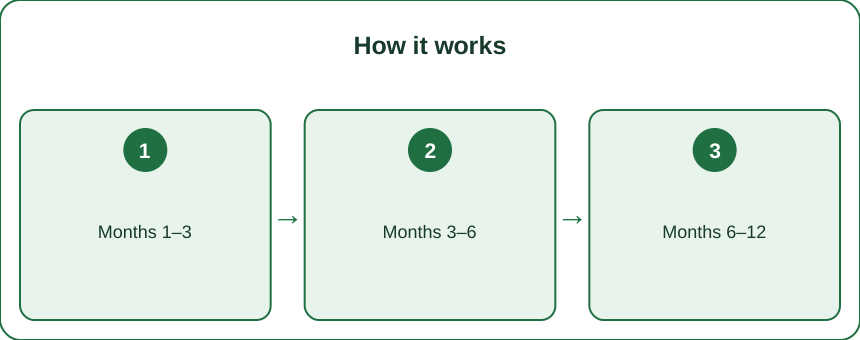
Quick Answer: Realistic postpartum recovery runs about twelve months, not six weeks. Months 1–3 are walking, breathing work, and pelvic floor rehab — invisible and load-bearing. Months 3–6 bring gradual strength work after clearance. Months 6–12 rebuild cardio and core stability, nonlinearly, with sleep regressions taxing the budget. C-sections, feeding choices, and your specific birth all rewrite the schedule, and your clinician outranks any timeline including this one.
Social media’s postpartum timeline runs roughly six weeks from birth to bikini.
Biology’s version runs closer to a year, with detours, and includes several months where the honest progress report is “I walked to the mailbox and it was hard.”
Here’s the realistic map — because comparing your month three to a stranger’s filtered month twelve is a losing sport, and it’s a sport almost everyone gets recruited into around week five.

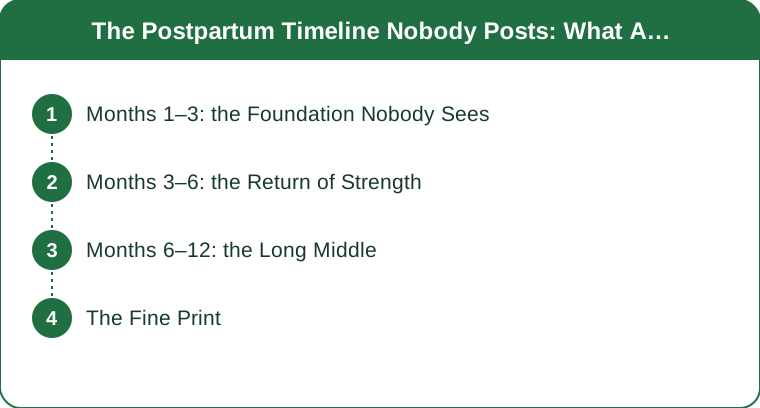
What Happens in Months 1–3 Postpartum?
Walking. Breathing work. Pelvic floor rehab. Sleep triage.
That’s the whole program, and it looks like nothing from the outside while rebuilding essentially everything underneath.
What’s actually happening: your abdominal wall is reconvening after months of stretch, your pelvic floor is recovering from either delivery or a long pregnancy or both, relaxin is still loosening ligaments for a while after birth, and your blood volume is renormalizing. None of that is visible and all of it is structural.
What to do in practice:
- Short walks, built gradually. Five minutes is a legitimate starting point.
- Diaphragmatic breathing — this is genuine core work, and it’s the foundation the rest builds on. Inhale to expand the ribs, exhale and feel the deep core engage.
- Pelvic floor work as directed. Not automatically kegels: some postpartum pelvic floors are too tight rather than too weak, and a pelvic floor physical therapist can tell you which you are. This is the single highest-value referral available and it’s chronically underused outside of France.
- Sleep whenever it’s structurally possible, which it often isn’t.
The invisible months are load-bearing. Rushing them is how setbacks get scheduled — most of the “I did too much too soon” stories start in week five.
When Can You Start Strength Training Again?
Once you’re cleared — and clearance is a conversation, not a calendar date — strength work re-enters gently.
Squats. Glute bridges. Light weights. Rows and presses. Body-weight before load, and load added slowly.
Energy comes back in patches rather than in a line. Some days feel almost normal, which itself feels almost suspicious after three months of not-normal. Then the next day doesn’t, and that’s not a regression, it’s just the shape of it.
Two things worth watching in this window:
- Coning or doming along the midline when you sit up or exert — that’s a sign the exercise is more than your abdominal wall is currently ready for. Scale back and mention it at your next appointment.
- Leaking, heaviness, or pressure in the pelvic floor during exercise. Common, and specifically not something to push through or accept as permanent. It’s the clearest signal to see a pelvic floor PT.

What Should You Expect From Months 6–12?
Cardio rebuilds. Core stability consolidates. Jeans negotiate a settlement.
This is the stretch where progress is genuinely real and completely nonlinear. Teething weeks tax the budget. Sleep regressions arrive on no schedule and cost you a fortnight. An illness moves through the house and everything pauses.
The trend matters. The Tuesday does not. If you’re measuring in weeks you’ll conclude nothing’s working; if you’re measuring in months, the line is clearly going the right way.
What tends to come back in roughly this order: walking endurance, then general strength, then cardio capacity, then core stability under load, then whatever your pre-pregnancy sport was. Running specifically is worth delaying — most pelvic health guidance suggests waiting until at least three to six months and until you can hop, single-leg balance, and walk 30 minutes without symptoms.
What Nobody Tells You About Postpartum Recovery
A c-section is abdominal surgery and the timeline reflects that. Add roughly 6–8 weeks to the early phases and expect scar tissue to need its own attention. Scar massage, once healed and with clearance, makes a real difference to how the abdominal wall functions later.
Breastfeeding changes the equation. It adds a caloric demand of roughly 300–500 a day and keeps some hormonal shifts running longer. Aggressive calorie restriction while feeding is a bad trade in both directions.
Weight and body composition move on their own schedule, largely independent of effort in the first six months. Sleep deprivation alone affects appetite regulation and cortisol enough to hold things flat regardless of what you’re doing.
Twelve months isn’t a deadline. Plenty of people feel fully themselves at eight months and plenty at twenty. Neither is a failure state.
Your mental health is part of the recovery timeline, not separate from it. Postpartum depression and anxiety are common, treatable, and frequently missed because everyone assumes exhaustion explains everything. If the low mood, anxiety, intrusive thoughts, or flatness has been there for more than two weeks, tell your doctor or midwife. That call is as much a part of recovery as any of the exercise above.
Every body, every birth, and every baby rewrites this schedule. Your clinician outranks any timeline, including this one.
Mini FAQ
When can you start exercising after giving birth?
Gentle walking and breathing work can usually begin within days for an uncomplicated vaginal birth, and are often encouraged. Structured exercise typically waits for the 6-week check, and longer after a c-section or a complicated delivery. The 6-week clearance is a starting line, not a finish line — it means “begin,” not “resume everything.”
How long does it really take to feel normal again?
Most people report feeling substantially like themselves somewhere between 9 and 18 months, with a wide honest range on either side. The first three months are the hardest and the least visible. If it’s taking longer than you expected, that’s common rather than concerning — though persistent exhaustion or low mood is worth raising with a clinician.
Is diastasis recti permanent?
Usually not. Some degree of abdominal separation happens in most pregnancies and the majority resolves substantially within the first year, especially with appropriate deep core work. A gap that persists past a year, or one causing functional problems, can be addressed with physical therapy — surgery is a last resort and rarely needed.
TL;DR:
- The real timeline is about a year, not six weeks — and the first three months are invisible and load-bearing.
- Months 1–3: walking, diaphragmatic breathing, pelvic floor rehab, sleep triage.
- Months 3–6: gentle strength after clearance. Watch for coning and any pelvic floor symptoms.
- Months 6–12: cardio and core stability rebuild, nonlinearly. Measure the trend, not the Tuesday.
- C-sections, feeding, and your specific birth all rewrite the schedule — and persistent low mood is a doctor conversation, not a discipline problem.
One year, four seasons of recovery, zero six-week miracles required. Run your own race at nap pace, celebrate the invisible months, and let the highlight reels lose their audience of one.
See It in Motion
Seen here: Maternity Capris with Side Pockets — shop it on bubblelime.com
Keep Reading
This article is for general informational and styling purposes only. Fit, sizing, and product availability may vary.