Realistic Postpartum Weight Loss (Without the Pressure)

Quick Answer: Realistic postpartum weight loss is gradual — a gentle, sustainable pace that respects healing tissue, disrupted sleep and (often) breastfeeding demands. Nourish rather than restrict, start with walking once you’re medically cleared, and expect a nonlinear timeline measured in many months, not weeks. Get your provider’s clearance before starting any exercise or calorie reduction.
Let’s start by throwing out the phrase “bounce back.”
Your body grew and birthed a human. It doesn’t owe anyone a rapid return to anything — least of all a stranger on the internet with a six-week transformation reel and a discount code.
Real, lasting postpartum weight loss is gentle, gradual, and kind to a recovering body and an exhausted new mom. Here’s a realistic approach that skips the pressure and actually works.

Why Is “Bouncing Back” the Wrong Goal?
Because it frames recovery as a deadline you’re failing to meet.
Here’s what’s actually happening in your body in the months after birth: your uterus is shrinking back over roughly six weeks, connective tissue that stretched over nine months is slowly remodeling, blood volume is renormalizing, and hormones are shifting on their own schedule. If you’re breastfeeding, you’re also running a genuine daily energy cost on top of all of it.
The single most important shift is this: postpartum weight loss should be gentle and gradual, working with your recovering body rather than against it.
Crash diets and extreme exercise are counterproductive here in a way they aren’t at other life stages. Aggressive restriction while healing can slow tissue repair, tank already-scarce energy, and for some people affect milk supply. Slow and steady genuinely wins, and grace matters more than speed.
What Does a Realistic Timeline Actually Look Like?
Most of the honest answers here are longer than the internet’s answers.
- Weeks 0-6: Recovery only. No structured exercise, no deliberate calorie reduction. Walking to the mailbox counts as movement and that’s fine.
- After your postpartum check-up (typically around 6 weeks, longer after a cesarean): gentle movement once your provider clears you. Walking, core-and-pelvic-floor rehab work, light mobility.
- Months 2-6: Gradual increase in activity as energy allows. Any weight change in this window is usually slow and interrupted.
- Months 6-12 and beyond: Where most sustainable change actually happens, once sleep is marginally more reliable and routines exist.
A common guideline for people not breastfeeding is aiming for a slow rate of loss rather than a dramatic one, and slower still while breastfeeding. Progress isn’t linear, and that’s normal. Some weeks the scale moves, some weeks it doesn’t, some weeks you’re too tired to have noticed either way.
The Five Habits That Actually Hold Up
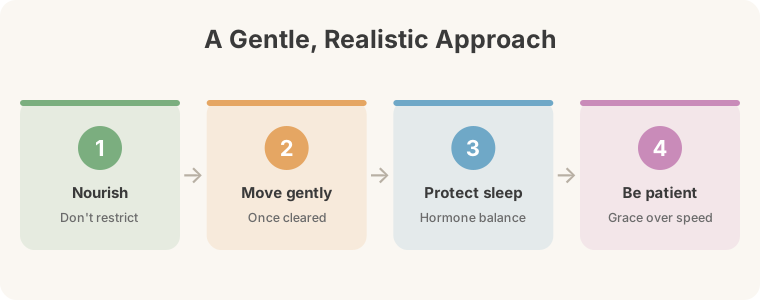
1. Nourish, don’t restrict
Especially if breastfeeding, your body needs fuel. Focus on balanced, nourishing food rather than cutting calories hard. Aim for protein at every meal (it helps with satiety and tissue repair), plus fiber and enough carbohydrate to function on four hours of sleep. Restriction backfires here more reliably than at any other time.
2. Gentle movement first
Start with walks — 10-20 minutes, stroller included — and build slowly once cleared. Add pelvic floor and deep core work before you add anything high-impact. Your body sets the pace, not a calendar.
3. Protect sleep where you can
Broken sleep affects appetite hormones and makes everything harder. Any rest you can steal helps — including the deeply unfashionable advice to nap when the baby naps instead of doing the dishes.
4. Stay hydrated
Simple but real. Good hydration supports energy, recovery and appetite regulation, and breastfeeding raises your needs noticeably. Keep a bottle wherever you feed.
5. Be patient and kind
It took nine months to grow a baby. Give yourself at least that long on the other side, without apology.

What Nobody Tells You About Postpartum Weight
The last few pounds often wait for weaning. Some people hold onto a small amount of weight while breastfeeding and lose it after, which is the opposite of what the “breastfeeding melts the weight off” narrative promises. Both patterns are normal.
Your body may not return to its exact previous shape, and that isn’t a failure. Ribcages widen. Hips shift. Feet sometimes go up half a size permanently. You can be strong, healthy and at your pre-pregnancy weight and still need different jeans.
Sleep deprivation makes fat loss genuinely harder, not just psychologically. It’s not in your head, and it’s not a discipline problem.
Comparison timelines on social media are selected, not typical. You’re seeing the outliers who posted, filtered through good lighting and better angles.
The scale is the least useful metric right now. Energy, mood, strength returning, being able to carry the car seat without your back protesting — these track your recovery far better than a number that swings with fluid retention and how recently you fed the baby.
Let Go of the Timeline
There’s no deadline here. Some weeks you’ll see progress; some you won’t — and both are normal. Comparison to others, or to a version of yourself from two years ago, only steals your peace.
Focus on feeling healthy, energized and strong, and let the rest follow gently. Practically, that often means owning two or three things that fit your body now rather than waiting to earn your old clothes back — a pair of high waist leggings with a soft, non-digging waistband does more for how you feel about getting dressed than any goal jeans hanging in a closet. You’re doing beautifully.
When to see a professional: talk to your provider before starting any exercise or reducing calories. Reach out sooner if you notice heavy bleeding that returns after slowing, pain in the pelvic floor, leaking or heaviness that doesn’t improve, a visible doming or gap along your midline during effort, or persistent low mood, anxiety or intrusive thoughts. A pelvic floor physical therapist is genuinely worth seeing even if nothing feels wrong — in many countries it’s standard postpartum care, and it should be everywhere.
FAQ
How long does it realistically take to lose weight after pregnancy?
For most people, meaningful change happens over 6-12 months or longer, not weeks. Weight loss is typically slowest in the first two to three months while you’re healing and sleep-deprived, and picks up as routines stabilize. Slower is genuinely better here.
Does breastfeeding help you lose weight?
It raises daily energy needs, but the effect on actual weight loss varies enormously between people — some lose steadily, others hold weight until after weaning. It also increases appetite for most. Treat it as a possible helper, not a plan.
When can I start exercising after giving birth?
After your provider clears you, typically around your six-week check-up and often later after a cesarean or a complicated delivery. Start with walking and pelvic floor work rather than running or high-impact classes, and build over weeks. If something feels heavy, leaks, or hurts, back off and ask.
TL;DR
- Throw out “bounce back.” Recovery is a process, not a deadline.
- Nourish rather than restrict — protein at every meal, enough fuel to function, especially while breastfeeding.
- Start with walking once cleared, add pelvic floor and core rehab before anything high-impact.
- Protect sleep and hydration. Both affect appetite and recovery more than any diet tweak.
- Expect 6-12+ months and a nonlinear path. The scale is the least informative metric right now.
- See your provider before starting, and see a pelvic floor PT even if nothing feels wrong.
This article is for general informational purposes only and isn’t medical advice. Consult your healthcare provider before starting postpartum weight loss or exercise.
See It in Motion
Seen here: Maternity Capris with Side Pockets — shop it on bubblelime.com
Keep Reading
This article is for general informational and styling purposes only. Fit, sizing, and product availability may vary.