The Postpartum Body: A Kinder, More Honest Way to Think About It

Quick Answer: “Bounce back” is a marketing phrase, not a medical timeline, and measuring yourself against it does real harm. Your body is changed, not ruined. Focus on what it can do rather than how it looks, move because it feels good rather than as punishment, and curate what you’re looking at. If the distress becomes persistent, or tips into restriction or compulsive exercise, that deserves real support.
Six weeks after giving birth, a woman is expected to have her body back and a photo to prove it.
That expectation was invented to sell things. It has no relationship to how tissue heals, how hormones settle, or how anyone actually feels at 3am with a newborn. Here’s a more honest way to think about all of it.

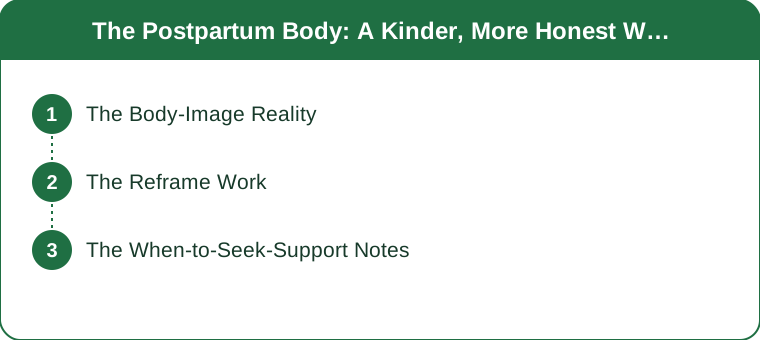
What’s the Honest Picture of a Postpartum Body?
Your body did something enormous. Growing and birthing a human is a profound physical event. Recovery from it deserves the same respect we’d give recovery from any other major physical event — which is to say, considerably more than a six-week deadline.
“Bounce back” does real harm. It’s unrealistic, it’s a phrase from marketing rather than medicine, and it sets a standard that healthy recovery routinely fails to meet. That’s a broken measuring stick, not a broken body.
Changed, not ruined. Some things return, some things don’t, and “different” is not a synonym for “worse.” Your rib cage may be slightly wider. Your feet may be a size bigger. Those are outcomes, not damage.
Comparison is a trap. Celebrity postpartum photos involve professional support, staff, and often a decade of built fitness. Social media shows the highlight reel of the highlight reel. You’re comparing your Tuesday to someone else’s photoshoot.
Hormones are a real layer. Postpartum hormonal shifts genuinely affect mood and body image. This is a physiologically vulnerable window, and being gentle with yourself in it isn’t indulgence — it’s accuracy about what’s happening.
And you are very much not alone. Struggling with your postpartum body is close to universal. It just isn’t discussed, because the discussion is drowned out by the bounce-back version.

How Do You Reframe the Narrative?
Function over appearance. What can your body do — and what’s it getting better at? Carrying a growing baby up the stairs. Walking further than last month. That’s measurable progress and it doesn’t require a mirror.
Gentle, realistic goals. “Get stronger” and “eat enough to feel human” work far better than “get my old body back,” partly because they’re achievable and partly because they’re aimed at something real. Nourish rather than punish.
Move for joy, not as punishment. Exercise as self-care rather than as a correction for your body’s existence. A walk you enjoy beats a workout you’re using to settle a score, and you’ll keep doing it.
Practise self-compassion. Talk to yourself the way you’d talk to a friend six weeks after major physical recovery on no sleep. Most of us would never say to a friend what we say to ourselves in a changing room.
Curate your media. Unfollow accounts that make you feel worse. Follow ones showing realistic recovery. This is the fastest-acting item on the list — you can do it tonight and notice a difference in a week.
Celebrate the non-physical. You’re keeping a person alive. You’re recovering. You’re doing something extremely hard on broken sleep. None of that shows up in a photo, and all of it counts.
Give it time, and give yourself permission. Recovery isn’t linear and there’s no schedule you’re behind on.
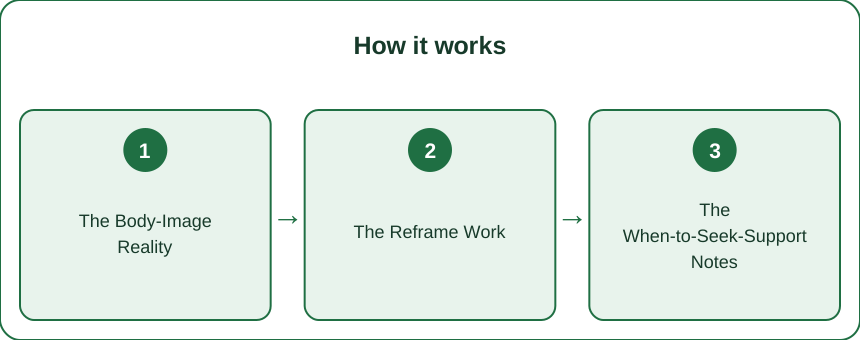
When Does This Need Professional Support?
Know normal from concerning. Having bad days about your body is ordinary. Persistent distress that colours most days, or thoughts you can’t get away from, is a different thing and warrants attention.
Postpartum mental health overlaps here. Body-image distress often travels with postpartum depression and anxiety. If low mood, anxiety or intrusive thoughts are present too, treat that as one picture rather than as a separate issue to handle alone.
Watch for disordered eating red flags. Extreme restriction, compulsive exercise, or persistent preoccupation with food and body are all reasons to get help early rather than waiting for things to get worse. Early is much easier to treat.
Raise it at your check-up. Your provider can help, and body image is a legitimate thing to bring to a postpartum appointment. Nobody will think it’s a waste of the slot.
Real help exists. Counselling, support groups, and postpartum-specialist therapists. Reaching out is a practical step, not a confession of failure.
Lean on your people. Partners, friends, and other mothers who’ll be honest about their own experience. This gets much heavier when carried privately.
What Nobody Tells You
- The six-week check is a screening, not a finish line. It was never designed to be the deadline it’s become.
- Hormones affect body image directly. Some of what you’re feeling at week three is chemistry, and it shifts.
- Everyone else is struggling too. They’re just also not talking about it.
- The clothes are allowed to change. Buying things that fit your current body is not giving up — wearing things that don’t fit is a daily reminder you don’t need.
- Recovery isn’t linear. A worse week after a better one is normal and means nothing about your trajectory.
Frequently Asked Questions
How long does it take to feel like yourself again?
There’s no standard answer, and the honest range is months to a couple of years. Feeling physically recovered and feeling like yourself are different milestones, and the second one usually takes longer. Neither timeline is a performance measure.
Is it normal to dislike my postpartum body?
Yes, and it’s extremely common. What matters is whether it’s a passing bad day or persistent distress affecting how you live. The first is ordinary; the second is worth talking to someone about.
Should I diet to lose the baby weight?
Restriction is a poor idea while recovering and especially while breastfeeding. Eating enough to support recovery, with gentle movement you enjoy, works better and doesn’t cost you the energy you need. If you want structured help, ask your provider rather than an app.
What should I wear in the meantime?
Whatever fits the body you have today. High waist leggings with a soft band and a few pieces that actually fit will do more for how you feel day to day than any amount of talking yourself into pre-pregnancy jeans. Clothes that fit are a kindness, not a concession.
When to Seek Support
Speak to your doctor or health visitor about persistent low mood, anxiety, intrusive thoughts, or body-image distress lasting more than a couple of weeks. Seek help promptly for extreme food restriction, compulsive exercise, or constant preoccupation with your body — these are treatable and early support makes a real difference. Postpartum mental health conditions are common and respond well to treatment. This article is general information, not medical advice.
TL;DR:
- “Bounce back” is marketing, not medicine — measuring recovery against it is measuring against a broken standard.
- Your body is changed, not ruined; different isn’t worse.
- Shift the focus to function, set gentle goals, and move for enjoyment rather than punishment.
- Curate your media — it’s the fastest-acting change available and you can do it tonight.
- Comparison against celebrity and social-media recovery is comparison against staff, support and editing.
- Persistent distress, extreme restriction or compulsive exercise all deserve real support — raise it at your check-up.
See It in Motion
Seen here: Maternity Capris with Side Pockets — shop it on bubblelime.com
Keep Reading
This article is for general informational and styling purposes only. Fit, sizing, and product availability may vary.