Postpartum Nutrition: Fueling Recovery, Not Fighting Your Body

Quick Answer: The fourth trimester is an eat-more season, not an eat-less one. Anchor 25–30g of protein at each meal, keep iron-rich foods in rotation, and add roughly 400–500 calories a day if you’re breastfeeding. Restricting now costs you milk supply, mood and the recovery your future workouts depend on. Weight conversations belong months from now.
Two contradictory jobs get handed to new mothers in the same week: recover from a major physical event, and shrink immediately.
Only one of those is real.
Here’s what recovery actually requires — plus a meal system that survives holding a baby with one arm.

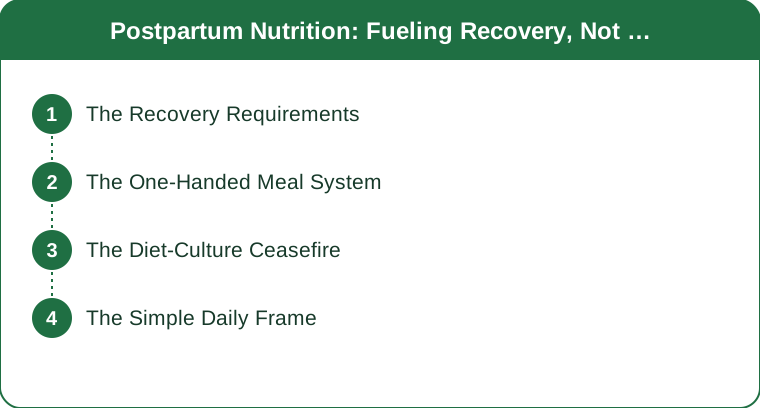
What does your body actually need after birth?
Three things, in rough order of urgency.
Protein, because healing is construction. Tissue repair after birth is genuine building work, and it runs on amino acids. The practical target most people find workable is 25–30g per meal — two eggs plus Greek yogurt, a palm-sized portion of chicken, a bowl of lentils with cheese. Spread across the day beats one large dinner.
Iron, because birth spends it. The fatigue-iron connection is real postpartum, and it’s frequently missed. Red meat, lentils, beans and leafy greens are the everyday tier; pairing them with vitamin C — a squeeze of lemon, some peppers, a piece of fruit — measurably improves absorption. If exhaustion outstays the newborn excuse, ask your provider for bloodwork rather than guessing.
Energy, because breastfeeding is a real bill. Nursing costs roughly 400–500 extra calories a day. Under-eating while nursing is a double tax: supply drops and so does your energy. This is biology’s least ambiguous “eat more” memo, and it’s the one diet culture argues with hardest.
How do you eat when you can only use one hand?
You stop cooking and start assembling. That’s a legitimate season, not a failure.
- The batch tier. Freezer burritos, egg bites, energy balls, portioned soup. The pregnancy freezer-stash strategy works even better postpartum. Anything you can eat over a feeding baby wins by default.
- The assembly tier. Greek yogurt bowls with frozen berries. Cheese, crackers and fruit on a plate. Toast with peanut butter and a banana. Nutrition without a stove is still nutrition.
- The snack station. A basket beside the feeding chair: nuts, bars, dried fruit, and the largest water bottle you own. Your body will ask at 3 a.m. The basket answers so you don’t have to make a decision at 3 a.m.
- The accept-help clause. When friends ask “what can I do,” say food, plainly and specifically. “A rotisserie chicken and some fruit” is a better answer than “oh, nothing.” Casseroles are care.
Practical detail nobody mentions: keep snacks somewhere you can reach one-handed while seated. Side pockets on whatever you’re wearing genuinely earn their place in this season — a granola bar within reach beats a full kitchen two rooms away.

Should you diet postpartum?
Not now. And the reasons are physiological, not sentimental.
The “bounce back” was always marketing. Bodies take a year or more to redistribute after growing a human. Celebrity timelines run on staff, trainers and childcare you don’t have. Comparing your week six to someone’s paid full-time job is a losing setup.
Restriction backfires specifically in this window. Under-fueling tanks milk supply, flattens mood, slows tissue repair and undermines the strength comeback that the postpartum workouts depend on. You can’t build on a deficit while you’re still repairing.
The reframe that actually helps: your body just did the most athletic thing it may ever do. Feed it like an athlete in recovery — because that is, quite literally, the situation.
Weight conversations belong months away, with a body that has slept and healed. They’ll go better then, too.
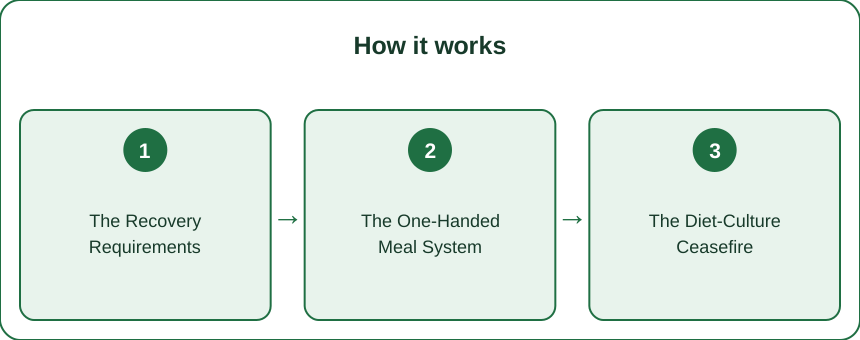
What Nobody Tells You About Fourth-Trimester Eating
Thirst hits like a wall while nursing. It’s not in your head — it’s the body invoicing. Drink a glass at every feeding session and the problem largely solves itself.
Keep taking the prenatal. Continuing it into early postpartum is standard guidance, especially while breastfeeding. Most people stop the day they give birth because nobody told them otherwise.
Hunger can be enormous and then vanish. Appetite swings wildly in the first months. Eat on a loose schedule rather than waiting for hunger, because sleep deprivation blunts the signal.
Nobody weighs the good days. Your dashboard is how you feel — stable-ish energy, hunger honored, no dizzy spells, no 4 p.m. collapse. That’s the metric that predicts recovery. The scale predicts almost nothing useful right now.
Caffeine and alcohol have real guidelines while nursing. Worth a two-minute conversation with your provider rather than a two-hour internet search.
What’s the simplest daily frame?
No tracking, no apps, five rules:
- Protein anchor at every meal — 25–30g, however it arrives.
- Color when possible — frozen vegetables and bagged salad count completely.
- A glass of water every feeding session.
- Keep the prenatal going.
- Check enough-ness, not weight — steady energy, honored hunger, no dizziness.
A note on when to get help: talk to your provider about persistent dizziness, exhaustion that doesn’t lift with sleep, a noticeable drop in milk supply, or any history of disordered eating resurfacing. A registered dietitian or a lactation consultant is genuinely useful here, and this article is general information rather than individual medical advice.
FAQ
How many calories should I eat while breastfeeding?
Roughly 400–500 above your pre-pregnancy needs, though it varies with supply and activity. Rather than counting, eat to comfortable fullness at regular meals and add snacks — appetite is a decent guide when you’re eating often enough.
Will eating more slow down weight loss?
Under-eating while nursing tends to backfire — energy drops, supply drops, and consistency goes with them. Most people find gradual change happens on its own once sleep and eating stabilize.
Do I need special postpartum supplements?
Usually just the prenatal, plus whatever bloodwork indicates. Vitamin D and iron are the two most commonly low; test rather than guess.
TL;DR:
- Eat more, not less. Protein 25–30g per meal, iron in rotation, +400–500 cal if nursing.
- Build a one-handed system: batch food, assembly meals, a snack basket by the chair.
- Restriction now costs supply, mood and recovery. Weight talk waits months.
- Water every feeding, keep the prenatal, measure energy instead of pounds.
- Ask for food when people offer help.
Protein anchored, iron rebuilt, snack basket stationed, ceasefire signed. Postpartum nutrition has exactly one job — fueling the recovery — and the shrinking industry was never invited.
See It in Motion
Seen here: Maternity Capris with Side Pockets — shop it on bubblelime.com
Keep Reading
This article is for general informational and styling purposes only. Fit, sizing, and product availability may vary.