The Postpartum Weight Plateau Nobody Warns You About Around Month Four

Quick Answer: The early drop was mostly fluid and the uterus returning to size — a fast process that finishes. Around month four, breastfeeding metabolism stabilizes, activity levels off, and hormones are still shifting on their own clock. The stall is physiological timing, not failing effort. This is general information, not medical advice.
Months one through three, the number moved. Not dramatically, but it moved, and it felt like the process was working.
Month four, the same effort produces nothing at all. And because nobody named this in advance, it feels like something you did.

Why does the plateau land around month four?
The early loss wasn’t mostly fat. Those first weeks came largely from fluid shifts and the uterus returning to its pre-pregnancy size — a rapid process that naturally slows once it’s complete.
Breastfeeding metabolism stabilizes. If you’re nursing, metabolic demand adjusts and settles around this timeframe after the higher-demand establishment phase.
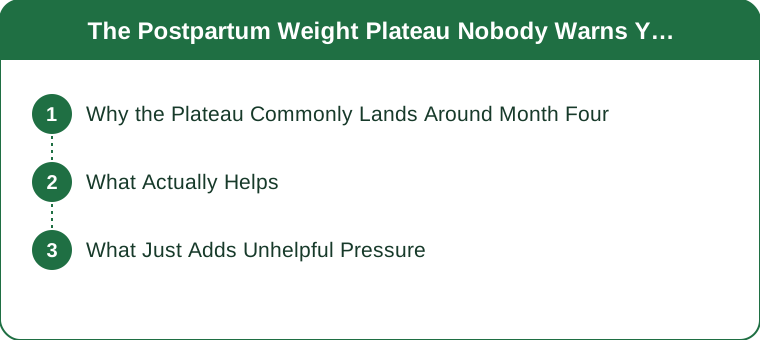
Sleep debt plateaus too. Cumulative sleep loss around month four often reaches a chronic steady baseline rather than continuing to worsen — which means it stops actively pushing the number in either direction.
Activity levels off. Return-to-exercise progression naturally flattens around this point after the initial ramp-up. You’re not doing less; you’ve stopped adding.
Hormones keep shifting regardless. They follow their own biological timeline well past month four, independent of how consistent your diet and training are.
Four things converging at once. None of them are about effort.
What actually helps?
- Track non-scale markers. Strength, energy, and how clothes fit frequently keep improving while the scale sits still. Realistic postpartum weight loss rarely looks like a straight line.
- Revisit nutrition for this phase. Caloric and nutrient needs shift meaningfully between early postpartum and month four, especially with continued breastfeeding. An early plan may no longer fit.
- Prioritize strength training. Building muscle mass has a more direct effect on longer-term metabolic rate than continuing cardio-only at this stage. Starting strength is often the missing piece.
- Protect sleep quality. Even without more total hours, improving what sleep you get has measurable effects on hormones related to weight regulation.
- Extend the timeline. Full body recomposition realistically runs well past the first several months. Month four is a checkpoint, not a verdict.

Myth vs Fact
Myth: A stalled scale means you need to eat less. Fact: Further restriction is the most common instinct and often the least helpful response — particularly while breastfeeding, where it can affect supply and energy without touching the actual cause of the plateau.
Myth: The first three months show what the rest will look like. Fact: They show fluid loss and uterine involution finishing. Extrapolating that rate forward guarantees disappointment, because it was never going to continue.
Myth: If you’re still not back after four months, something’s wrong. Fact: “Back” is an arbitrary destination on an arbitrary schedule. Some postpartum body changes are permanent, and that’s an ordinary outcome rather than a failure.
Myth: Breastfeeding automatically drives weight loss. Fact: It raises energy demand, and it also raises appetite and can affect where the body holds reserves. Individual responses vary enormously, in both directions.
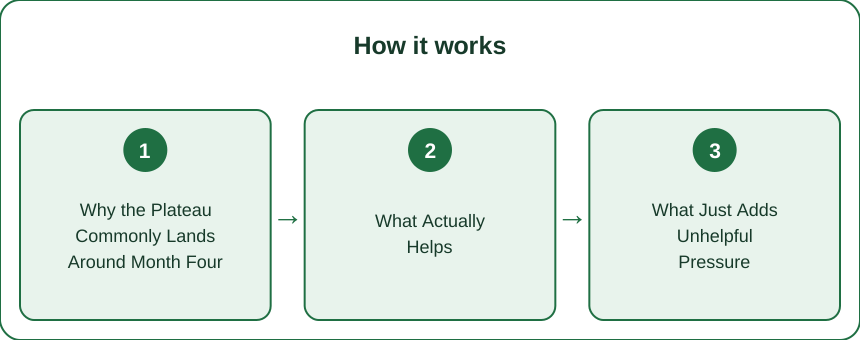
What just adds pressure without adding progress?
Cutting calories further. It doesn’t address the physiological cause, and it can backfire on energy, milk supply, and recovery all at once.
Comparing to someone else’s month four. Different hormone profile, different birth, different feeding choices, different sleep. None of it transfers.
Scale-only focus. Fixating on one number while strength and energy are genuinely improving means missing the progress that’s actually happening.
Jumping intensity out of frustration. Abruptly increasing training risks injury and burnout without breaking the plateau any faster. Gradual adjustment works better and hurts less.
Internal deadlines. An arbitrary “back to normal by month six” adds real emotional weight with no physiological basis whatsoever.
Talk to your doctor if weight loss stalls alongside other symptoms — persistent exhaustion beyond expected new-parent tiredness, hair loss, feeling cold, low mood, or anxiety. Postpartum thyroid changes are common and treatable, and postpartum depression and anxiety are common, treatable, and not something to push through alone. If you’re breastfeeding and considering any calorie change, discuss it with your provider or a registered dietitian first. This is general information, not medical advice.
FAQ
How long does postpartum weight loss actually take?
Considerably longer than the culture implies — many people find body composition continues changing through twelve to eighteen months and beyond. The realistic timeline depends on birth type, feeding, sleep, and individual physiology far more than on discipline.
Should I diet while breastfeeding?
Significant restriction while breastfeeding is worth discussing with a provider first, since it can affect supply and your own energy. Most guidance favours adequate intake with a modest deficit at most, and prioritizing protein and food quality over aggressive cutting.
Is it normal for weight to stall for months?
Yes, and it’s more common than the visible stories suggest. Plateaus of several months happen frequently, particularly while sleep is still broken — which is why progress often stalls precisely when sleep improves rather than before.
TL;DR:
- Early postpartum loss is mostly fluid and uterine involution — a fast process that finishes, not a rate that continues.
- Around month four, breastfeeding metabolism stabilizes, activity levels off, sleep debt plateaus, and hormones keep shifting independently.
- Track strength, energy, and fit rather than only the scale.
- Revisit nutrition for the current phase and prioritize strength training over cardio-only.
- Avoid further restriction, comparison, abrupt intensity jumps, and self-imposed deadlines.
- Stalls with exhaustion, hair loss, feeling cold, or low mood warrant a doctor — postpartum thyroid changes and postpartum depression are common and treatable. This is general information, not medical advice.
See It in Motion
Seen here: Maternity Capris with Side Pockets — shop it on bubblelime.com
Keep Reading
This article is for general informational and styling purposes only. Fit, sizing, and product availability may vary.